
Review Tales
Trusted Reviews and Author Features Since 2016
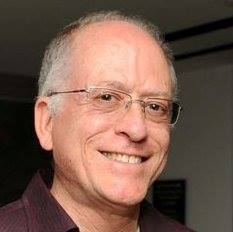
Interview with Ellis Shuman
Iva Dimitrova is author of this interview. Here is a link to the review of her book. Click here.
- In June of this year, you published your short story collection Rakia, which is set in Bulgaria. However, this isn’t the first time you’ve chosen my homeland as the backdrop for your stories. I’m referring to The Burgas Affair, which was also published in Bulgarian in 2016. What is it about my country that has held your interest for so long? Why is it special to you?
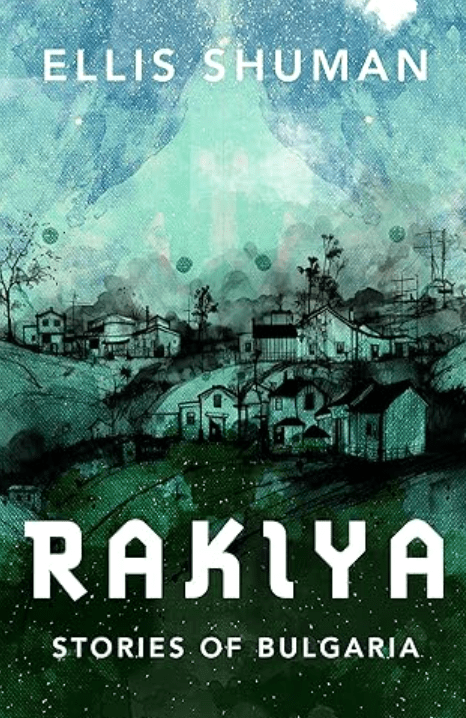
As part of my efforts to market my new book, Rakiya – Stories of Bulgaria – I ask people ‘When was the last time you read a book set in Bulgaria?’ The response is nearly unanimous – they have not read any books using Bulgaria as a setting. Add to this the fact that very little Bulgarian literature has been translated into English. The exception to this is the novel Time Shelter by Georgi Gospodinov, which won the 2023 International Booker Prize, but even with that award, not too many people have read anything remotely connected to Bulgaria.
The Burgas Affair, my previous book, was a novel primarily set in Bulgaria. The book sold more copies in its Bulgarian translation than it did in the English version. I try to share my love for Bulgaria through my writing, through both fiction and non-fiction, and am excited whenever I have a chance to introduce readers to the country.
- You lived in Bulgaria for two years. What kept you here, and do you think that experience was a key factor in helping you better develop your characters, the settings, and the circumstances in your plots?
I was working in an online marketing company in Tel Aviv when my boss informed me that my position was being relocated to Sofia on a two-year contract. My wife and I had one week to consider whether I should make the move, but we decided to accept this unexpected challenge.
As someone who had never previously been to Bulgaria, everything I saw and did was an exciting adventure. Not many tourists visit the country, and that’s a shame because traveling in Bulgaria is very affordable. There is so much to see, and even after a two-year stay, there is so much more I would like to learn about the country.
When I came back to my home in Israel, I found that I could not stop thinking about Bulgaria. I quickly realized that I could return to the country every day through my writing. I set out on a mission, to share the country through travel reports, non-fiction, and of course through my novels and short stories. The stories in Rakiya are told both in the voices of native-born Bulgarians and of those visiting the country for the first time.
- In the stories from Rakia, you weave in elements of Bulgarian lifestyle and culture, folklore and traditions, as well as the country’s natural landmarks. But what did you learn about Bulgarians during your time living in the country? How would you describe their mindset? What are your impressions of our national psyche?
The name of my short story collection is Rakiya. Rakiya is Bulgaria’s traditional alcoholic drink, and it’s best when it’s homemade and very strong. Many of the characters in my stories raise a glass of rakiya and toast each other by saying ‘Nazdrave!’ which means ‘To your good health.’ I felt that Rakiya was a suitable title for the collection.
In one of my stories, ‘Musala,’ a young American joins his Bulgarian friend on a climb to the top of Bulgaria’s highest mountain. While the Bulgarian is considering leaving the country because job opportunities are better elsewhere in Europe, he still has a strong affection for the country’s natural beauty. In my stories, I attempt to show how strongly Bulgarians are attached to their traditions, folklore, cuisine, and unique history, even though life in the country can be challenging at times.
- What does your process of “painting” with words to create characters and plots look like? Where do you begin? What inspires you?
As I mentioned, much of my writing has been inspired by the two years I lived in Bulgaria. I hope that the beauty of the country comes through in my stories, and that the characters do justice to the people I met in Bulgaria, and the warm hospitality they extended to me as a temporary resident in their country.
The plots are entirely from my imagination. The opening story in my new book, ‘Rakiya’ describes a competition in a mountain village to see who can produce the best homemade alcoholic drink. While there have been such events held in Sofia, the competition there is between industrial producers of the drink. My original idea was to stage a village competition between two men, who were formerly best friends but had grown apart over the years.
- Do you work with a pre-planned structure for your stories, or are you one of those writers who dive straight into writing and polish the text through subsequent edits?
In many cases, when writing my novels and short stories, I follow the example of American author John Irving. He stated that in his books, he wrote the ending first, and then he created the plot for his novel, a story that would reach that concluding line. I, too, consider how a story will end and then make sure my writing brings the reader to the conclusion I wrote in advance.
I believe I’m a much better editor than I am a writer. When I look back, I can see that my first drafts lack detail and structure. When I return to those stories with an editor’s eyes, I find ways to make my words shine, and my characters come to life. That said, it always helps to have an extra pair of eyes to review your writing. That is why I hired freelance editors to help me with my two novels. An editor provided by my publisher helped polish the stories in Rakiya. I must also mention and give credit to my wife, who can easily point out typos, incorrect word choices, and other issues with my texts.
- The characters in Rakia are quite diverse. Did it require research on your part to create them? Are there real people or events that inspired the characters and stories in Rakia?
I have never written historical fiction before, but it was important to me to include the story of Bulgarian Jewry during World War II in the collection. Most people are not familiar with this history. Although Bulgaria was aligned with the Nazis during the war, its community of 50,000 Jews survived the Holocaust intact. That said, 11,343 Jews in Thrace and Macedonia, Bulgarian-controlled territories during the war, were sent to their deaths in the Nazi concentration camps.
My story ‘Forgiveness’ takes place in the modern day. An Israeli is invited to a small village in southern Bulgaria to meet an elderly Bulgarian war veteran. The Israeli’s grandfather and the Bulgarian were once best friends, but they were separated by the war. The grandfather was displaced from his home and sent to a forced labor camp in fear of being deported from the country, while the Bulgarian served in the army and played a role in expelling Macedonian Jews from their homes.
To write this story, I conducted quite a bit of research. I interviewed historians and journalists and talked to my contacts in Bulgaria. I sat for hours in the library of Yad Vashem, Israel’s memorial to the victims of the Holocaust. I read the testimonies of Jews who lived in Bulgaria during the war. I hope I accurately presented the facts, although in the end, my story is a work of fiction.
- What moral lessons or conclusions are you aiming to draw the reader’s attention to with your collection?
I doubt readers will find any moral lessons in my stories and novels, but if my writing has introduced them to Bulgaria, with its stunning nature and unique traditions and culture, and made them consider visiting Bulgaria one day, I will have achieved my goal.
- Could you tell us more about yourself? I read that you were born in United States and are an Israeli writer. You probably feel a personal connection to the recent news surrounding Israel.
I was born in the United States and moved to Israel with my family when I was a teenager. I served in the Israeli army and along with my wife, I was a founding member of a kibbutz, an agricultural collective community, in Israel’s southern desert. Over the years, I’ve worked in agriculture, the hotel industry, on an Israeli news website, and in online marketing.
Writing for me has been more than a hobby; it’s been a passion. I made several early attempts at writing novels. Unfortunately, those manuscripts are lost forever. I have set my fiction in Israel, Bulgaria, and elsewhere. My travel writing has followed my journeys through Eastern Europe and most of my book reviews have been of Israeli and Bulgarian literature.
There’s been no good news from Israel in the past year, and everyone in the country is affected by the war. Our citizens are held hostage in Gaza; our soldiers are fighting there and in Lebanon. But it’s much more than that. When Hamas, Hezbollah, and now Iran launch rocket attacks against Israel, my family needs to take shelter as well. We have heard the booms of rocket interceptions, and miraculously, few Israelis have been injured. We pray for peace and hope this war ends soon.
- When and why did you start writing? Is it a necessity for you? Please share more about your previous works and the awards you’ve received for your short fiction.
I started writing as a boy. Initially, I wanted to follow in my father’s footsteps. He was a journalist at the local newspaper in the small city where I lived. I launched a summertime neighborhood newspaper, knocking on doors and reporting tidbits of information about how my neighbors were spending their summer vacation. In school, my favorite subject was Creative Writing.
I’ve written two suspense novels set in Bulgaria and two collections of short stories. My father helped edit the stories included in The Virtual Kibbutz. After my two novels were published, I focused on writing short fiction, and my stories were published in various online literary journals. My story ‘Jerusalem Marathon’ was nominated for a Pushcart Prize. After writing twelve stories set in Bulgaria, I collected them in Rakiya – Stories of Bulgaria.
- I get the impression that you’re a self-published author. Is that true? If so, was it a choice, and if yes—why?
I have published four books. The first was a collection of short stories set on the kibbutz. I published this book through a self-publishing company, but the experience made me realize that I could do most of the work by myself.
I wrote the novel Valley of Thracians after my return from Bulgaria. It’s set in modern day in Bulgaria but refers to the Thracians, the militant tribes that ruled in the Balkans four thousand years ago. I hired a freelance editor to help me revise the text, and a graphic designer to do the cover, but everything else I did on my own.
The Burgas Affair was published by Ciela, the leading Bulgarian publishing house, in 2016, and it was only a year later that I self-published the book in English. My new book Rakiya – Stories of Bulgaria was published by a small independent publisher in the United States. I guess you could say that I am both traditionally published and self-published.
11. Are you currently working on something new? Could you share more about it?
These days I am primarily busy marketing my book, but at the same time I have been writing some short non-fiction essays. One of these days I’ll resume writing fiction, but it will probably be short stories and not another novel. I look forward to sharing new stories with my readers.
Amazon link: https://www.amazon.com/Rakiya-Stories-Bulgaria-Ellis-Shuman-ebook/dp/B0D3WQP9TN
Book Detail
Book Title: Rakiya -: Stories of Bulgaria
Author Name: Ellis Shuman
Pub Date: June 17, 2024
ISBN: B0D3QXHXT2
Book Category/Genre: Literature & Fiction, European History
Page Count: 194 (ebook)
Publisher: Independently published
Author Bio:
Ellis Shuman is an American-born Israeli author, travel writer, and book reviewer. His writing has appeared in The Jerusalem Post, The Times of Israel, and The Huffington Post. His short fiction has been nominated for the Pushcart Prize, and has appeared in Isele Magazine, Vagabond, The Write Launch, Esoterica, Jewish Literary Journal, San Antonio Review, and other literary publications. He is the author of The Virtual Kibbutz, Valley of Thracians, The Burgas Affair, and Rakiya.
Book Description: Rakia
A mother pickpocketing tourists in order to support her daughter. An elderly war veteran ashamed of his actions during the Holocaust. Two brothers hunting a killer bear. A Syrian refugee working in a Sofia bakery. A femme fatale disappearing at an international writers’ conference. And two neighbors competing to see who makes the best alcoholic drink.
This collection of heartwarming and culturally illuminating stories introduces readers to Bulgaria—its majestic mountains; picturesque villages; and rich history and traditions—and leaves them wanting more.
Discover more from Review Tales
Subscribe to get the latest posts sent to your email.


 Review Tales