
Review Tales
Trusted Reviews and Author Features Since 2016
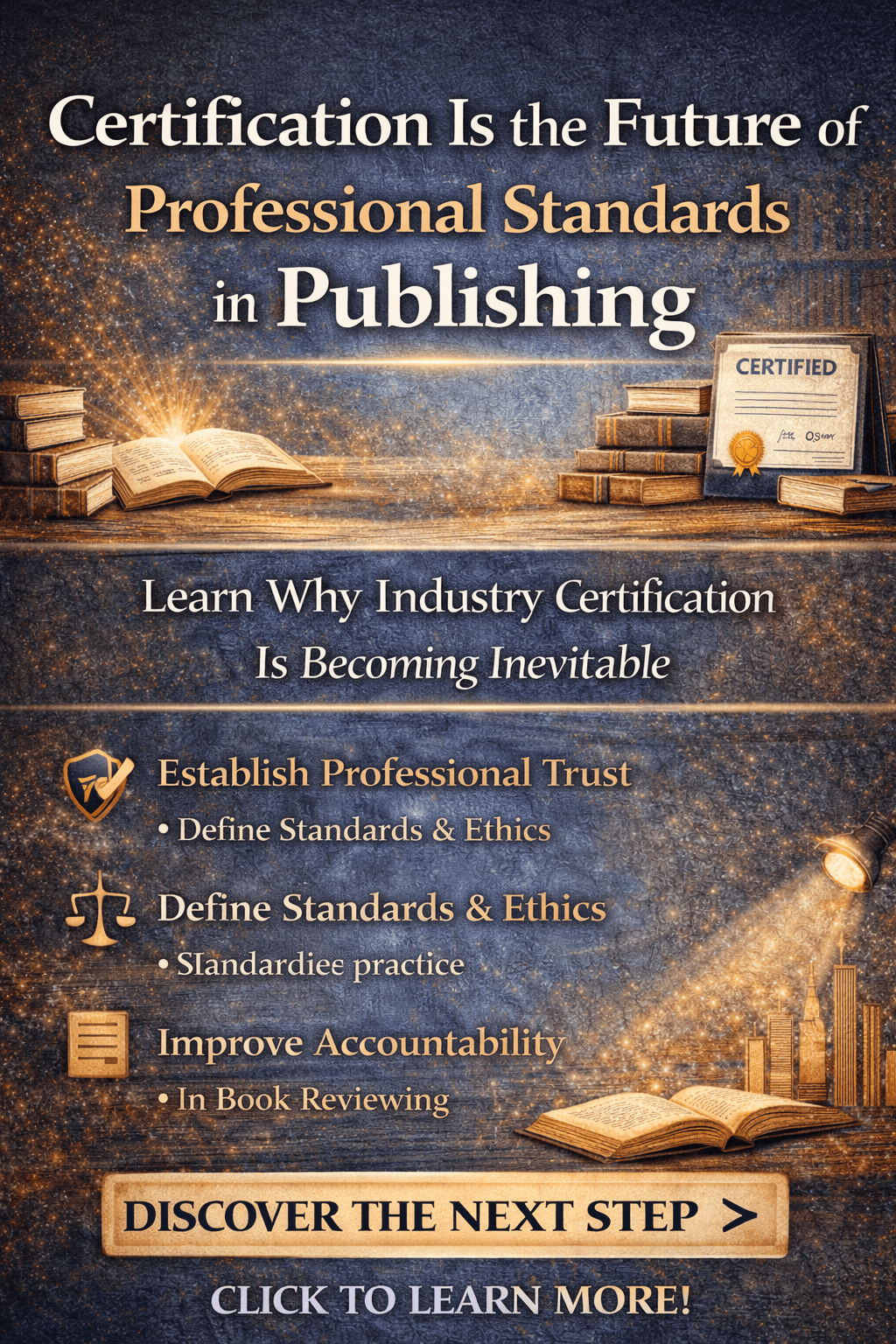
Why Certification Is the Future of Professional Standards in Publishing
Introduction
Every established profession operates within defined standards.
Medicine requires licensing.
Law requires accreditation.
Finance operates under regulatory oversight.
Education follows structured qualification systems.
These frameworks exist for one reason: trust.
Publishing, particularly book reviewing, has historically operated without formalized certification.
That era is ending.
As the industry expands and technology accelerates, structured professional recognition is no longer optional. It is necessary.
Certification is not about restriction.
It is about credibility, accountability, and long-term industry maturity.
Certification as a Marker of Professional Evolution
Across industries, certification serves four critical purposes:
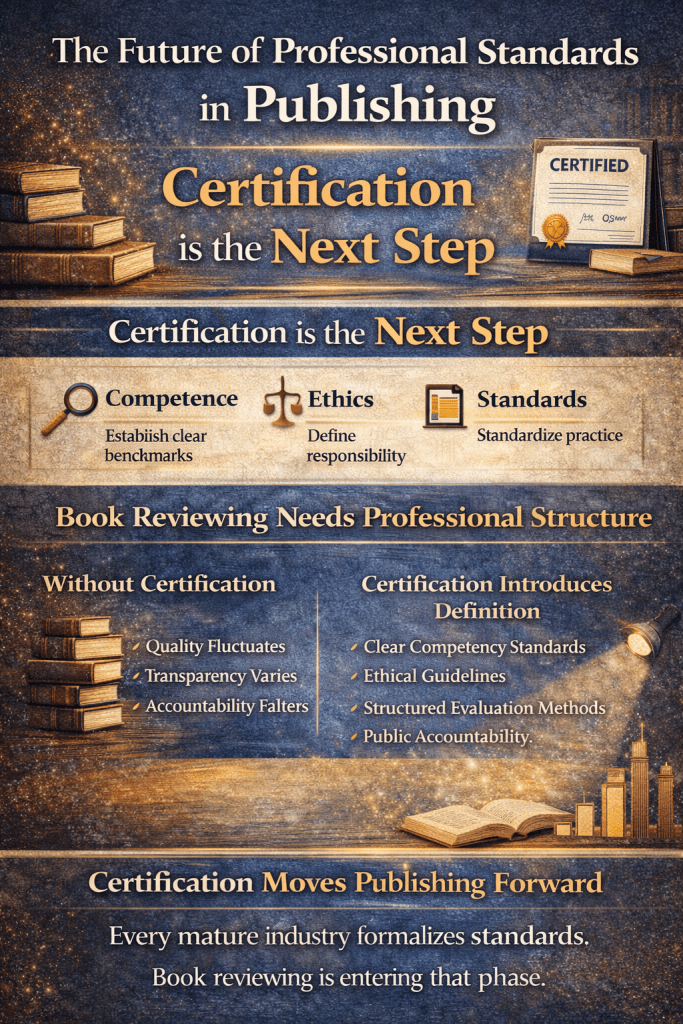
• Establish measurable competence
• Define ethical responsibility
• Standardize professional practice
• Protect public confidence
When professionals meet clear benchmarks, trust increases.
When industries adopt structured standards, they signal maturity.
Publishing is reaching that threshold.
The Structural Gap in Book Reviewing
Book reviews influence:
• Reader purchasing decisions
• Author reputation
• Marketing performance
• Publishing visibility
Despite this influence, the evaluation process remains largely informal.
There is no universal framework defining:
• Required competencies
• Ethical disclosure standards
• Evaluation methodology
• Accountability mechanisms
Without structure:
Quality fluctuates.
Transparency varies.
Credibility becomes inconsistent.
Certification introduces a definition.
It clarifies what professional reviewing should represent.
Trust Is Built Through Frameworks
A structured certification system establishes:
Clear Competency Standards
Reviewers understand the skills they must demonstrate.
Ethical Guidelines
Transparency, disclosure, and fairness become foundational.
Structured Evaluation Methods
Reviews follow a consistent professional methodology rather than a subjective impulse.
Accountability
Certified professionals commit publicly to defined standards.
Trust is not assumed.
It is built through structure.
Technology Demands Professional Identity
Digital publishing continues to expand.
Artificial intelligence increases content volume.
Automation accelerates production.
Volume without standards creates noise.
Standards create a signal.
Certification ensures that professionals understand how to integrate technology responsibly while preserving independent judgment and analytical depth.
Professional identity becomes more important as tools become more powerful.
Certification evolves alongside innovation.
The Next Phase of Industry Development
Every mature industry eventually formalizes standards.
Publishing is entering that phase.
Professional review certification is not simply a credential.
It is infrastructure.
It provides:
• Clear pathways for aspiring professionals
• Consistency for authors and publishers
• Transparency for readers
• Long-term credibility for the ecosystem
Without infrastructure, industries remain fragmented.
With infrastructure, they advance.
The Vision for Professional Review Certification
Review Tales is developing a structured framework designed to:
• Define professional reviewing standards
• Establish measurable training pathways
• Integrate ethical and technological awareness
• Create recognized professional status
The objective is not just discussion.
It is development.
Professionalization requires action, structure, and leadership.
Join the Movement Toward Industry Standards
If you believe publishing deserves defined professional recognition and structured quality control, now is the moment to engage.
Certification represents the next stage of credibility in book reviewing.
The industry will continue to grow.
The question is whether it grows with standards.
📥 Free Resource
Download the Professional Book Reviewer Standards and Framework Checklist
Inside you will find:
• Core certification principles
• Ethical framework overview
• Professional evaluation structure
• Career progression roadmap
About The Author
Jeyran Main
Founder — Review Tales
Certification Framework Developer
Developer of structured professional standards for book reviewers and creator of the Certification Framework Initiative.
Discover more from Review Tales
Subscribe to get the latest posts sent to your email.


 Review Tales