
Review Tales
Trusted Reviews and Author Features Since 2016
What’s in Your Armory? by MK Stangeland, Jr.
Suffering from writer’s block? Have you written yourself into a corner and don’t know how to get out of it?
Perhaps you’ve already written the solution but haven’t realized it yet.
Anton Chekhov famously said that a rifle on a wall must be fired in the next scene. This is the origin of ‘Chekhov’s Gun’, the term popular shorthand for a story element introduced in one scene that becomes important later in the story. It’s an indispensable plot device in any writer’s toolbox, enabling plot twists that feel natural and not upsetting audiences with unsatisfactory Deus Ex Machinas.
While Chekhov himself would probably insist otherwise, using “Chekhov’s Gun” isn’t so much a rule as shorthand for a valuable tool a writer would be ill-advised to do without. A rifle on a wall need not be fired if it develops character traits or builds a location’s atmosphere. Sometimes, even in more recent years, writers will drop red herrings that mostly exist to keep audiences guessing about which Gun will actually be taken off the wall and fired.
Even so, no detail introduced in a story need necessarily be confined to its original parameters. A red herring doesn’t have to remain so. A personality trait introduced just to round out a character doesn’t have to remain as such. There exists no requirement that a story element created for a single scene remain confined to that scene.
Are your characters trapped in a hole, but you don’t know how to get them out? Perhaps that otherwise inconspicuous item or character you introduced to fill your world but then forgot about is the perfect solution. Have trouble advancing the plot because you do no know what should happen next? Now might be the right time to bring back that antagonist or character flaw you thought you’d left behind. Need to really shake up your plot or throw your world a curveball? That lore you introduced early in your story to make your world feel lived in may be just what you’re looking for.
If it’s not a perfect fit for where your story is now, that’s OK! That’s what rewrites are for. As long as it doesn’t throw the rest of your story into chaos, you can always adjust the earlier appearance to fit the needs of the story now. Unless perhaps your story needs chaos and a major rewrite, in which case, all the better.
Stepping outside the realm of books, an excellent example of this practice in action is Stargate SG-1 and Stargate Atlantis. Those who remember these TV series know that one of the reasons they were popular with fans was that the people behind the scenes remembered their canon and did not shy away from digging up old plot elements to fit the needs of later stories, sometimes years later.
For example, an episode early in season five introduced an alien with the power to convince people that his identity was that of a man they’d known all along. Half a season later, when the heroes were faced with the problem of infiltrating an enemy meeting, the show brought back this plot point. The heroes faced a problem, they were provided with an easy solution, it didn’t require inventing anything new, and it rewarded fans who were paying attention. In another instance, a virtual reality system that provided the plot for an episode in season two would later return in season eight in a completely different context.
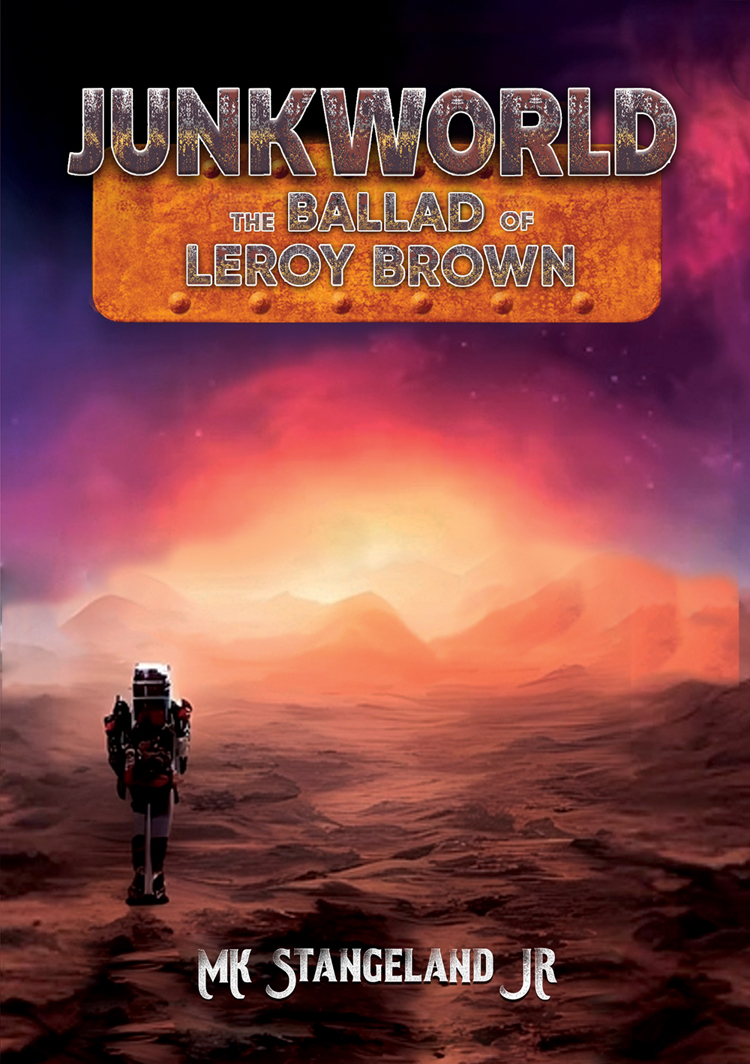
While writing my book, Junkworld: The Ballad of Leroy Brown, I used this tactic multiple times. In one scene, I introduced inactive robots, which later provided an unexpected benefit for building a military strategy. Near the end of the book, a vehicle I introduced merely to show proof of progress but didn’t expect to use became an important piece in the final battle.
The biggest example involved two plot points near the opposite end of the book. While assembling the plot, I had a location I needed to be destroyed, but I didn’t know how. It was after much consideration that I realized the perfect answer already existed.
Early in the book, during Leroy Brown’s arrival on Junkworld, I introduced a threat that provided an early challenge for the title character to overcome. Initially, this early threat I created wasn’t meant to return – Leroy had faced and overcome the challenge; it had served its purpose and wasn’t needed anymore. When I realized I could bring this threat back as the key to solving the problem of how to cause mass destruction, both previously unconnected plot elements were made stronger. The original threat was given a proper payoff rather than being relegated to an isolated event, while the latter problem was solved with a satisfying answer that didn’t require inventing anything new.
By linking a problem and answer that were previously unrelated, the whole became stronger than the sum of its parts, and the entire book felt like a more unified, satisfying whole.
So if you’ve written yourself into a wall – be it a problem you don’t know how to solve or writer’s block you don’t know how to break through – consider going back to what you’ve already put to page. You may discover you’ve already written the answer; you don’t know it yet.
Written by MK Stangeland, Jr.
Discover more from Review Tales
Subscribe to get the latest posts sent to your email.
One Comment on “What’s in Your Armory? by MK Stangeland, Jr.”
Leave a comment


 Review Tales
Great reminder that eclectics will generally have more options…often way more options we might recognize at first blush. Thanks for sharing!
LikeLiked by 1 person