
Review Tales
Trusted Reviews and Author Features Since 2016
Looking for Stories to Tell? Start by Observing the Ordinary Michael Panzner

Before deciding to try my hand at writing children’s books, I spent much time as a freelance writer focused on drier topics, primarily business and finance. In many ways, this was the path of least resistance. I could lean on insights from experts and my “day job” experiences, bypassing the complexities of crafting characters, settings, or intricate plots. Unlike fiction writing, my primary goal was to inform and educate in a way that adult readers could readily comprehend.
Perhaps another reason why I gravitated toward nonfiction writing was that I often felt somewhat inadequate about the idea of creating content from scratch. I didn’t quite understand where the key elements of a story came from. It seemed that people who were considered good fiction writers had some sort of magical ability to conjure up whatever ideas were necessary to craft a captivating story. Perhaps naively, I thought that they could simply sit back and wait for the creative elements to pop into their heads, almost out of thin air.
However, over time, I came to understand that the creative process did not need to resemble a sort of spontaneous combustion, like the universe’s big bang. In fact, the more I learned about talented artists across various fields–literature, art, music, cinema, dance–the more I realized that creativity isn’t simply a matter of conjuring up something from nothing. Instead, it is an evolutionary process deeply rooted in personal experiences and observations.
Indeed, it seemed as though the process was often a matter of starting with seemingly ordinary or uninteresting facts or circumstances and then reinterpreting them in a unique and compelling way. I’ve heard authors talk about how they had based a character on a person they knew or an event they were aware of, either directly or indirectly. I’ve read about musicians who said they found inspiration from a random sound or phrase that sparked their imagination.
This realization led me to an epiphany. Rather than hoping (and praying) for a flash of inspiration, I recognized that creative storytelling could emerge from the ordinary things that might otherwise be overlooked if you weren’t paying attention. I began to see the mundane details of my own experiences as kernels that could blossom into something special—stories that could not only educate but also entertain in a way that nonfiction writing simply cannot.
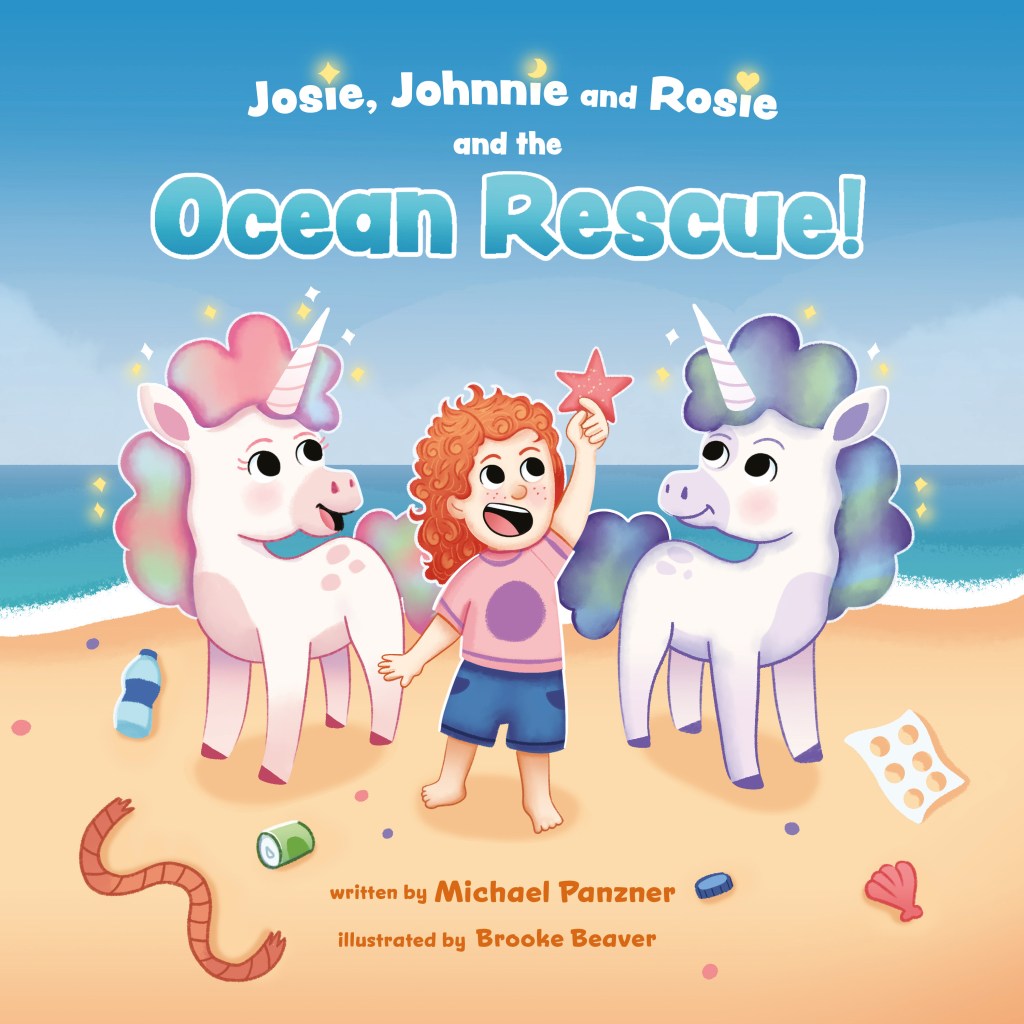
With my newfound appreciation for viewing the ordinary details of life as potential fodder for an engaging tale, it wasn’t long before I had the makings of my first children’s picture book. To begin with, I noticed how much my little red-headed granddaughter loved unicorns and going to the beach. I also thought that if one magical friend with a horn was compelling, then two of them—twins—would be even better.
Eventually, I considered what other characters young readers might find appealing, which got me thinking about friendly little fish who needed a pristine natural environment to survive and thrive. Before long, I had come up with the essential elements for an exciting story that I had once believed would be difficult, if not impossible, to conjure out of thin air.
The story in question? The one about the little girl and magical twin unicorn friends who work together to protect the environment and make a positive difference in the world: Josie, Johnnie, Rosie, and the Ocean Adventure!
Discover more from Review Tales
Subscribe to get the latest posts sent to your email.
3 Comments on “Looking for Stories to Tell? Start by Observing the Ordinary Michael Panzner”
Leave a comment


 Review Tales
Michael, I share your view that creativity is a process using acute observations in crafting a story. Best wishes on the book.
LikeLiked by 2 people
Thank you!
LikeLiked by 1 person
Thanks from me as well!
LikeLiked by 1 person