
Review Tales
Trusted Reviews and Author Features Since 2016
Reflections on Literary Publishing from Heresy Press’s Perspective by Bernard Schweizer
Heresy Press was founded one year ago in response to a profoundly unsettling state of affairs in literary publishing. Many authors felt increasingly alienated, disrespected, and bewildered because the rules of the game had been changed without them being consulted. Whereas formerly acceptance into the literary fold had been based primarily on solid demonstrations of literary merit, i.e. imaginative originality, superior style, and narrative skill, all of a sudden, authors found themselves forced to abide by a set of more mundane rules.

Before being admitted into the antechambers of publishing, authors now have to pass gatekeepers who verify whether their skin colour and sexual orientation match up with the identity markers of their fictional creations. Then, sensitivity readers have a go at their manuscripts, scanning them for signs of “offensive” language or infractions against a (growing) list of disfavored viewpoints. To many writers, this felt like landing in a bad fever dream.
Although some authors were able to accommodate the new rules (and maybe even prosper under them), many others were deeply disturbed. More than 200 authors have reached out to me since the founding of the press, and they shared copious evidence of the crude sorting carried out by literary gatekeepers these days. Writers are routinely turned away simply for being white males (white women face fewer obstacles); but writers of both sexes and all races are rejected for the alleged sin of cultural appropriation. One female author reports: “An established New York agent read a synopsis of my story. ‘This is the sort of novel publishers are clamouring for,’ she wrote in response…. But in the end, the agent passed on the novel because of the ‘insurmountable cultural resistance in publishing’ to authors writing in the voice or from the point of view of ‘characters of a race different from their own.’” A male author was told, “Any book that I consider with Indigenous themes would have to be written by an Indigenous author! If you are not from the Navajo community, I’m going to have to pass on this one!” Had Shakespeare, Dickens, Twain, Aphra Behn, Pearl Buck, or Zora Neale Hurston been held to these standards, much of their work would not have made it into print.
And it’s not just that these tendencies are restricting what gets published; more insidiously, they increasingly interfere with what writers dare to imagine. As one National Book Award winner put it in an email to me: “I wonder if I’m being too safe in my current work—if I’ve subconsciously assimilated safety into my work.” Chimamanda Ngozi Adichie is more forthright, warning against the “epidemic of self-censorship” among literary creators.
To make matters worse, writers not only face progressive ideological restrictions, but the right is wielding the blunt weapon of book banning, further interfering with genuine artistic creativity. Still, 99% of writers who approached me complained more about the “soft” censorship methods of sensitivity reading and identity essentialism rather than the hard censorship of book banning; the former prevents books from ever being completed and circulated in the first place, whereas book bans take effect after works are already in circulation (and sometimes the bans even backfire, rendering certain books more attractive with the cachet of forbidden fruit).
The name of Heresy Press encapsulates a distinct preference for non-conformism: “We discourage authors from descending into self-censorship, we don’t blink at alleged acts of cultural appropriation, and we won’t pander to the presumed sensitivities of hypothetical readers. Our ultimate commitment is to enduring quality standards, i.e. literary merit, originality, relevance, courage, humor, and aesthetic appeal.” This mission not only resonated with hundreds of authors internationally, but it has also been embraced by National Book Award Winners Joyce Carol Oates and Sherman Alexie, both of whom are on the press’s Advisory Board, joined by other notable authors and public intellectuals like Steven Pinker, John McWhorter, Nadine Strossen, and Meghan Daum.
What unites all of these voices is the desire to offer a real alternative to the safety and predictability that characterizes mainstream publishing nowadays. To get a feel for what conventional publishers are cranking out these days, I recently visited a Barnes & Noble store: Among 22 books in the bestselling fiction section, 20 were written by women. As a lifelong feminist, I applaud strong female representation in literature, but this clearly looks like an over-correction. By all appearances, mainstream publishers have given up on male readers, either from the questionable assumption that men don’t read novels or because there are hardly any novels by men on the market, which begs the question of why that is so.
The uniformity of contemporary fiction offerings manifests itself also in a stifling thematic monotony. The 20 female-authored novels I screened at Barnes&Noble mainly covered topics like the magical power of love, friendship and the value of community, twisted family relations, female empowerment (witches, goddesses, and female pirates are all the rage), and the oppression of non-white people under systemic racism.
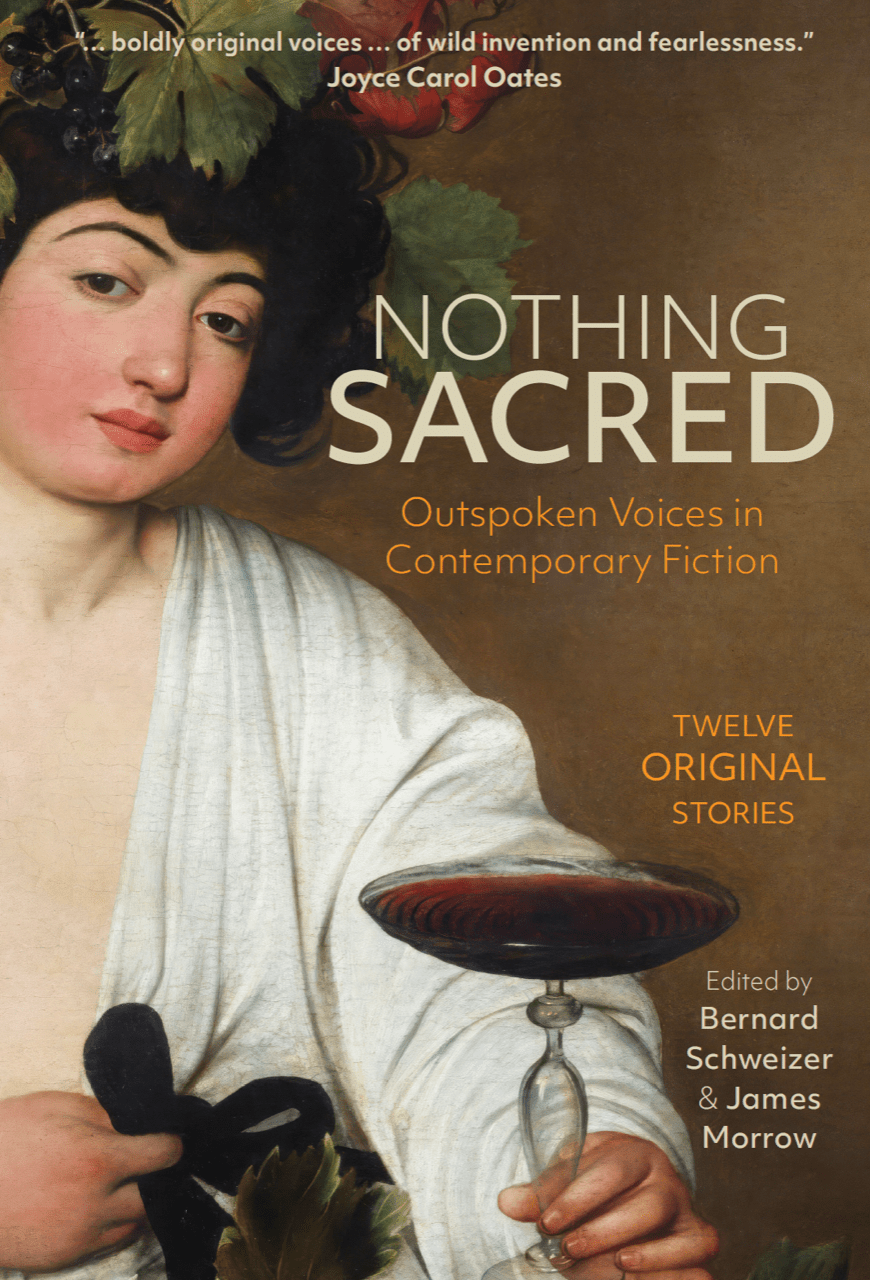
There is nothing wrong per se with any of these themes, but one should ask: is this all we got? By contrast with this pretty safe array of themes, Heresy Press strikes out into more untamed territories. Our first book, Nothing Sacred: Outspoken Voices in Contemporary Fiction, just released, covers a broad range of topics, from love and friendship to vigilantism, religious heresy, artificial intelligence, surveillance, moonshine brewing, pornography, celebrity cult, working-class life, cancel culture, and so on.
How Heresy Press fares in the public eye remains to be seen. Clearly, authors have voted with their feet when they knocked on our doors by the hundreds. The next step is connecting these outspoken writers with correspondingly resilient and adventurous readers.
Author Bio
BERNARD SCHWEIZER is a literary scholar with twelve books (monographs, essay collections, and editions) to his credit, plus numerous peer-reviewed articles. Schweizer grew up in Switzerland, earned a Ph.D. in British Literature from Duke University, and then joined the English faculty of Long Island University, Brooklyn. After retiring as an emeritus professor in 2019, his literary passions drove him to found Heresy Press as a haven for ambitious, outspoken fiction. He has served as the press’s captain, chief engineer, and steward ever since.
Discover more from Review Tales
Subscribe to get the latest posts sent to your email.


 Review Tales