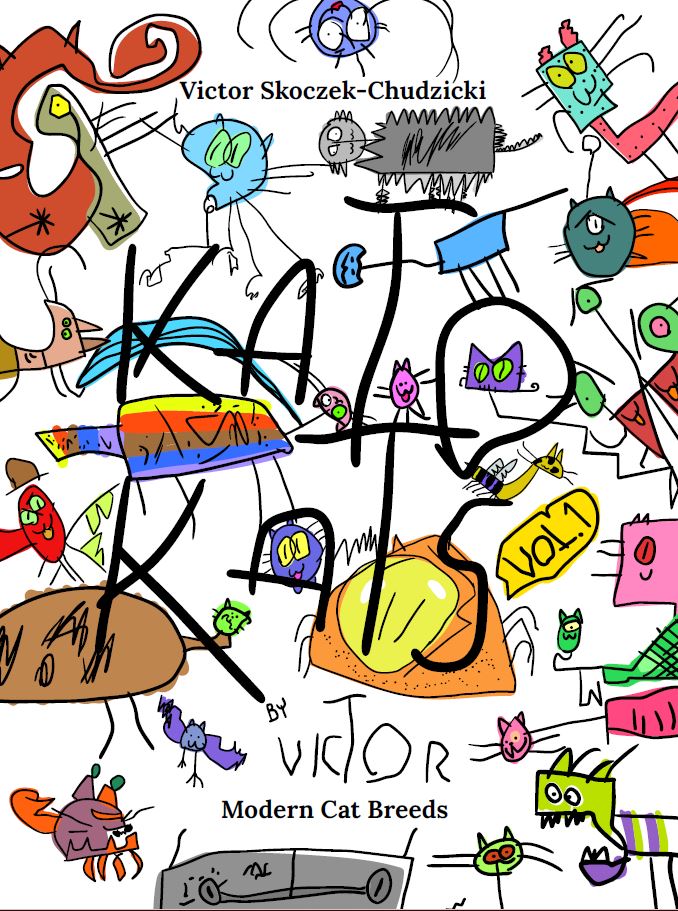
‘Shadow Cast’ is a contemporary military fantasy story. It is the first book of its series. The land of Zyearth is inhabited by species that are called Zufaunos. They are anthropomorphic animals, meaning they have furred hominids and porcupine-like quills as hair.
‘Breaking Free from Suffering’ is a short but sweet account of a self-help book providing ways for the reader to confront their mind and stop the negative thoughts that escalate into negative habits, depression and self-harm.
        While hunting whitetail one year, I stumbled upon a weathered tombstone in the middle of the woods. Waiting patiently for that big buck to cross my path gave me plenty of time to think about that lone grave’s inhabitant and ponder her story, which I was then driven to write.
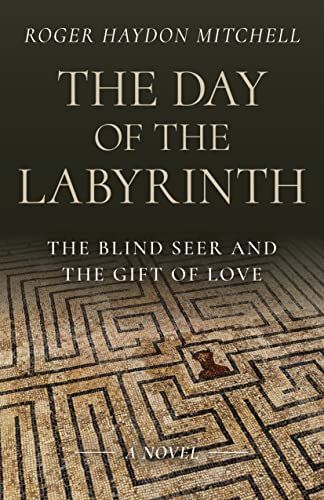
As one reads the title, it’s not what you think. Yes, I am a romance author, but what most don’t know at first look is that I am a blind romance author. In fact, a contemporary Western romance author.
‘Homicide Herault’ is a travel mystery and begins with Trekker Durkin, who likes to bike and is a veteran. He decides to take a bike tour to Beziers in the South of France. What he thinks at first is a relaxing and eventful experience doing something he loves, but what he gets is completely the opposite.
‘Do You Remember the Last Thing You Ate?’ is a cosmic horror story. It all begins with Dr. Lavinia Kelly, lead researcher in the newly developed concept of bio-noise. She is finding a way to alter human nature and DNA through soundwaves and frequencies; however, what transpires is beyond her calculations, and that is where the story takes you on a deep and interesting journey.
Oh, that’s a tough one! To be honest, Dancehall really does hold a special place in my heart. As a collection, it feels very cohesive, and I love that it tells a story. I’m very proud of it and of people’s reactions to it.
In Dancehall, some of my favorite poems are Scarborough Unfolds, Ours was not love at first sight, Bounty, and Like a Hallelujah in an empty church.
Generally speaking, though, whenever someone tells me that a poem made them feel something, it immediately becomes one of my favorites. I believe it’s my job as a poet to make the reader feel something, so when a reader tells me I succeeded, that poem moves up in rank for me.Â
What’s your favorite thing that someone else has written?
Poetry-wise, I am a huge fan of Monologue of a Dog by Wislawa Szymborska, which I read in translation and which I feel has had a mark on my work. I love the way Symborska approaches emotion — it’s just so powerful. The Tradition by Jericho Brown was also an amazing collection that I only recently read.
Prose-wise, the list is long, but I think Alias Grace by Margaret Atwood and The Giver by Lois Lowry would be my top picks. I Know This Much is True by Wally Lamb broke me in a good way, so I think that belongs on my list too.
What are you working on writing now?
I don’t typically sit down with a collection in mind when I write poetry. I write one-off poems about different topics or subjects until it feels like there’s a collection in there somewhere.
Dancehall is a collection about love, lust, and longing. Recently, I’ve been exploring grief tied to my father’s death and my own sexuality. I think there will eventually be collections addressing those themes.
Do you have a favorite food or drink that helps you write?
I wouldn’t say that it necessarily helps me write, but I couldn’t exist without coffee! I’m drinking some right now. And anything spicy just does it for me.
What’s your favorite kind of music?
I’m big into alt-rock. The Killers, Weezer, Florence and the Machine, Twenty-One Pilots, and Vampire Weekend are on constant rotation on Spotify for me.
I particularly love the albums that tell a story — Sam’s Town by the Killers, Dance Fever by Florence and the Machine, and Father of the Bride by Vampire Weekend are so much greater than the sum of their parts. They’re albums that have 100% influenced the way I think about collections.
Forest, country, beach, or city?
Can I say dessert? I recently took a trip to Arizona and Utah, and I have to say I’ve been bitten by the desert bug. I can’t wait to go back!
What movie can you watch over and over again?
Honestly, I usually hate rewatching movies. Two movies that I often return to, though, are Pan’s Labyrinth (Guillermo del Toro) and Hereditary (Ari Aster).
What would you like people to know about being an Indie author?
Being an indie author has its pros and cons.
On the positive side of things: Indie publishers tend to be much smaller. That means that you’re going to be working closely with a few people — not a huge team. It can feel very intimate vs a bigger publishing house. Likewise, indie houses are often a lot more collaborative vs. bigger publishers. You may not have the final say over everything, but you’ll be asked your opinion, and you’ll have a chance to influence the direction of things like the cover. For Dancehall, I more or less mocked up this cover, and the publisher made it work –and I’m thrilled with how it came out. Larger houses usually don’t give authors any control at all over cover or design unless you’re a big name. (I know this from my experience working on the editorial teams at two presses — Yale University Press and Taunton Books)
On the negative side: Indie presses don’t usually have a lot of money or expertise in marketing or publicity. That means it will mostly fall on you, the author. Submitting books to reviewers, scheduling readings, reaching out to indie bookstores — it’s all on you. And it’s important.
When you were a kid, what did you want to be when you grew up?
I’ve honestly always wanted to be a writer. From the time I was 5 until the time I graduated high school, I’d carry a notebook with me everywhere to write stories and poems. (I’m ageing myself, but this was before smartphones.) You never knew when inspiration might strike, and I wanted to be ready.
Today, I’m a freelance writer in my 9-5. I write educational content for financial companies. And I write creatively when an idea strikes. I’m very lucky to say I’m doing exactly what I always wanted.
What does the writing process look like for you?
Whether I’m writing a poem, an essay, or an article, I sit there until it’s all out on the page. It might not be perfect and need to be edited, but there will be a full draft before I step away from the computer. Voice and mood are so important to what I write, professionally and creatively, that I can’t step away. Once I do, it’s much harder to get back into the same frame of mind or flow.
I have an author website (TimStobierski.com) where I occasionally post about different publishing-related things, but I haven’t been very active there lately.
Otherwise, I run StudentDebtWarriors.com, a website for college students, graduates, and parents struggling to understand the complex world of student loans.
Where do you get inspiration?
My poetry is largely inspired by my own experiences, emotions, and relationships. Whether or not a poem is autobiographical (most of them aren’t), they all hold a small piece of me in them.
I’m also very often inspired by interesting words, phrases, or sounds. I’ll often think of a phrase or line but not have any idea of how to work it into a poem — so I add it to a list on my phone and let it percolate in the back of my head for weeks or months or years. Eventually, they all find a home.
What about writing do you enjoy the most?
I love it when someone reads my work and tells me that it made them feel something — that it made them cry, or that it reminded them of their father, or that I put into words something that they’ve felt but never been able to explain. The satisfaction I get from those moments is why I do what I do.
What is the most challenging part of writing for you?
I’m not a very structured writer. I can’t sit down at the same time each day and write a new poem. Believe me, I’ve tried. That’s just not how my brain works.
I write a poem when I’m inspired — and I can’t control when that inspiration will come. Sometimes I’ll write two poems in a day or 5 in a week and then nothing for a month. I wish I could say I’ve found some trick, but I haven’t.
How have you grown as a writer?
I used to believe that good poetry was defined by complicated words and rigid structure. The fewer people understood what I was saying, and the more I stuck to strict rules of meter, etc., the better a poem was, in my mind.
It wasn’t until I attended UConn that I really started to shake off those habits and beliefs. I credit that to Sharon Bryan, a poet who, at the time, was a visiting professor. I had wanted to enroll in a workshop that she was teaching, but it filled up before I could get a spot, and she agreed to do an independent study with me.
In our first few lessons, I remember that she told me the assignments I was turning in weren’t poems. They were mimicry. I was mimicking other poets and writing what I thought poetry was. Over the next few weeks, she helped me forget everything that I thought I knew about poetry and pushed me to try new things. I still remember the day that she said, “Finally, a poem,” after reading one of my assignments in her office. That was when I finally realized I could write poetry and not just mimic what I’d seen others do before.
I still constantly remind myself that there is no single definition for “poetry” and that there’s no one way to write a poem.
‘Coven of Blood, Bone, and Beasts’ is the first book of its series, filled with adventure and fantasy elements. It begins with Lord Hilmar and the Kingdom of Lanska being under control by demons and poverty. Clearly, Hilmar is not fit to be king, so the gods take action.
‘A Keen Mind and A Phantom Song’ is a paranormal fantasy story. It all begins with Deirdre Gale, a scientist who loves to work under the Keepers of Pyreshore. When she gets the job, she is ecstatic and does all to keep it; however, as the job becomes increasingly challenging, she understands that there is more than what meets the eye.