
Review Tales
Trusted Reviews and Author Features Since 2016
On Healing, Meaning, and the Strength to Keep Going

What if becoming stronger had less to do with having all the answers—and more to do with learning how to sit honestly with the questions?
I’m pleased to introduce my new book, The Mindful Self: Healing, Meaning, and Strength in a Chaotic World.
In a world that rarely seems interested in slowing down, this book explores what it means to pause, look inward, and develop a more meaningful relationship with ourselves. It considers healing, resilience, self-awareness, purpose, and the quiet strength that can emerge when we stop running from the parts of ourselves that need our attention.
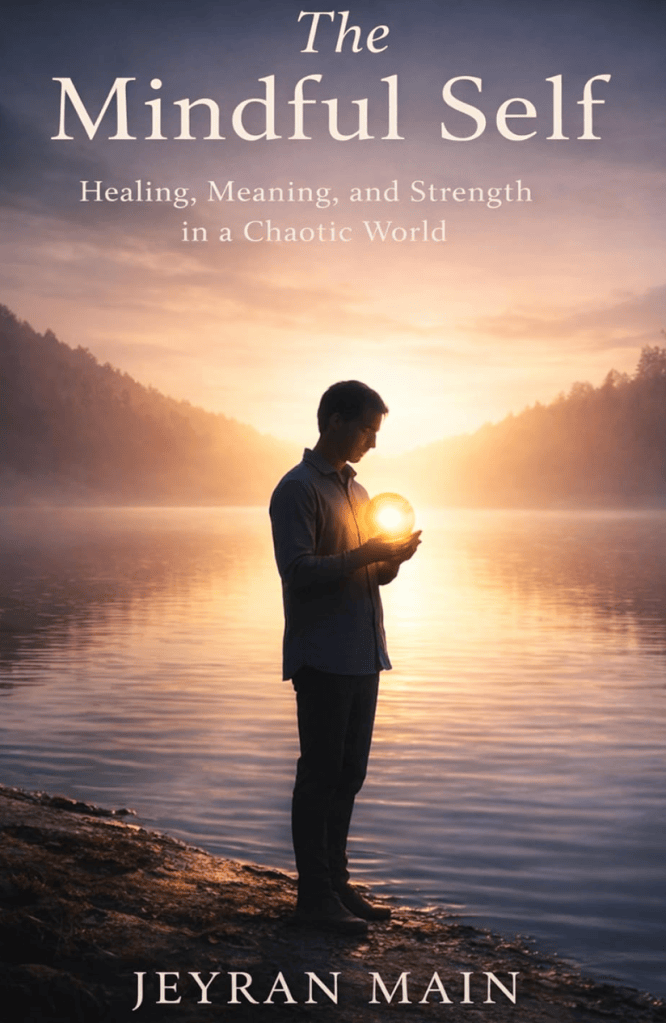
This isn’t a book about pretending life is simple. It’s about learning how to meet its complexity with greater awareness, perspective, and intention.
I wrote The Mindful Self for anyone who has ever felt overwhelmed by the noise of modern life, questioned what really gives life meaning, or simply wanted to understand themselves a little better. Think of it as an invitation to step back from the chaos—not to escape life, but to experience it more consciously.
Because sometimes the most important conversation you can have is the one you finally have with yourself.
Available now:
Buy on Amazon
If you enjoy thoughtful books about self-awareness, personal growth, meaning, and the realities of being human, I hope you’ll give The Mindful Self a read.
Thank you for supporting my work and for continuing to make room for books that encourage us to think a little deeper.
Jeyran Main
Editor-in-Chief & Founder, Review Tales
The Celestial Shot by A. J. Ullman (Book Review #2395)
A. J. Ullman’s The Celestial Shot delivers a compelling murder mystery built around an audacious crime, a determined detective, and a killer whose patience may be more dangerous than the weapon itself. The third installment in the A True North Murder Mystery series, the novel combines traditional investigative suspense with a deeper examination of violence, memory, and the long reach of the past.
Read MoreNowhere to Go by Tony DeChico
On June 8, 2026, I was in bed recovering from a five-part foot reconstruction surgery. Six weeks with my foot above my heart in bed. I couldn’t walk. I couldn’t work. I couldn’t do the thing I had done my whole life, which was keep moving.
So I picked up my phone, opened a dictation app, and started talking.
I’d never written a book. I’d spent decades making sure nobody saw too much of me. I left home at fourteen. I learned early that the safest version of me was the one I controlled. The addiction, the crime, the years of running all rested on one skill: staying hidden.
Read MoreKimberly Ferrato Author of The Ground Keeps Its Own
When Tennessee Inspired a Story I Never Expected to Write
By Kimberly Ferrato
I grew up in Southern California, so Tennessee was completely different from anything I was used to. I honestly never imagined that I would spend part of my life there, and I definitely never imagined it would inspire me to write my first novel.
When I started spending more time in Tennessee, I fell in love with the small towns, back roads, old houses, churches, and cemeteries. There is so much history everywhere you look. But the more time I spent there, the more I started thinking about the stories behind those places. I wondered how many secrets had been passed down through families and how many things had happened that people simply stopped talking about.
Read MoreThe Change: A Novel by Joseph Valerri
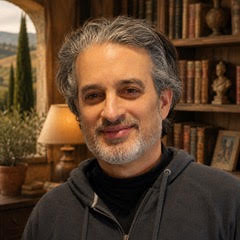
Growing up I had a singular dream of building software. For the last 30 years that’s what I did. Now I’m a science fiction writer with the release of my first novel The Change. This transition may seem unnatural, but I don’t see it as a transition but an evolution.
I became a technology entrepreneur when software was still something you installed from a floppy disk. Over the decades that followed, I built companies, developed products, raised money, hired teams, won and lost customers, and eventually cofounded a software company that was acquired by a large corporation and a few others that will soon follow suit.
Read MoreThe Novel I Started Writing in Washington — and Finished Three Decades Later by F. Michele Ramsey
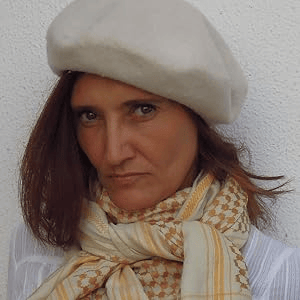
Some novels begin with a plot. Others begin with a character who refuses to leave the writer alone. Mine began with homesickness.
In 1994, I was living in Washington, D.C., with my American husband. I had spent several years in the United States, but my thoughts kept drifting back to the Middle East. I missed its sounds, its colours, its aromas, its contradictions, its history—and the extraordinary mixture of cultures, religions and nationalities that had always fascinated me.
So I began writing.
I had no idea then that the manuscript I was starting would eventually become The Double-Edged Sword. In fact, after those first attempts, I put it away. It remained shelved for more than twenty years.
Then life took an unexpected turn.
Read MoreAn Interview with for Suzanne Sunshower
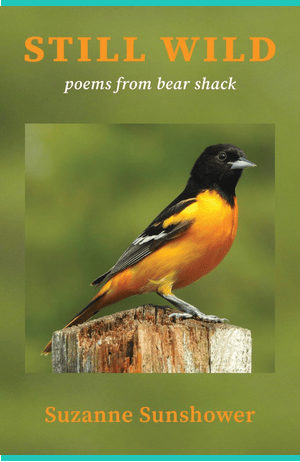
1- When did you first realize you wanted to be a writer?
As a child I loved to read and write, and received ongoing encouragement from my Dad to do both. When I was six, he hired me to help him clip research articles for his weekly editorial column. A fantastic job, it helped develop my love for periodicals and journalism. At seven, he gave me his old typewriter so I could tap out ideas for my own stories. Then he gave me books to read about writing rules and grammar, and told me that I wouldn’t know if I really wanted to be a writer until I saw my name in print. I published a couple things before my teen years and he was right, I loved seeing my name in print. By 21, I was a serious freelance writer sending out story pitches, essays and poems. Soon, submitting writing for publication became solely about finding a caring home for it – not about seeing my name.
Read MoreNavigating life’s punctuation by David Sunderland
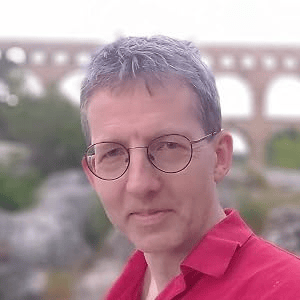
As writers, we spend a surprising amount of time thinking about endings. Where should the exposition stop? What should remain unresolved? Does a full stop really mark an ending, or simply make space for whatever comes next?
These questions have increasingly followed me beyond the page.
Over the past few years, my own life has involved considerable change: leaving a long period of work within the United Nations system, moving between countries, changing relationships and homes, and trying to work out what the next chapter might contain. All this has involved loss – of identity, certainty, place, status, routines and imagined futures – and grief.
Read MoreAn interview with Chad Faries
1—When did you first realize you wanted to be a writer?
I don’t think it was until I was in college. I liked writing and had done a little creative writing in high school, and before that I loved recording songs from the radio onto cassettes and then playing them back to transcribe the lyrics. I wore out the pause button on Prince lyrics. When I started college, I was a psych major. I took a general ed creative writing course and started reading a lot of poetry because it was taught by a poet, Denise Sweet, an Anishinaabe from the Red Cliff Reservation in Wisconsin. I recall reading a Galway Kinnell poem about a relationship experience that couldn’t have been further away from anything I had ever experienced. I don’t recall the poem, but I do recall riding my mountain bike home from class in the early-afternoon darkness of winter in Green Bay, Wisconsin. Snow started to fall, and I felt completely sated in the blur of bike and flake. I had identified with the sentiment and, more importantly, with something that was happening beyond the language of the poem. I was fascinated by that—like a magic portal to a deeper communication I’d been looking for my entire life, which was a whopping 20 years at that time. I felt really important.
2—How do you schedule your life when you’re writing?
The question is how I schedule writing while doing life. I’m in a different place now, having a child in my later years, and though I don’t physically write as much as I did in those younger years, I feel like I am composing all the time. I do a lot of bicycling, running, yoga, etc., so I have a lot of time alone, and those are my creative spaces. Then, usually in the evening, when everyone else has settled into bed, I stay up in the sublimity of minor exhaustion—wild with decaf and deep breath—and start creating. I edit in the new light of mornings, but creating is usually at night. I’ve also placed a premium on health and wellness, which allows me to sustain a level of productivity in all facets of my life that might seem insane to others. Being in recovery for nearly 38 years helps.
3—What would you say is your interesting writing quirk?
Sometimes I close my eyes and imagine the keyboard is a piano, the keys tapping out some cosmic code, and I sway like I’m playing music. I dare not stop to look back, or edit. This is usually done while listening to loud music through AirPods to manipulate my emotions and get me where I want to be—or where I need to be. It might be some Nigerian acid rock, maybe some Thai surf rock, or Algerian jazz—something that transports me to something unfamiliar or off-kilter. Hence, generally, my first drafts are an absolute mess: a mixture of automatic writing, stream of consciousness, and deliberate ideas I’ve been ruminating on during my long bike rides.
4—How did you get your book published?
I was fortunate enough to win the Yooper Poetry Prize. I had thirty years’ worth of poems that were rooted directly—and abstractly—in the Upper Peninsula of Michigan. I gathered them all together and started organizing them into sections. I worked with a fellow poet and long-time partner in crime from our early undergrad poetry daze, Jayson Iwen, to figure out what poems were beyond help, what needed work, and which ones were solid. He said there needed to be something where I could imagine I was like a drone hovering over the city, watching all the poems manifest. I landed on radio waves from our local broadcaster, WIKB—specifically the program Telephone Time, which has been airing cares and selling wares for over 60 years. Then I wrote an extensive prelude and postlude that made sense of the sections through that conceit. I liked that I was working toward a specific goal with that manuscript—rooting it in a very deliberate place. I prefer “deliberate” to the much more common “intentional,” because deliberate focuses more on process and less on the goal. Once I won the prize, the press was really excellent to work with. We had some honest edits, killed some darlings, kept some hostage, and worked out a really great design.
5—Where did you get your information or idea for your book?
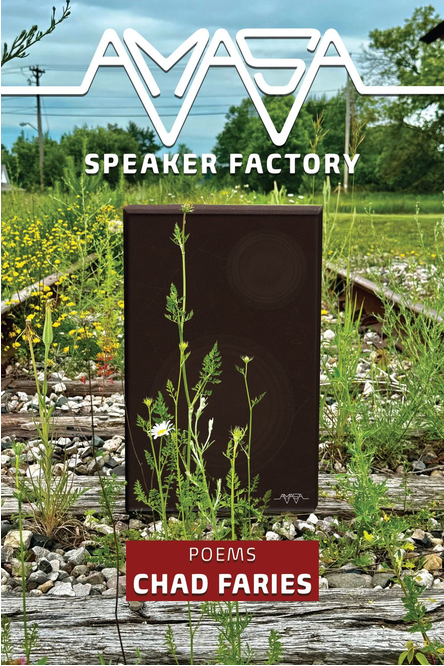
The book is rooted physically in the Upper Peninsula of Michigan, but the sentiments and intellectual pursuits are rooted in everything from Western civilization—specifically The Odyssey—to Native American storytelling and dream songs, to ’70s rock ballads. The structure is absolutely inspired by William Carlos Williams’ long poem, Paterson. I wanted it to be rooted in community. That is why I landed on the Amasa Speaker Factory. The structure is musical and framed in radio waves, and on a long walk in Mexico, when I was finishing up the manuscript, it came to me—and I knew that would be the title, even if I had to fight for it. Amasa speakers were assembled in an old school in Amasa, Michigan, from the mid-’70s to the late ’80s. The school had closed after iron mining had largely left the area and the population was dwindling. A resourceful family came up with a killer logo, took advantage of the popularity of large wooden speaker cabinets and loud rock and roll, and created an excellent, affordable speaker sold mostly regionally. A lot of the soundtrack of my youth was played through Amasa speakers. I recall the speakers set out on a big picnic table, blasting Humble Pie at TJT’s Nirvana Bar’s annual work picnic. Though the speaker factory is long gone, that logo has become a symbol of community pride and can be seen on all kinds of apparel—and tattooed on all kinds of body parts. I know, because my aunt is the local tattooist.
6—What do you like to do when you’re not writing?
I do a lot of advanced yoga. I like the challenge of doing inversions and continuing to push my body to the limits of its capacity. Since I’ve been clean and sober for so long, I’d be lying if I said I wasn’t looking for highs. That breathwork and exhaustion I talked about earlier bring me to the place I like to create from. I travel a lot in and out of the country to off-the-beaten-path places to trail run, mountain bike, kayak, and motorcycle deep into places others don’t go. On a good day, I can manage all four—snaking up Going-to-the-Sun Road in Glacier National Park with my VW Touareg topped with a kayak and a Trek, with a Honda CRF250 in tow. I read somewhere that most people who visit national parks rarely go beyond a mile in on any trail. And a good dual-sport motorcycle can pretty much get you anywhere in the world. I’ve ridden motorcycles alone all over the tiny villages of Thailand, Cambodia, Vietnam, Costa Rica, Colombia, Jamaica, the Dominican Republic, New Zealand, and on and on. It’s all food for the imagination—and for contemplating our existence. All the while, I’m feeding my mind with a mix of silence, podcasts, and killer soundtracks. And now, it’s all the better because I’ve got my little boy on the gas tank, bobbing down the cobblestone roads of his mother’s magic pueblo in Tepoztlán, Mexico.
7—What was one of the most surprising things you learned in creating your book?
I learned a good bit about the history of Iron County, especially mining. For example, the county is full of heritage farms that had been in families for over 100 years, and I never really questioned why Iron County, specifically, had all those farms. I learned that after the Panic of 1893, the mines closed and the county quickly pivoted to farming, since a lot of the land had already been cleared from mining and the timber industry. Most of the farms are now just rolling hayfields spotted with boulders pushed up by frost and cast to the perimeters, creating ancient stone fences demarcating the tame and the wild. County Road 424 is full of them. Homer Location, too. And Iron Lake Road. When you live in Iron County—even though the last mine shut down in 1978—the old headframes, outbuildings, and abandoned pits created from the caving grounds still litter the forests. They have a classic beauty now that the white birches and scrub brush are taking back what was once theirs. The structures seem ancient, but the reality is that the people who worked in those mines are still around, though they are dwindling. The Iron County Historical Society is doing a fantastic job of collecting stories and saving that legacy with really meager resources. Though many of my poems break from these narratives and transcend to loftier, more lyrical spaces, they grow out of the landscape.
8—Is there anything you would like to confess about as an author?
Like I said above, I embrace self-induced sloppiness and let intuition and chance win—sort of like Keats’s Negative Capability: don’t be afraid to exist in the unknown. Also, I simultaneously think I am completely inferior to my peers while being confused about why I don’t command more accolades. I’ve also started to become concerned about something I found very frivolous prior to becoming a father: legacy. It feels like a very classical, powerful pull. Does he have standing? Will he endure? I think it has helped me understand literature more. I recently read Emily Wilson’s translation of The Odyssey, and I surely read it differently as a father. Telemachus is so much more important to Odysseus than a simple string of adventures—or even a crown. These are all confessions that likely make their way into the creases of my poems and prose.
9—As a child, what did you want to do when you grew up?
I always, always, always wanted to be an astronomer from a very young age. I think I still do. I have really fond memories of being in the freezing cold in the depths of winter, looking at the Horsehead Nebula with my red Astroscan 2001 telescope in my lap, my breath crystallizing off into the same cosmos. I still have that telescope. I was a PBS Cosmos kid, and my high school in Marquette happened to have a planetarium. When I was in grade school in Iron River, we would take field trips to Marquette to see the planetarium, and I was fascinated. Little did I know that just eight years later, I would be taking an astronomy class in that same planetarium and attending that high school. I took physics, and it didn’t really land with me. I more so liked the romance of observational astronomy. During my senior year of high school, when many of the other students were looking for the next keg party, I was already sober—having date nights on the shores of Lake Superior under the Milky Way, trying to impress with my knowledge of constellations.
10—How do you process and deal with negative book reviews?
I don’t see a lot of negative long-format reviews these days, unless they’re directed at an author who seems to be deemed large enough to absorb such a lambast. Now, I have had some pretty harsh comments on social media, and I think they just generate more interest. Usually, some anonymous, thoughtful, and perceptive reader weighs in on the comment, and some really interesting critical discussion—or worthless drivel—ensues. Both provide that little devious shot of dopamine, and I’m reminded that, even after 38 years, my name is Chad, and I am an alcoholic and an addict. It works when you work it.
Author Bio
Amasa Speaker Factory wanders Michigan’s Upper Peninsula with a mining helmet, a pickaxe, and a dizzying soundtrack.
Chad Faries sifts through abandoned mines, family history, and the quiet damage of loving Iron County, Michigan–a place that keeps trying to break him. His poetry mines the U.P.’s economic decline, stubborn resilience, and awkward small-town rituals, balancing bleak humor with bruised affection. Both a personal autopsy and a regional love letter, Faries proves that identity, like iron, is forged under pressure and usually leaves a mess behind.
“Amasa Speaker Factory is a brilliant Book, a literature of roller rinks and huffy bikes and homegrown weed. Chad Faries explores a far-northern Midwest where wilderness has been decades reclaiming mine ruins, radio waves reach through decades as your sweet, tired town ‘calls you home with a radio dial, ‘ through speakers from those same years with voices that will grow with long grass between railroad ties.” — Jonathan Johnson, author of Pine
“Brilliant and beguiling; this book is magnetic as the Yooper iron that binds it. As a U.P. rock opera, Amasa Speaker Factory is a tantalizing mindmeld memory–divine, devilish, hardscrabble, tumultuous reckoned life–pierced with the cold flames of youthful gains shredding loss. The heart skips less beats when we up and lose ourselves.” — Alison Adelle Hdge Coke, author of Look at This Blue
Published March 13, 2026 by Modern History Press.
ASIN : B0GSH3NGSV
ISBN: 979-8-89656-085-2
Bio: (no headshot)
CHAD FARIES is the author of two poetry collections, The Border Will Be Soon and The Book of Knowledge and the memoir Drive Me Out of My Mind. He divides his time between Iron River, Michigan, and Thunderbolt, Georgia.Amazon Link: https://amzn.to/3SxPLaB
Bookshop link: https://bookshop.org/p/books/amasa-speaker-factory-poems-chad-faries/031a25ec8cfdbf50?ean=9798896560852&bkshp-astro=t
GoodReads: https://www.goodreads.com/book/show/249265048-amasa-speaker-factory