
Review Tales
Trusted Reviews and Author Features Since 2016
THE LEGENDARY MO SETO by A.Y. Chan (Book Review #1894)
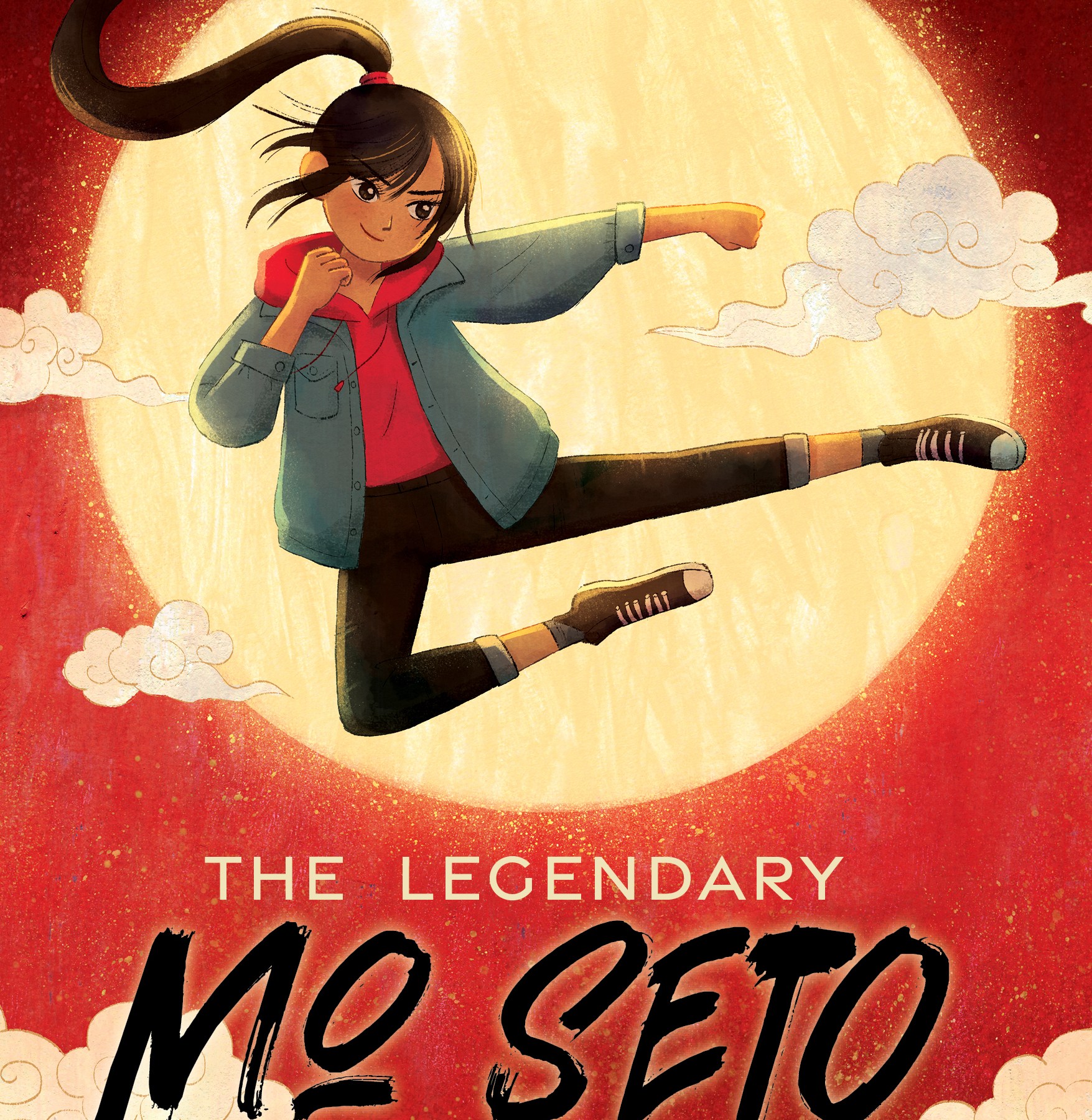
“The Legendary Mo Seto” by A.Y. Chan is a whirlwind adventure that seamlessly blends martial arts mastery with a heartwarming tale of self-discovery and familial bonds. Set against the backdrop of a fast-paced taekwondo world, this debut novel captures the essence of determination, friendship, and the power of embracing one’s uniqueness.
Read MoreA Box Full of Darkness by Anushka Shiell (Book Review #1893)

‘In A Box Full of Darkness,’ Anushka Shiell masterfully weaves a compelling narrative that spans nearly two decades, following the life of Tessa Halifax from her teenage years to her role in the political arena. This contemporary fiction and political drama is a deeply personal story of resilience, healing, and unwavering dedication.
Read MoreUnusual outcomes of divorce By Lita Marson (Book Review #1892)

Lita Marson’s “Unusual Outcomes of Divorce” presents a captivating tale that merges the mundane with the extraordinary. Set in an alternate 2024, where the world is devoid of COVID-19 and military conflicts, Marson crafts an atmosphere of support and mutual assistance that starkly contrasts with the turmoil familiar to us.
Read MoreFaraway Tables by Eric D. Goodman (Book Review #1943)

*Faraway Tables* by Eric D. Goodman is a captivating poetry collection that beautifully bridges the grand and the everyday. Written largely during the COVID pandemic, the poems are rich with reflection, exploring the personal and geopolitical shifts that have shaped the human experience in recent years. Goodman’s writing is marked by a deep sensitivity to life’s transitions, especially in a world reshaped by isolation and rapid technological change.
Read MoreInterviewing Bigfoot


I’m afraid my colleague Bigfoot is extremely shy, so he’s agreed for me, as his, er, ‘agent’, to tackle this interview. Not to say he wasn’t tickled to get the offer and to talk about his new novel—‘The Projectionist’!
Read MoreMurder in Mennefer by A.L. Sirois (Book Review #1890)
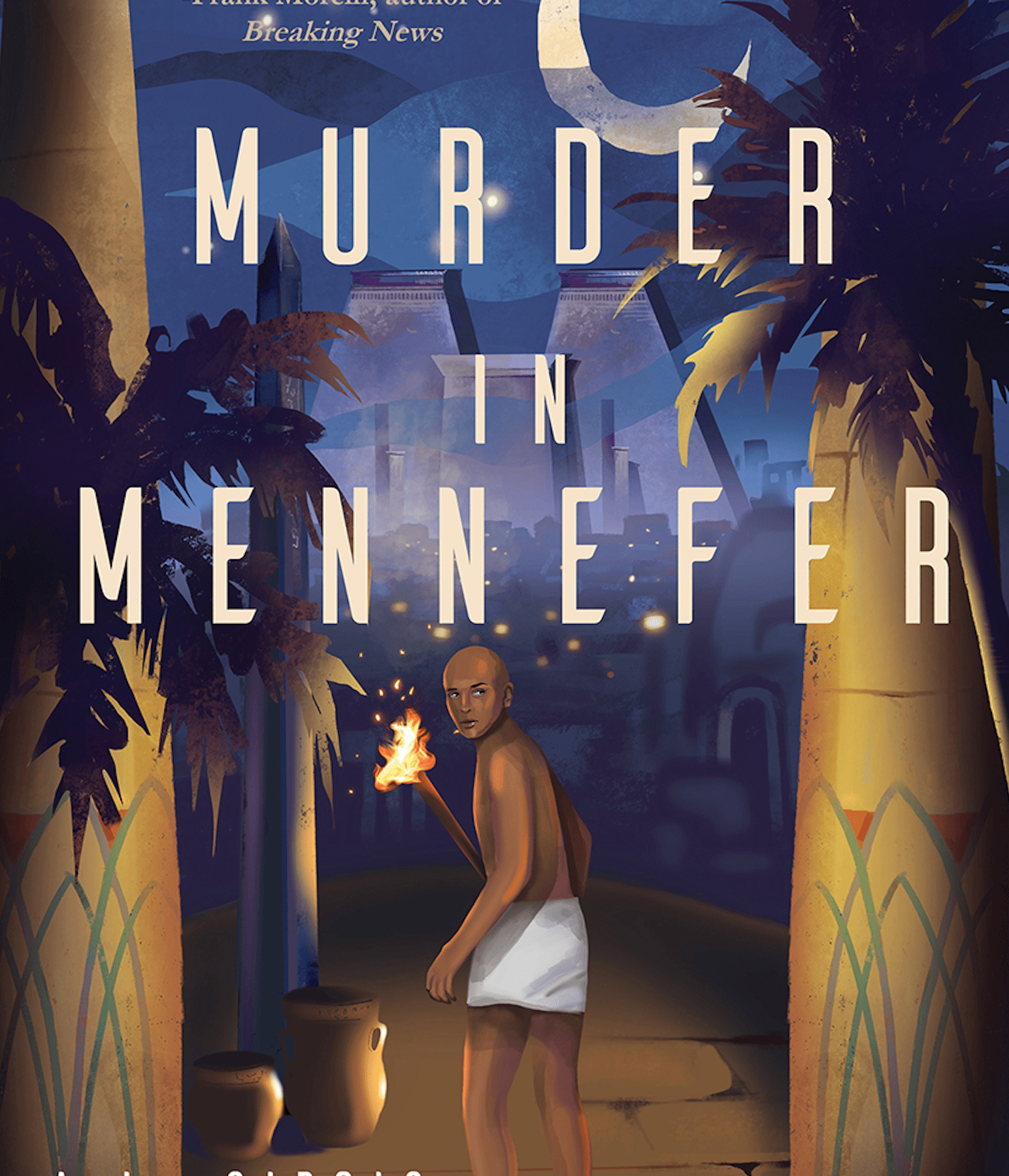
Set against the evocative backdrop of ancient Egypt, “Murder in Mennefer” by A.L. Sirois is a gripping novel that weaves a complex tapestry of murder, mystery, and political machinations. The story is centered around the young and resilient Imhotep, who, after the tragic and mysterious death of his architect father, Kaneferw, is thrust into a perilous situation filled with deceit and danger.
Read MoreI’m Not Dead…Yet: How I Turned My Misfortunes Into Strengths by Dr. Joshua Caraballo (Book Review #1889)

Dr. Joshua Caraballo’s memoir, “I’m Not Dead…Yet: How I Turned My Misfortunes Into Strengths,” offers a profound exploration of adversity, resilience, and the journey towards self-acceptance. It’s a story woven with the threads of a challenging childhood, societal expectations, and personal growth that transcends the boundaries of a typical survival tale.
Read MoreLyrical Revelations by Thomas Leslie McRae (Book Review #1889)

“Lyrical Revelations” by Thomas Leslie McRae is a compelling collection of poems that delves deep into the realms of love, civil rights, religion, and societal observations. Through his poignant verse, McRae invites readers on a profound journey that explores the human condition and the complexities of life with raw honesty and emotional intensity.
Read MoreThe Pond of Reflection by Catherine Ann Russell (Book Review #1955)

*The Pond of Reflection* by Catherine Ann Russell is an enchanting children’s story that explores themes of self-discovery, inner beauty, and friendship. Set in a kingdom without mirrors, it follows the journey of Princess Journee, a young mouse with a yearning to understand herself in a deeper way. In a world where reflection and appearance are not prioritized, Journee feels an irresistible pull to see her own reflection—a desire that leads her on an unforgettable quest.
As she approaches her coming-of-age birthday, Journee asks her father, the wise and thoughtful Great Mouse King, for a mirror. However, he explains that there are no mirrors in the kingdom, having made a conscious choice to cultivate self-awareness and inner character over outer appearance. This rule has fostered a culture where the kingdom’s inhabitants focus on knowing themselves from within rather than being concerned with their external appearances. Yet, Journee is different—she feels that perhaps understanding her reflection could help her understand who she truly is. Rather than discourage her, her father sees this as an opportunity for personal growth and gives her permission to embark on a quest to discover herself. He even entrusts her with his own mighty steed, Mr. Steed, a loyal horse who will guide and protect her on her journey.
Along her path, Journee encounters two unlikely allies: Mr. Toad and Mr. Owl. Though vastly different in their personalities, the trio forms a close bond as they travel together in search of the legendary Pond of Reflection—a mystical body of water rumored to reveal one’s true heart. Through a series of trials and adventures, the characters each contribute their unique gifts, learning valuable lessons about themselves and one another. This journey is not just a physical quest but a symbolic exploration of identity, growth, and friendship.
One of the most charming elements of *The Pond of Reflection* is the character development that unfolds during the journey. Journee, Mr. Toad, and Mr. Owl each have their own strengths and flaws, yet they find harmony through their teamwork and shared purpose. Despite being the daughter of the Great Mouse King, Journee humbly chooses not to disclose her royal status to her companions. Instead, she learns to appreciate her worth beyond her title, discovering that her courage and kindness define her more than any crown could. Mr. Toad and Mr. Owl, with their distinct personalities, bring humor and wisdom to the journey, reminding readers of the value of embracing one’s unique qualities and finding friendship in unlikely places.
When the trio finally reaches the Pond of Reflection, they each take a moment to gaze into its mystical waters. What they see is more than their physical reflections—it’s an image of their hearts, shaped by their character, actions, and friendships. This scene is a beautiful metaphor for self-awareness, suggesting that true understanding comes not from physical appearance but from looking inward and recognizing one’s strengths, values, and intentions.
Upon returning to the kingdom, Journee excitedly recounts her adventures to her father, who reveals that he, too, once went on a similar journey in his youth. His wisdom in guiding Journee is grounded in his own experiences and the profound insights he gained on his own path. In recognition of her bravery and growth, he crowns Journee with a special jewel, symbolizing the inner treasure she has discovered. This jewel, earned through her courage and willingness to look within, serves as a reminder of her journey and the strength she now carries.
Russell’s storytelling is heartfelt, weaving gentle life lessons into an engaging narrative that will resonate with readers of all ages. The story beautifully illustrates the concept that true worth is found within and that self-knowledge is a treasure that can only be discovered through introspection and experience. For young readers, *The Pond of Reflection* is a gentle yet profound introduction to concepts of self-identity, resilience, and friendship. The book encourages readers to seek out their own “pond of reflection,” teaching them that the answers they seek are often found within.
The final celebration in the kingdom, with Journee’s new friends welcomed as residents of the palace, brings a joyful and satisfying conclusion to the story. It reinforces the idea of inclusivity and acceptance, showing that the bonds formed through shared struggles and mutual respect are as valuable as family ties.
In summary, *The Pond of Reflection* is a timeless tale that captures the spirit of adventure and the quest for self-discovery. Through the character of Princess Journee, young readers learn the importance of looking beyond appearances and valuing inner character. Catherine Ann Russell’s book is a delightful addition to any child’s bookshelf, offering wisdom, adventure, and a memorable journey that leaves a lasting impression. It’s a story that encourages children to explore their identities, embrace their uniqueness, and understand that true beauty shines from within.
Written Jeyran Main


