
Review Tales
Trusted Reviews and Author Features Since 2016
Grady Whill and the Templeton Codex A Superhero High School Adventure by Carole P. Roman (Book Review #1417)

‘Grady Whill and the Templeton Codex’ is a Young adult fantasy story. The teenage superhero story begins with a secret academy recruiting only kids worthy of having the powers to be the best.
Read MoreWAS PLATO CORRECT IN CLAIMING DEMOCRACIES DEVOLE INTO TYRANNIES? by Thomas J. Yeggy
Why devote five years of your life to researching historical facts and theories on what has caused human behavior that results in war? Because the next major war will be much different than even WWII, which resulted in over eighty million deaths over a six-year span. Even if only a few hundred understand the why of war in human history from reading, the goal will have been reached.
Read MoreAn Interview with Matejs Kalns
1-When did you first realize you wanted to be a writer?
Probably very late on, I’ve always written stories from a very young age, scribbled little ideas and scenes. I didn’t fully commit to writing a novel until I was in my late twenties. It was a very nerve-wracking experience, but my debut book received a lot of positive feedback, so it’s been very encouraging and likely gave me the confidence to keep writing more.
Read MoreHello Spring! The 6th Magazine Edition is out!

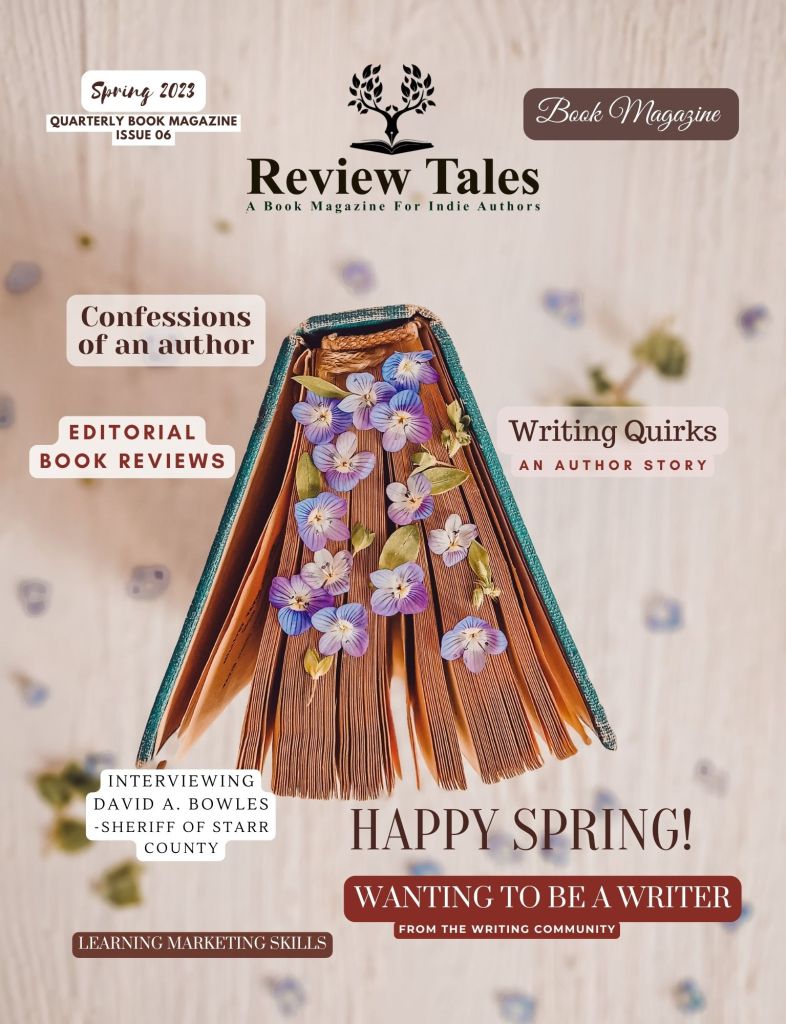
Review Tales Magazine – The 6th Spring Edition is out! Please support your writing community by purchasing a copy today.
Review Tales Magazine
Spring Edition 6
We welcome Spring 2023 with open arms. The 6th edition of this magazine is filled with many delightful and insightful submissions. Mark Kinslow shares how his book was accidentally created without him ever thinking of becoming an author. Chris Tomasini confesses how liberating the writing experience has been.
We have interviewed some esteemed authors with tremendous potential and, with that, understand what it takes to be a writer. Character development, writer’s block, writing quirks, and everything that matters in this industry are discussed in detail.
Above all, I am incredibly proud and delighted to see the support and togetherness this magazine has caused. What exists here and what we have accomplished is a beautiful team effort of those passionate and caring to keep such a platform alive.
I thank you all, and keep writing!

Founder & Editor-in-chief
Review Tales Magazine – Publishing & Editing Services
In Defense of Damsels in Distress by Kathryn Troy

Let me start by saying that Xena, Warrior Princess is my hero. She’s a badass, kick-ass heroine, and almost everything I do is in some way inspired by her.
Read MoreMother of Valor by Gary Corbin (Book Review #1416)
‘Mother of Valor’ is a crime thriller filled with much action and adventure. The story mostly revolves around Valorie Dawes, a policewoman, her family, her lover, Gil, and everything that has happened before in her life, shaping who she is now.
Read MoreMarriage, Malibu & Coffee by Bridget Straub (Book Review #1415)

‘Marriage, Malibu & Coffee’ is a fictional tale about Lori, her life, her ups and downs, and everything in between. She is a lively person who happens to have it hard with a failed marriage, motherhood, and finding herself.
Read More“What were you thinking?” K. E. Karl
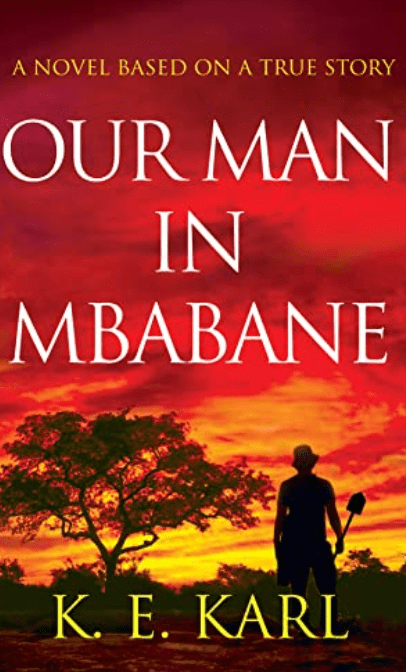
I am often asked this when I tell people I smuggled munitions into South Africa for the African National Congress—Nelson Mandela’s organization—in the 1970s and early 1980s.
My recently published book, Our Man in Mbabane: A Novel Based on a True Story, is about my fictionalized self, Frank George, and his exploits in Southern Africa. Frank is working as an economist in London when an ANC representative recruits him to go to Swaziland, get a job, buy a car, and run armaments into South Africa to support the fight against apartheid. As an ex-pat in Swaziland, Frank enjoys a pleasant lifestyle, has two romances, and explores the country and region with his friends. However, he regularly encounters the dark side of apartheid—the racist views of white South Africans and the treatment of Blacks as third-class citizens in their own country. On his ANC missions, Frank often confronts hair-raising situations, which he deals with as best he can, given that he has had no training as an undercover agent.
I wrote my novel as a low-key thriller, with romantic interludes and humorous encounters with friends. It is the story of an idealistic young American accepting a dangerous assignment because of his strong political views. Over time, however, he comes to doubt his own convictions and begins to lose his sense of self-identity. So, it is also a tale of a young person’s journey in an exciting but challenging environment.
If you’d like to read and review it, it is on NetGalley until the end of May.
The novel includes extensively researched historical events and key anti-apartheid figures in South Africa and Swaziland in the late 1970s. In particular, Ruth First and Joe Slovo appear as characters in the book. Some of First’s letters to me about a job in Mozambique are on my website.
So, why did I go to Swaziland (now Eswatini) and get a job in Mbabane (uhm-buh-baa-nay)? The key reason was that I was a devoted leftist. It was the 1970s, and the Vietnam War had recently ended, energizing an entire generation of young people. At the University of Oregon, I took part in anti-war demonstrations and was active in supporting the United Farm Workers, which was trying to unionize farm workers. After studying at the London School of Economics, I got a job in London, a great city with fabulous entertainment and cultural heritage. I worked, enjoyed the city’s delights, and also helped an organization called the Chile Solidarity Campaign, a group devoted to putting pressure on the dictator Augusto Pinochet, who had overthrown a democratically elected government in Chile, ending civilian rule. My CSC work brought me to the attention of the ANC recruiter in London.
Two books also influenced me: Hemingway’s For Whom the Bell Tolls and Orwell’s Homage to Catalonia. Hemingway’s book is about a young American and a dynamiter, Robert Jordan, who volunteers to support the Republicans in their fight against the fascist Nationalists in the Spanish Civil War. Orwell volunteered to fight in that war on the front line in Spain, and Homage is his memoir of that experience. Great writing can inspire, and these two books motivated me. I didn’t dwell on my decision to go to Swaziland; my recruiter gave me a privileged opportunity to fight against a brutally oppressive regime, apartheid South Africa. It was 1977, and in the prior year, the apartheid regime had massacred many young people in the Soweto uprising. The South African Police had simply opened fire on protesting students, killing dozens. I was a committed leftist; of course, I would go.
I had two primary motivations for writing my book. First, it is a reminder of the ugliness of apartheid and provides a concise history of South Africa. Particularly in North America, there is not much remembrance of apartheid-era South Africa. This is important because we need to learn from history; unfortunately, there are still efforts to disenfranchise people of colour in many places in the world, including the US. Too many people look at the world through a prism of “Us” and “Them” rather than seeing us all as human beings.
Second, I hope the book can inspire young people to consider spending at least part of their life dedicated to helping others who are less advantaged. This might be, for example, in the Peace Corps, the Canada Service Corps, or any organization helping poor people. So, it can be a short-term commitment if you prefer. I believe it is important to make a conscious decision about your life path.
After Swaziland, I chose a more conventional lifestyle with two marriages, one daughter from each, and an occupation. Other former recruits continued working in South Africa for a more democratic and equal society or to support various social movements in their home country. Ken Keable edited a book about many of the volunteers, London Recruits, and my short memoir, the story of what I really did in Swaziland, appears on the book’s website.
Well, some serious stuff, but the book is entertaining! That was my biggest challenge as a first-time novelist—to make the book as engaging as possible. I leave you with two quotes that I hope will entice you to read them.
“The fact that the novel is based on the author’s own experiences supporting the ANC in the 1970s and 1980s makes the story worth reading; there are also brief, but effective scenes of suspense scattered liberally throughout…”—Kirkus Reviews
“The dialogue and characterization both are sharp, and Karl’s smooth, unfussy prose keeps the story flowing smoothly as he illuminates a fresh milieu, avoiding the stereotypes or ginned-up suspense that often compromise stories of white Americans in Africa. Lovers of romance and spy novels with a real-world edge will enjoy this story, which is as light in its telling as it is weighty in its concerns.”—BookLife
Written by K. E. Karl
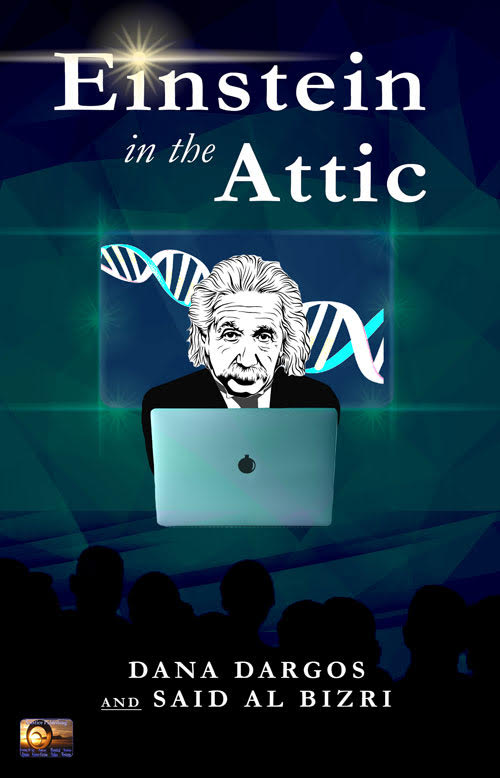
Interview with Dana Dargos and Said Al Bizri

1-When did you first realize you wanted to be a writer?
My writing journey began in kindergarten, where I’d create crayon-scribbled, staple-ridden stories (drawing inspiration from diverse entertainment media, such as Bluth’s “The Land Before Time” and the videogame “Jak and Daxter”), and proudly present them to the class. But although I enjoyed writing, I viewed it as a hobby, as I also aspired to be a ballerina and a doctor. However, during high school, I discovered a profound appreciation for writing upon reading Charlotte Bronte’s “Jane Eyre.” Her ability to weave words in a precise, skilful, and poignant manner that evoked emotions and empathy in the reader astounded me. Her writing captured the essence of the human experience, making both the narrator and reader feel seen and understood. This realization sparked my ambition to become an author, although I also harboured aspirations of becoming an investigative journalist or a criminal law lawyer (it wasn’t a matter of indecision, but rather a lot of ambition). As time passed, however, my goal of becoming a successful author solidified, and I have been working towards that career ever since.
2-How do you schedule your life when you’re writing?
I’m still trying to figure that out, to be honest. It’s not easy. As soon as my daytime job ends, I dive straight into my writing life without delay, so I almost have zero free time. Because of this, there are admittedly times when I need a break and force myself to take one or else I’ll get burned out. The truth is balancing both a daytime job with an author’s life is exhausting. Even after you’re done publishing a novel, the work never stops. After releasing a book, it’s marketing, seeking new ways to build your social media presence, etc. Don’t get me wrong, I’m grateful for this privilege and opportunity to grow as an author. But being a writer is much more time-consuming than anyone can imagine. That’s why reminding myself to take breaks as needed is important—to take care of me. During those breaks, I’ll often schedule my life and wrap it around my writing.
3-What would you say is your interesting writing quirk?
Not sure if it’s a quirk, but I’ve been told that people really enjoy my ability to write raw writing. Whether it’s comedic or dramatic, I apparently do a good job of writing both honestly.
4-How did you get your book published?
I pitched to about 300 agents and publishing companies before finally getting signed by Solstice Publishing. That patience and persistence were worth it, though. Since the time of its publication, “Einstein in the Attic” has won the Independent Press Award, Literary Titan Award, Firebird Book Award, Maincrest Media Book Award, Best Book Award Finalist by The American Book Fest, and THREE honourable mentions at the prestigious New York, Hollywood, and San Francisco Book Festivals, so far and counting.
5-Where did you get your information or idea for your book?
Said and I was having a conversation one time about six years ago about spirituality and faith and how each of us struggled with it before the time we had the conversation. By then, we each had our own beliefs. However, upon having that conversation, we realised that many people have had that same internal struggle with trying to understand whether there was an intelligent designer. And with all of the problems going on in the world at the time (and even more now), we figured that a lot of people would find the topic relatable–especially when it came to wondering why there was so much evil and negativity in the world if a god did exist–and how science could tackle that theme if it took a fair stance. From there, we each wondered aloud how the world would change if one were to zap some of the most intelligent minds from the past and ask them those questions–how would the philosophers respond to those questions (with logic and evidence), and how would their opinions influence the world? From there, Said and I kept adding more and more to the idea until it became a storyline.
6-What do you like to do when you’re not writing?
– I enjoy reading, art, music, dancing (badly), exploring new events, places, and things, shopping, travelling, gaming, content creating, hiking, swimming (and the beach), street hockey, blogging, appreciating a unique and cleverly crafted mocktail, fashion, film, (occasionally) cosplaying, self-care, (via activities, such as spas, facials, treating myself, etc.), journalism, museums, horse-riding, photography, entrepreneurs, and spending time with my family and loved ones, and obviously with my bunny, Fufi, and trusty speed Pitbull-Rottweiler mix, Rocky. Don’t worry; he’s a cute, silly pup, haha.
7-What was one of the most surprising things you learned in creating your book?
A lot of people you know won’t support you like the ones you don’t know, and many people you wouldn’t expect to support/be proud of you are.
8-Is there anything you would like to confess about as an author?
It’s much harder than it looks. I know my social media presence has made my author’s life look easy, fun, and glamorous, but that’s just a small peek of it. Being an author, building your brand, and working towards success is a marathon of diligence. The hard work behind such a lifestyle will never be accurately portrayed by social media, no matter how hard you try to explain it. All I can say is that I did not grow up privileged, none of my success was ever handed to me, and all of my accomplishments resulted from working my way from the bottom up.
9-As a child, what did you want to do when you grew up?
I wanted to be a ballerina and doctor (although I loved writing). Look how that ended up, haha.
10-How do you process and deal with negative book reviews?
I’m fairly confident in my work and know its strengths and weaknesses. If someone gives me constructive feedback, I’ll listen, analyze it honestly, and think about how to improve in my next book. However, if it’s something like a matter of taste (that I can’t change) or an uninformed opinion (such as calling the main character ‘whiny’ without understanding how his trauma and mental health have contributed to that), I just shrug and move on with my life. I know what “Einstein in the Attic” is and isn’t and what Said and I intended with it. I don’t let negative reviews bring me down because A: I focus on the positive reviews and the readers whose lives I’ve impacted, and B: There are more important things in the world to worry about, such as the devastating earthquake in Turkey and the humanitarian crisis in Lebanon.
To provide some context on the humanitarian crisis in Lebanon, the country experienced the third worst non-nuclear explosion in history as a result of government mismanagement and corruption; the inflation rate has surged to 123%, (causing the value of the Lebanese currency to plummet to an all-time low, making it nearly impossible for people to survive on their wages), more and more children cannot afford to attend school. Many families are struggling to access fuel, electricity, food, medicine, and/or water. Hospitals have even shut down due to the lack of electricity and medical supplies. Furthermore, terrorism, crime rates, armed conflicts, riots, kidnappings, and civil unrest have skyrocketed. The situation is heartbreaking, and seeing it in person is much worse.
When I see how patient, humble, and hopeful the Lebanese people remain despite the extreme instability and pain they endure, it puts my own problems into perspective. Who am I to complain about something much smaller than their problems? I’m not invalidating my experiences or saying our problems don’t matter. Rather, I find inspiration in the Lebanese people’s incredible resilience and determination to continually rebuild their lives from the ground up. It inspires me to not sweat the small stuff and carry on. I think we need more of that in the world. A review is a review. Life is more than that.


 Review Tales