
Review Tales
Trusted Reviews and Author Features Since 2016
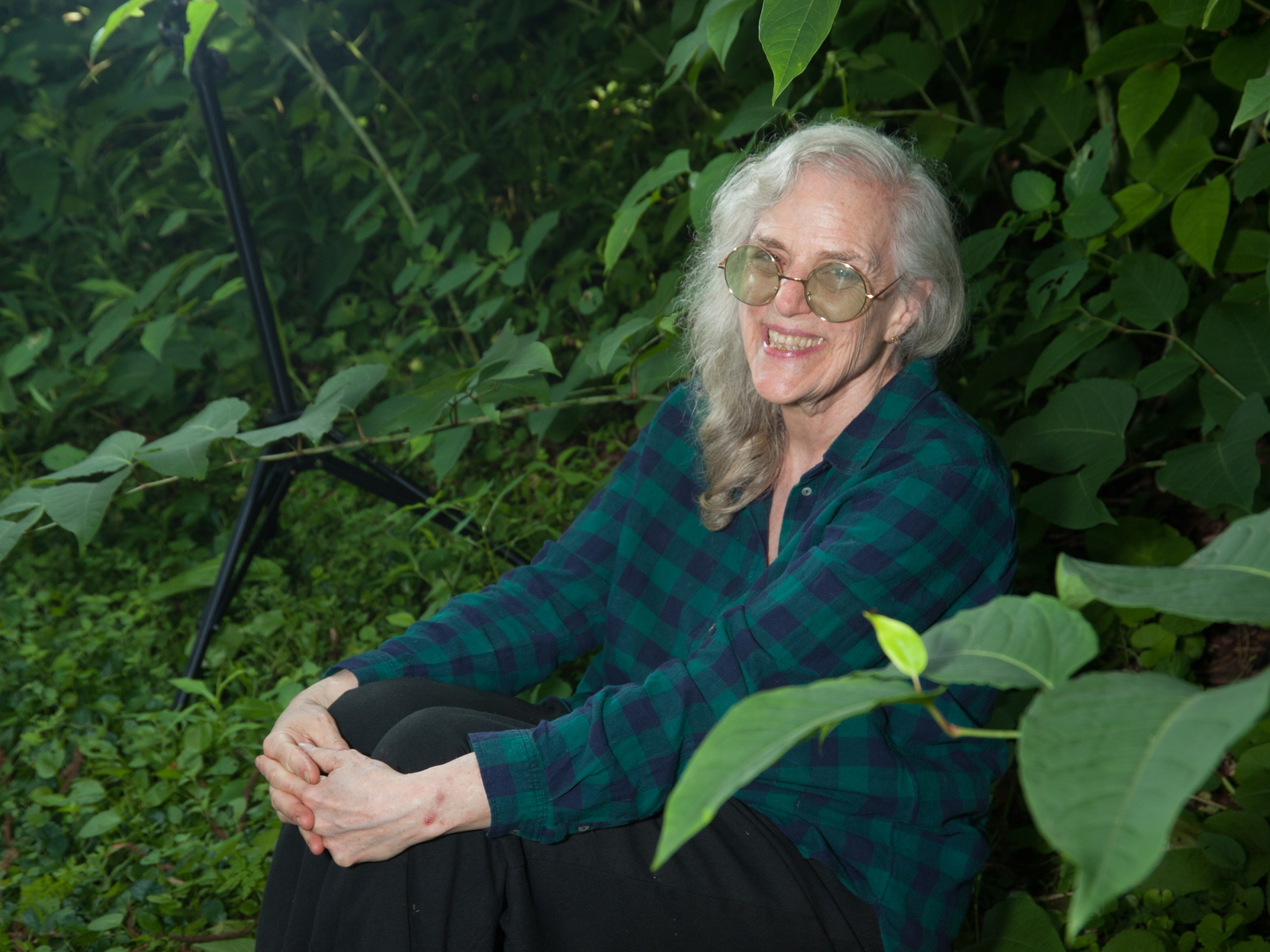
How to Fall in Love With Writing by Anique Sara Taylor
How to Fall in Love With Writing
How I Began My Writing Practice:
When going through a complicated business situation years ago, it was difficult to connect with writing, between all the office emails, calls, meetings, and letters. Even though I’m a night owl, I began to experiment with getting up very early in the morning to write before the business day began.
In the dark, liminal envelope. Silence. Black coffee. I was surprised how phrases and writing ideas began to connect. My interest was deepening. Commitment got stronger, and the work grew. A sense of fulfillment was developing more each day as I entered into the words and became inspired all over again.
How Civil Twilight (the Book) Came About:
Amidst another overwhelm, I needed a poetry project goal to hold me with a target date. Mostly, my poems had been long, but I’d been curious about what was at the heart of a poem, what could happen within a very short piece.
I explored elements to develop a form for a chapbook (manuscript of about 30 pages). Civil twilight is when Earth’s surface is neither completely light nor dark. Sun’s geometric center is 6 degrees below Earth’s horizon, and only the brightest stars can be seen. Civil twilight is often 5:30 someplace in the world, AM or PM. 5/30 was a friend’s personal number. Combining these elements began to solidify into a project.

Personal Civil Twilight Goals:
30 poems, 30 words, 5 lines each, became the outer structure, yes. But I had inner goals that were more important to me. I wanted: Lushness of language and diction in the short form. Rhythmic lines that felt expansive within the poem. A mingling of assonance and alliteration with staccato two-word accents (spondees). Strong images that shimmered. The lyric of both loss and healing. A richness of sound/meaning/purpose to intensify emotion within a long line, even in a short poem. The concept of adjusting to a world where someone who’d always been there was no longer alive. (My Father’s death.)
I wanted to name the loss of a father as a symbol of other losses. I loved weaving his ghost through the book. I got brave with the use of surprising metaphors, hoping readers would follow without explanations. I tried to include being thankful for the gifts of the natural world. The more I explored these elements, the more interested and, therefore, inspired I became. A long-term project can be a wonderful friend.
Civil Twilight was chosen as First Prize by Blue Light Press in 2022 and published by Blue Light in 2023. I’m forever thankful they chose it and published it.
Poem Excerpts:
Here are phrases I lifted from individual poems. Maybe you’ll see the tools I discuss below in them. If they call to you, look into the book. See how each one fits into its own individual, full poem:
Swim back from the sunset. Now, only
the brightest stars will ever be enough.
*
We jealously follow wildflowers across
endless fields seeking out our relentless dead.
*
…even unloved toddlers hum lullabies. Don’t
wait until your body’s compass has crumbled.
*
A cardinal plummets to the ground
like fallen fire, reinventing the darkness.
*
Eagles grasp claws swirling
endlessly downward. Can you hear the waltz?
*
Persuade…the vertebrae to grow gradually back past
all the boundaries we’d ever believed in.
*
Whirl in embroidered linens by river’s edge
as if it were yours.
*
A Little History. And What About Inspiration?
Somewhere between story and prayer, heart and song, poetry may be our oldest art. Maybe it was first used to enchant gods of the hunt or gods of weather or fire. Later, rhyme and meter allowed for longer memorizations to teach the histories of communities and their stories.
Although centuries of poetry have weathered different phases and functions, maybe no time is as exciting as now for poetry. It’s still written in formal structures—sonnet, villanelle, haiku, etc. And different genres, such as narrative, lyric, dramatic, and prose poetry. But now we have slam poetry, performance, mixed genres, almost anything you can imagine. Not the neat high school rules we were once taught.
Many believe a poem happens with a magic strike of inspiration. We love inspiration, but what if it doesn’t happen? What if we can’t count on it? If we read it the next day and wonder, what could we have been thinking? What if there were a way to get deep-inside inspiration?
Exploring Some Writing Tools:
The most basic tool is not your own story. It could include your story, but what about everything else in the universe? The smallest thought, from microscopic cells––to vast and endless galaxies, what you learned/didn’t learn in class, religious school, what your parents said. Anything you research. Anything you can remember. Anything you make up.
Things You Can Do:
- Carry a notebook (or a way to make notes) wherever you go.
- Write down what you see, hear, feel, remember. Observe. Listen.
- Gather material. A word, phrase, description, or thought.
- This is your palette.
Explore Poetry Tools:
- Diction: The essential building blocks of vibrant nouns, active verbs, and imagistic adjectives (avoid adverbs).
- Concrete nouns, with a sprinkling of conceptual nouns. (Philosophical.)
- Assonance: Repeated vowel sounds that echo between words.
- Alliteration: Repeated hard consonants that create a bass line or staccato element.
- Anaphora: Word/phrase repetitions that begin lines for emphasis or incantation.
- Imagery: Direct descriptions without explanation.
- Metaphor: When two things that don’t belong together link to unfold a surprising new meaning.
Putting It Together:
- Research subjects that interest you. Take notes. Braid that language into your work.
- Add phrases from personal journals and from your own story.
- Collage disparate fragments, lines, phrases, sentences.
- Listen for inflection, vocabulary, word sounds, intonation, and your inner rhythms.
- Arrange phrases from different sources next to each other.
- Notice how strange juxtapositions can bring a poem into a surprising place. Something you’d felt but couldn’t quite express.
We think that we think in a linear fashion. But the world often happens in a cacophony of combinations. This collaged concept of phrasing can reflect a deeper truth we couldn’t have expected, which allows the poem to come into what it needs to be.
Main Points Distilled:
If you’re the type who skips all the way to the end, here are points I hope you’ll take away:
- Don’t wait for inspiration.
- Write notes about everything around you.
- Everything is material (including, but not limited to, your own story).
- Learn tools writing can offer for a rich palette.
- Study other writers, make time to work, get out your tools, and create a project. Inspiration will show up.
- Explore as you become enchanted with the possibility of what a poem can be.
- A long-term project can be a wonderful friend.
How to Be in Training for Creativity:
What I didn’t mention:
You are the vehicle for inspiration. Health will support it to flourish.
- Eat whole foods.
- Exercise.
- Take care of yourself.
- Fall in love with writing.
About the Author:
Anique Sara Taylor’s chapbook Civil Twilight is the winner of the 2022 Blue Light Poetry Prize.
As the sun sinks 6 ̊ below the horizon at dawn or dusk, it’s 5:30am/pm someplace in the world. In thirty shimmering poems (30 words/5 lines each), Civil Twilight probes borders of risk across a landscape of thunderstorms, quill-shaped mist, falcons that soar, the hope of regeneration, and a compass to the centre. Tightly hewn poems ring with rhythm and sound and follow ghosts who relentlessly weave through a journey of grief toward ecstasy. Spinning words seek to unhinge inner wounds among sea shells and hostile mirrors, eagles and cardinals––to enter “the infinity between atoms,” hear the invisible waltz. Even the regrets. The search for an inner silhouette becomes a quest for shards of truth as she asks the simple question, “What will you take with you?”
“Taylor’s award-winning collection is mesmerizing. 30 poems, 30 words each shimmer with a refined intensity at once both taut and expansive … her emotional richness is as lyric as it is restrained.” ––Leslie T. Sharpe, Author of The Quarry Fox and Other Critters of the Wild Catskills
“Experience each poem, woven [with] great intimacy and rare musicality … Read all 30 poems aloud in sequence and feel yourself transformed.” ––Sharon Israel, Host of Planet Poet, Words in Space Radio Show and Podcast
“Civil Twilight is a stunningly crafted sequence of small poems … keenly attuned to the language of the natural world and all the mysteries that come with it.” —Sean Nevin, Author of Oblivio Gate
Anique Sara Taylor’s book Civil Twilight is Blue Light Poetry Prize 2022. Where Space Bends was published by Finishing Line Press in 2020. A Pushcart Prize nominee, her chapbooks chosen Finalist in 2023 are When Black Opalescent Birds Still Circled the Globe (Harbor Review’s Inaugural 2023 Jewish Women’s Prize); Feathered Strips of Prayer Before Morning (Minerva Rising); Cobblestone Mist (Long-listed Finalist by Harbor Editions’ Marginalia Series). Earlier Chapbook Finalists: Where Space Bends (In earlier chapbook form 2014 by both Minerva Rising & Blue Light Press.) and Under the Ice Moon (2015 Blue Light Press). She holds a Poetry MFA (Drew), Diplôme (Sorbonne, Paris), a Drawing MFA & Painting BFA (With Highest Honors / Pratt) and a Master of Divinity degree. Follow her on Facebook, X, Instagram, LinkedIn, and her blog. Sign up for her newsletter.
Add to GoodReads:

Available at Amazon and Barnes & Noble.

Discover more from Review Tales
Subscribe to get the latest posts sent to your email.
3 Comments on “How to Fall in Love With Writing by Anique Sara Taylor”
Leave a reply to sagustocox Cancel reply


 Review Tales
Pingback: Civil Twilight by Anique Taylor |
Thank you for hosting Anique.
LikeLiked by 1 person
Pingback: Civil Twilight by Anique Sara Taylor |