
Review Tales
Trusted Reviews and Author Features Since 2016
Sun Tzu’s Café by Eric Bornstein (Book Review #1865)

“Sun Tzu’s Café” by Eric Bornstein is a thrilling contemporary novel that delves into a chilling plot involving the exploitation of America’s brightest minds under the guise of an upscale café chain. In a world where marijuana is legalized, the story ingeniously intertwines the legacies of ancient Chinese military strategies with the sinister modern-day espionage tactics of the Chinese Communist Party (CCP). The novel cleverly uses synthetic hallucinogens and THC compounds as tools for espionage, echoing the infamous CIA Project MKULTRA experiments from the Cold War.
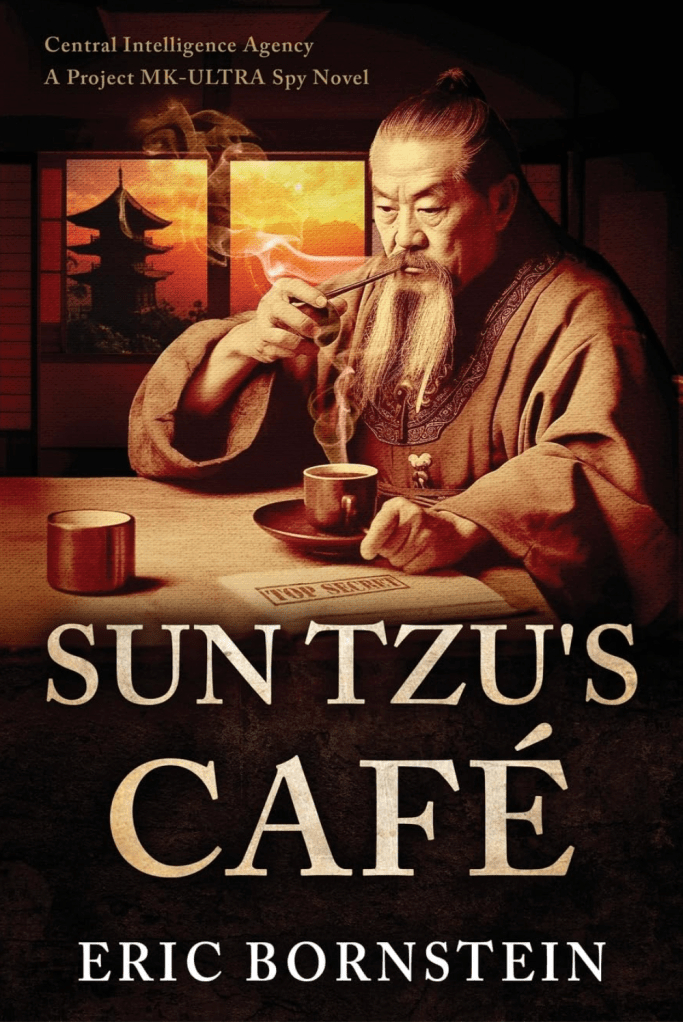
Bornstein masterfully crafts a scenario where the CCP, in collaboration with a disillusioned former CIA agent, turns American graduate students into unwitting informants. These students, deeply involved in cutting-edge research, become the targets of a nefarious scheme to extract critical technological insights. The drug-induced vulnerability of these students to suggestion mirrors the dark days of MKULTRA, creating a powerful narrative bridge between past and present threats to national security.
The plot thickens as unexpected side effects of the drugs begin to surface, leading to severe psychological episodes among the students. Enter the hero of the story, an E.R. doctor from Burlington, Vermont, whose medical expertise and curiosity draw him into the heart of this covert operation. His involvement escalates the stakes as it threatens to unveil a scandal that could lead to international terrorism charges against the CCP.
The setting of the novel in chic, seemingly benign coffee shops adds a layer of everyday horror to the story, making the readers ponder about the unseen dangers lurking in public spaces. Bornstein’s narrative is tight, fast-paced, and filled with enough espionage and political intrigue to keep the reader hooked until the last page.
However, the novel also poses significant questions about ethics, surveillance, and the extent to which governmental and foreign powers are involved in the exploitation of individual privacy. Bornstein’s use of historical and philosophical references to Sun Tzu adds depth to the narrative, enriching the reader’s understanding of strategic deception.
Overall, “Sun Tzu’s Café” is a compelling read, mixing historical espionage elements with contemporary political issues effectively. It is a cautionary tale that resonates deeply in today’s technology-driven society, making it a must-read for fans of thrillers and political dramas alike.
Written by Jeyran Main
Click here to feature your book in the Review Tales Magazine.
Discover more from Review Tales
Subscribe to get the latest posts sent to your email.


 Review Tales