
Review Tales
Trusted Reviews and Author Features Since 2016
Navigating life’s punctuation by David Sunderland


As writers, we spend a surprising amount of time thinking about endings. Where should the exposition stop? What should remain unresolved? Does a full stop really mark an ending, or simply make space for whatever comes next?
These questions have increasingly followed me beyond the page.
Over the past few years, my own life has involved considerable change: leaving a long period of work within the United Nations system, moving between countries, changing relationships and homes, and trying to work out what the next chapter might contain. All this has involved loss – of identity, certainty, place, status, routines and imagined futures – and grief.
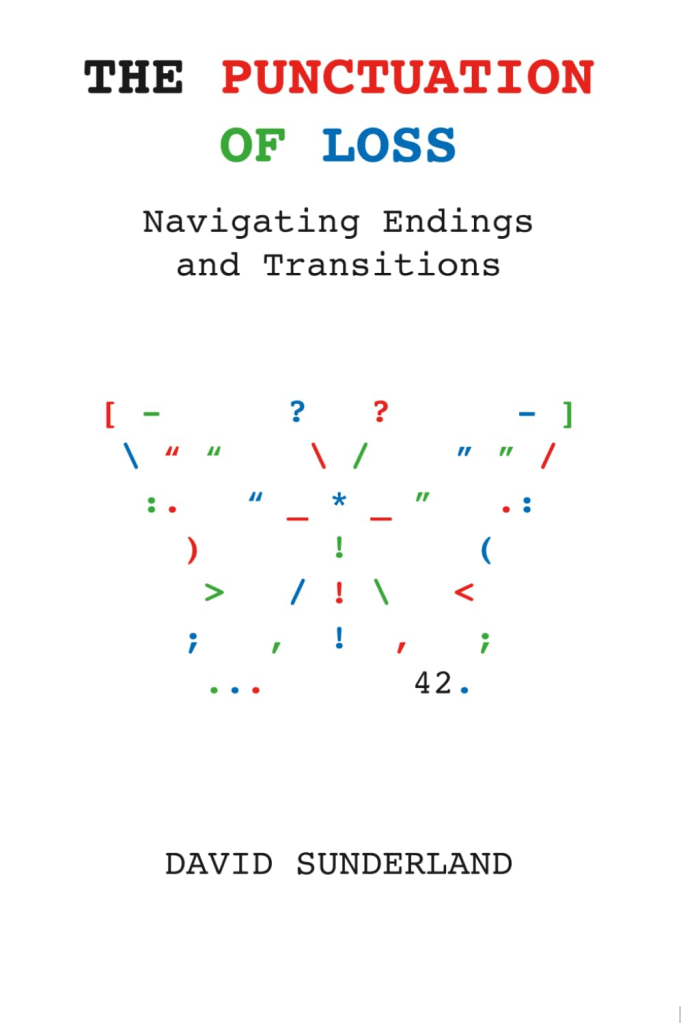
This journey helped inspire me to write The Punctuation of Loss, my recent book exploring death, grief and transition through the marks we use to structure language. A full stop can represent finality; a comma, a pause; an ellipsis, uncertainty; a semicolon, continuation after an apparent ending – and so on. I found that punctuation became a surprisingly rich vocabulary for thinking about how we navigate change.
The same thinking has grown into two branches (or perhaps from two roots). Through Plenna, the non-profit organization I founded, I have been exploring how we can become more “death literate”: better prepared practically and emotionally for our own deaths and those of people around us. In a recent paper on contraction in the United Nations, I have also begun asking whether ideas drawn from punctuation and grief can help us understand what happens when organizations themselves contract, rather than follow the pervasive paradigm of growth.
Writers have something particular to contribute through symbolism and the making of meaning on many levels. Sometimes the hardest challenge is deciding what we include and what we leave out.
Death is the ultimate full stop. But learning to live with endings may also teach us something about how to live.
Discover more from Review Tales
Subscribe to get the latest posts sent to your email.


