
Review Tales
Trusted Reviews and Author Features Since 2016
The Punctuation of Loss: Navigating Endings and Transitions by David Sunderland (Book Review #2407)

David Sunderland’s The Punctuation of Loss: Navigating Endings and Transitions takes an unexpectedly familiar concept—punctuation—and turns it into a thoughtful framework for understanding some of life’s most difficult experiences. Full stops, commas, ellipses, colons, and semicolons become more than marks on a page; they become ways of considering endings, pauses, uncertainty, continuation, and the possibility of beginning again.
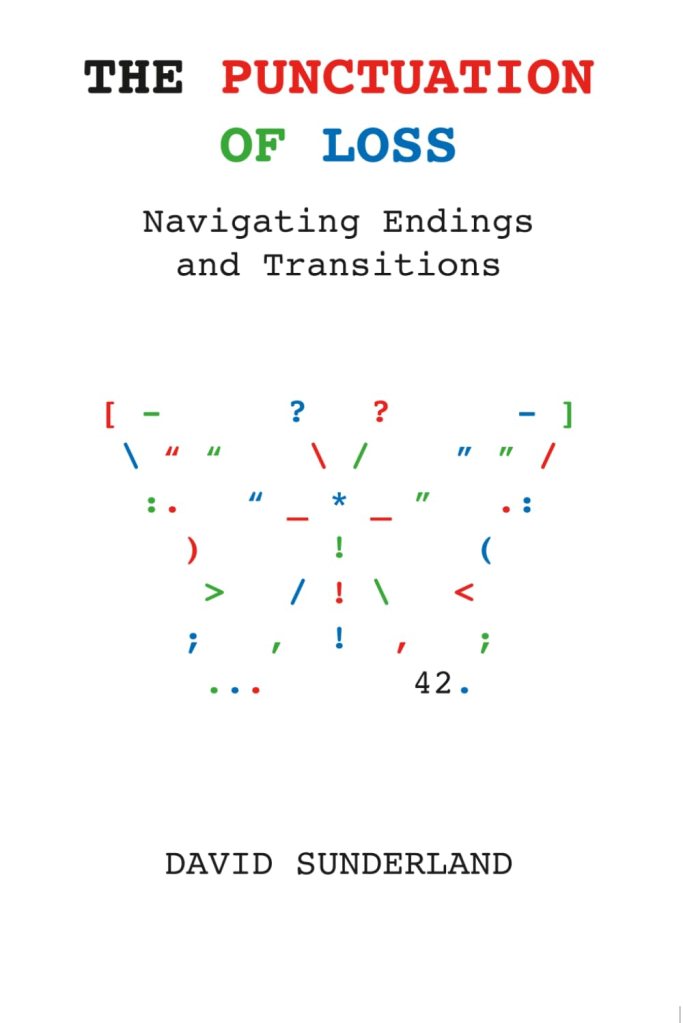
What makes Sunderland’s approach particularly compelling is that he does not treat loss as something limited to bereavement. Beginning with deeply personal experiences such as death, divorce, and illness, the book gradually expands its perspective to encompass the losses experienced by communities and societies. Environmental change, migration, ageing, institutional decline, democratic fragility, and uncertainty about global cooperation all become part of a larger conversation about how human beings respond when something familiar changes or disappears.
Rather than presenting grief as a process that can be neatly solved through a prescribed series of steps, Sunderland offers readers something more exploratory: a language through which loss can be considered. His framework encourages us to recognize that endings do not always function as absolute full stops. Sometimes they are commas, creating a pause before something continues. Sometimes they resemble ellipses, leaving uncertainty and unanswered questions. Other forms of punctuation suggest relationships between what has ended and what may follow.
The book’s strength lies in this ability to make an enormous and complicated subject approachable without reducing its complexity. Sunderland draws from literature, philosophy, psychology, medicine, cultural traditions, and lived experience, creating an interdisciplinary discussion that remains accessible to general readers. The result is less a conventional guide to grief than an invitation to reconsider the role of loss in the broader story of being human.
There is also something quietly reassuring about the book’s central metaphor. If life has its punctuation, then perhaps not every ending needs to be understood as final. Some endings create space, some demand reflection, and others connect one chapter to the next.
The Punctuation of Loss offers a distinctive perspective on grief and transition, but its reach extends beyond personal sorrow. It asks readers to think differently about change itself—and about how we might meet life’s inevitable endings with greater compassion, resilience, and understanding.
Written by Jayran Main
Discover more from Review Tales
Subscribe to get the latest posts sent to your email.


