
Review Tales
Trusted Reviews and Author Features Since 2016
The Novel I Started Writing in Washington — and Finished Three Decades Later
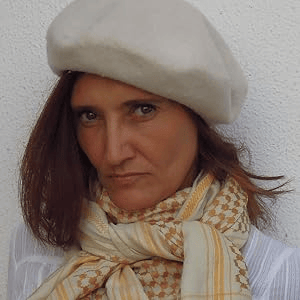
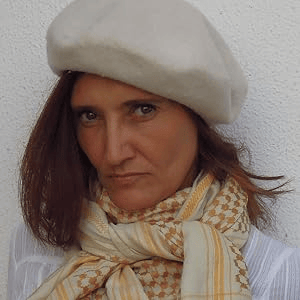
Some novels begin with a plot. Others begin with a character who refuses to leave the writer alone. Mine began with homesickness.
In 1994, I was living in Washington, D.C., with my American husband. I had spent several years in the United States, but my thoughts kept drifting back to the Middle East. I missed its sounds, its colours, its aromas, its contradictions, its history—and the extraordinary mixture of cultures, religions and nationalities that had always fascinated me.
So I began writing.
I had no idea then that the manuscript I was starting would eventually become The Double-Edged Sword. In fact, after those first attempts, I put it away. It remained shelved for more than twenty years.
Then life took an unexpected turn.

A few weeks after I began writing, my husband was offered a job in Gaza. Two months later, we were on a flight to Tel Aviv.
Suddenly, the place I had been imagining from a distance was no longer simply the setting of a story.
It was real.
At that time, my own understanding of the political situation was still incomplete. I had lived in the Middle East before and had visited Jerusalem while living in Jordan, but Gaza remained something of a mystery to me. The Oslo Accords had created an atmosphere of cautious optimism, yet the reality on the ground was considerably more complicated.
Driven, perhaps, by the same spirit of adventure that had brought me to the region in the first place, I ventured into Gaza one bright spring day. There were shootings at the Eretz checkpoint and bombings at Israeli settlements, but I went anyway.
What I encountered left a permanent impression on me.
Checkpoints and encounters with the Israeli army became part of everyday life. I witnessed the humiliation and injustice experienced by Palestinians—not as something I had read about in a newspaper, but as something happening around me.
Living there changed the way I understood the conflict.
It also changed the novel.
I came to understand something that has stayed with me ever since: when people have nothing left to lose, desperation can overcome fear.
But my experience in Palestine was not defined only by conflict and injustice. It was also defined by people.
Palestinians taught me about resilience. They taught me about courage. They taught me about friendship and hospitality in circumstances in which many people would have become bitter or withdrawn.
Those impressions stayed with me long after I left.
The manuscript, however, remained untouched.
For more than two decades.
Sometimes I wondered about it. Sometimes I thought about returning to it. But life moved on, and the unfinished novel remained somewhere in the background.
Eventually, I opened it again.
By then, I was no longer the same person who had begun writing it in Washington in 1994. The world had changed. The Middle East had changed. I had changed.
And the story had changed with me.
I realised that I did not want to write a political treatise. I wanted to write a novel—a story in which politics, history, religion, love, loyalty and betrayal could collide through the lives of ordinary people.
That became The Double-Edged Sword.
At its heart is Farah Gabriel, a young French-Egyptian woman whose personal life becomes entangled with the turbulent politics of the Middle East. Her journey takes her through Paris, Washington, Jerusalem and Amman, and eventually forces her to confront questions about identity, loyalty, love and the consequences of political violence.
The novel moves between different perspectives because I wanted readers to see that conflicts are rarely as simple as the headlines suggest. People carry their histories with them. Families carry them. Communities carry them.
And sometimes the most dangerous thing is not hatred itself, but what happens when people become convinced that violence is the only answer.
That is where the title The Double-Edged Sword comes from.
A sword can be a weapon of liberation in one person’s eyes and an instrument of destruction in another’s. The same act can be viewed as resistance by one person and terrorism by another. Ideals can inspire courage, but they can also be manipulated to justify revenge.
The novel explores that uncomfortable territory.
It does not offer an easy answer.
Perhaps that is because I have never felt that the Middle East could be understood through easy answers.
My own connection to the region has always been personal. I am half Irish and half Egyptian, and the Middle East has been part of my life for decades. I lived in Jordan during the Gulf War and later spent several years in the West Bank and Gaza. I have worked in international development and humanitarian environments where politics was never an abstract subject—it affected real people, families and communities.
Those experiences inevitably found their way into my writing.
But The Double-Edged Sword is ultimately a novel about people.
It is about the choices we make when history intrudes into our private lives. It is about love crossing religious and cultural boundaries. It is about people who believe they are fighting for justice and the danger of allowing that conviction to consume them. It is about the Palestinian experience, but also about the human cost of a conflict that has lasted for generations.
And perhaps most of all, it is about the difficulty of remaining human when surrounded by circumstances that encourage us to see other people as enemies.
When I wrote those first pages in Washington in 1994, I could never have imagined that it would take almost thirty years for the story to reach readers.
Nor could I have imagined how painfully relevant its subject would remain.
The manuscript began with homesickness.
It became a story shaped by experience.
And eventually, it became a novel about a place and a people that had left an indelible mark on me.
I wrote The Double-Edged Sword because I wanted to tell a compelling story. But I also wanted to preserve something of what I had seen and learned: that behind the political arguments are human beings, that resilience can survive extraordinary hardship, and that even in the darkest circumstances, friendship and compassion remain possible.
That is what Palestine gave me.
And that is what, after all these years, I hope the novel gives its readers.
Discover more from Review Tales
Subscribe to get the latest posts sent to your email.


