
Review Tales
Trusted Reviews and Author Features Since 2016
The Small Print by Julian Foster (Book Review #2417)
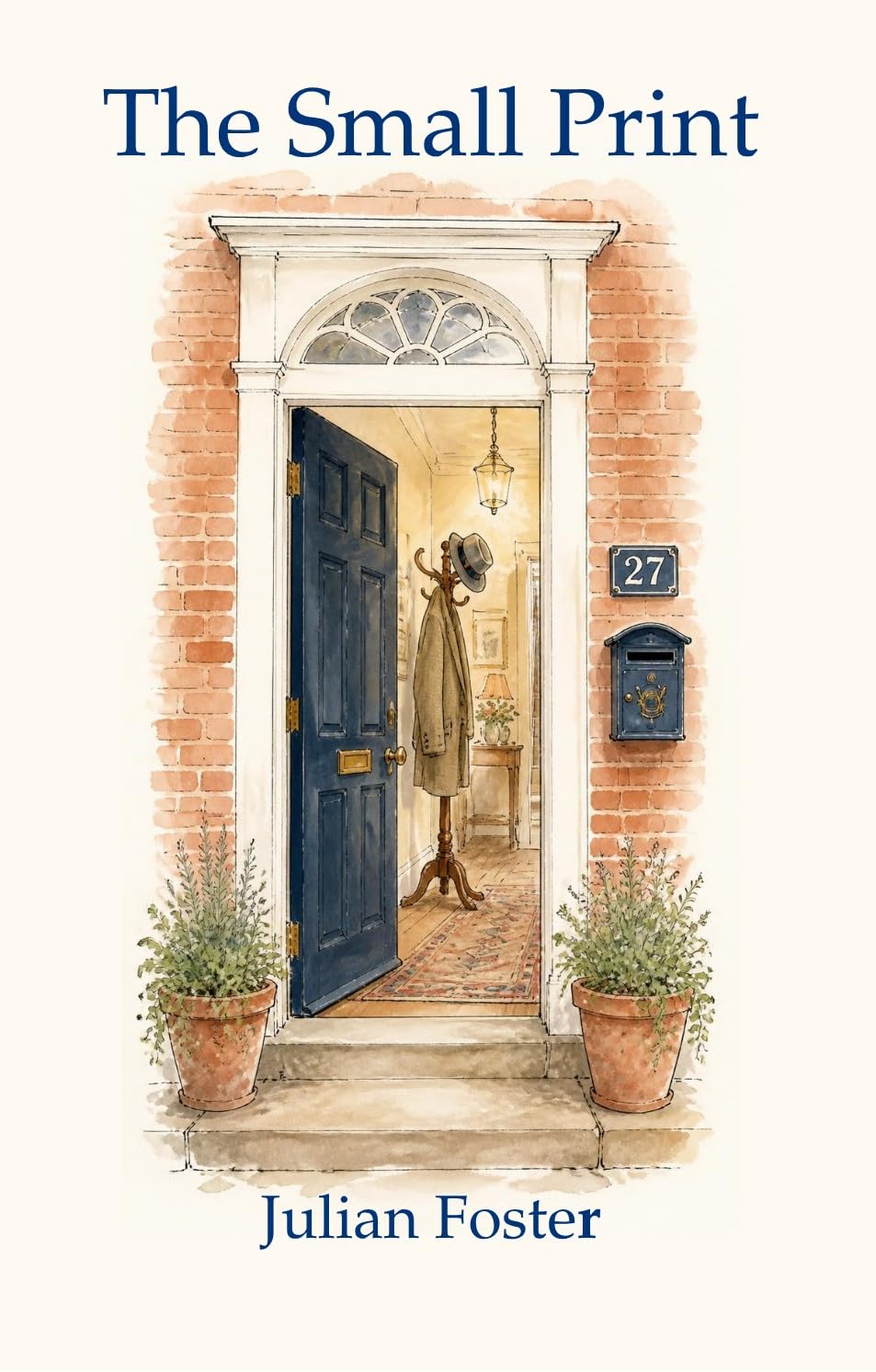
Modern life has a remarkable talent for turning the smallest inconveniences into matters of principle. A misplaced object, an awkward conversation, a neighborhood disagreement, or an obscure procedural rule can somehow become the center of an individual’s entire universe. In The Small Print, Julian Foster finds the comedy hiding inside precisely these moments, offering twenty-eight contemporary vignettes that examine human absurdity with a wonderfully dry sense of humor.
The collection thrives on the gap between how seriously people take themselves and how ridiculous their circumstances can become. Foster’s characters inhabit a world of social embarrassment, minor moral failures, passive-aggressive conflicts, bureaucracy, and petty rivalries, yet they rarely react with the level of emotion their situations seem to deserve. Instead, there is an almost impressive commitment to maintaining dignity while everything quietly falls apart around them.
“Lost Property,” for example, takes the simple discovery of an unclaimed leather bag and transforms it into an examination of how quickly envy can disguise itself as entitlement. The premise is funny because it is so recognizable: the mind finding increasingly respectable reasons to justify something it simply wants.
“Oink Oink” takes another familiar situation—old school friends meeting to bury past grievances—and pushes it toward something much darker and more elaborate. What should be a mature reconciliation instead becomes an expensive act of revenge, revealing how easily childhood grudges can survive beneath the surface of adulthood.
Perhaps the most quintessentially bureaucratic example is “Minutes and Minutiae,” where a residents’ association becomes consumed by the question of whether a motion was properly seconded or whether the supposed seconding was merely the result of someone coughing. The distinction is absurd, but the seriousness with which it is investigated makes the situation even funnier.
“The Gable” similarly demonstrates Foster’s talent for taking an apparently trivial disagreement and allowing it to escalate into something wildly disproportionate. A dispute involving a neighbor’s pristine Canadian cedar sauna eventually ends in flames, while the narrator’s remarkably calm response adds another layer of dark comedy.
What connects these stories is Foster’s sharp observational eye. The humor does not depend solely on outrageous events; much of it comes from recognizing the tiny irrationalities of ordinary behavior. People want to appear reasonable, dignified, correct, and in control—even when their actions demonstrate the opposite.
The collection’s brevity also suits its subject matter. These are small stories about small moments that somehow reveal surprisingly large truths about pride, resentment, social convention, and human nature.
The Small Print is an elegant celebration of life’s minor catastrophes. With its dry wit, British sensibility, and meticulous attention to social absurdity, the collection should appeal to readers who enjoy humor that trusts its audience to notice the joke. Julian Foster understands that sometimes the funniest disasters are not the ones that change your life, but the ones that absolutely should not matter—and somehow matter enormously anyway.
Written by Jayran Main
Discover more from Review Tales
Subscribe to get the latest posts sent to your email.


