
Review Tales
Trusted Reviews and Author Features Since 2016
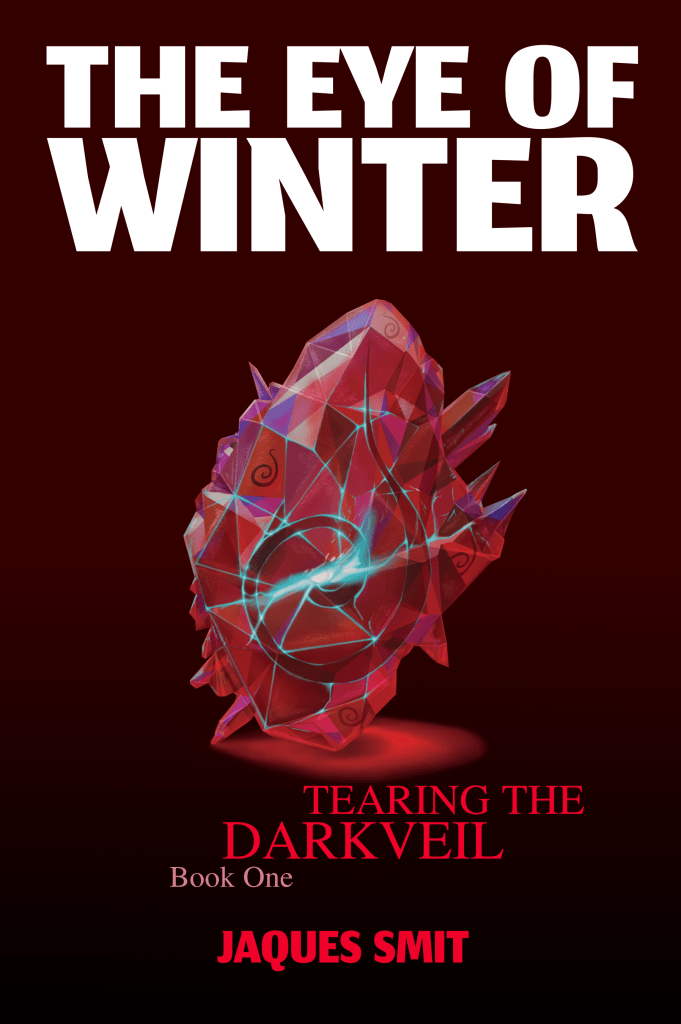
The Eye of Winter – More than a Hero’s Journey by Jaques Smit

In 2009, I was going through a tough time in my life. I felt trapped and isolated. Then a friend gave me The Magician by Raymond E. Feist. I vanished into its pages and blasted through the Riftwar Saga. Soon I learned Feist based these books on his D&D character, and suddenly, I was reminded of my passion for writing. As a teen, I wrote poetry and loved storytelling, especially in games. More often than not, I was the Dungeon Master among my friends.
In the Talent Code, Daniel Coyle argued that one aspect of what a talent hotbed needs is for the beginner to see someone who started like them who completed that journey. I didn’t know Feist, and we had very different circumstances, but in my twenty-year-old mind, they seemed insignificant. All I could see was that there lay a path, and I wanted to travel it.
The call to adventure comes when the status quo gets disrupted, and this was my first disruption. I already had a world I was developing through D&D, now this world had a new purpose, to become a setting for my first book.
I planned out a story that was far too ambitious and started writing. My first book was done a few months later. The friend who gave me the Magician kindly read my work and offered me feedback that landed where it needed to fall. It had promise, but it was quite derivative of Feist’s work. My first obstacle stood in my way. I lacked references, as I had not read enough yet.
This is the point where I cued training montage music and began reading, writing, experimenting, playing and making more to learn the craft of storytelling. Eleven years later, my second call to adventure came when I again sat amid darkness. I was dealing with burnout, not my first. As a multi-decade game developer, burnout was a cyclical event for the first half of my career. This time, however, I dealt with it differently. I chose a more creative path and threw myself into my writing.
During my first writing adventure, I lacked a key component, a mentor. Someone who could teach me what I didn’t know and challenge me to overcome barriers. This time, I had such a person, and they helped me rise to the occasion. After years of hard work, I stood at the precipice of release. As a game developer, I’m used to the range of responses, from praise to disdain and, worst of all, apathy. Yet, it still scares me. Standing with my book at that first event, waiting for someone to ask me, “Why should I read this?” and trying to think of an appropriate answer, my hands were trembling…
If you are familiar with Joseph Campbell and the Hero’s Journey, you may recognise some elements of it in my story. Joseph made us aware of this repeating narrative in human storytelling. Starting from the inciting incident, through the buildup to face the dragon, and then returning home. This cycle isn’t simply a story structure, however. It’s a reflection of how we, as individuals, evolve in our everyday lives. It tells us about growth, that we can survive the darkness, and that we can change.
My book, “Eye of Winter” leans even deeper into this statement, weaving themes from modern Positive Psychology into the story. I aspire to offer readers a richer, more profound experience. One that showcases the growth mindset and shows that great mentors aren’t people that give you advice, they’re people that listen to you and ask you insightful questions that allows you to see things from a new perspective.
So, what exactly is the Hero’s Journey?
If you are already familiar with this well-trodden trope, please skip ahead while I recap the basics for the uninitiated. If you are still here, I will assume your inner monologue sounded something like this: “What’s this weirdo smoking? I’ve never taken a ring to Mordor or the like!“ And yes, neither have I. Or maybe you’re interested in my take on the idea. Either way, the Hero’s Journey is a metaphor that follows a cycle of specific beats that shape an ordinary person into a hero. I weave between the fictional hero and our shared experience as humans because this is how I see the Hero’s Journey. As a story of us as human beings.
Departure
For change to occur, we must leave what we know and delve into the scary unknown. This requires an inciting incident, something that makes the hero want to leave their “Normal” behind. According to Joseph Campbell, that phase comprises the call to adventure and crossing the threshold. Depending on the story, it may also include Refusal of the Call, Supernatural Aid or the Belly of the Whale.
The call to adventure: Something, or someone, interrupts the hero’s familiar life to present a problem, threat, or opportunity. This is the reason for the change.
Refusal of the call (Optional): It’s not always easy to leave what you know behind. The heroine might want to remain in their comfort zone or refuse to face their fear. It sucks, adventuring is uncomfortable and sand gets in everywhere.
Supernatural aid (Optional): The hero encounters a mentor figure who gives them the tools and inspiration they need to accept the call to adventure.
Crossing the threshold: The heroine embarks on their quest. Knowing where to go is only the beginning, but you get to a point where turning back is no longer an option.
Belly of the whale (Optional): The hero encounters their first major obstacle that leads to stagnation. While the hero might be willing, they just can’t seem to make the change needed to overcome the challenge.
Initiation
Now that we are on the move, we get to the real meat of change. Unfortunately, growth never comes easy. We must pay in sweat, tears, and sometimes blood, for the change we want to see. This phase of the cycle is all about overcoming obstacles and earning our heroism. The beats you find during the Initiation are: the road of trails, friends and allies, temptation, atonement, apotheosis and the ultimate boon.
The road of trials: This is where the rubber meets the road and the character is challenged beyond their current capability. The heroine must go through a series of tests or ordeals to begin their transformation. Often, the hero fails at least one of these tests.
Friends and Allies: The heroine meets one or more allies, who pick them up and help them continue their journey. The message here is that you aren’t alone. Others are on the same journey, want to achieve the same end and it is so important to find those few others than can help.
Temptation: The hero is tempted to abandon or stray from their quest. This temptation can come in many forms: the love interest, fame, wealth, fear, anger, or even a feeling of inadequacy. Whatever shape it takes, this is where we are reminded that the hero is an ordinary person, with flaws and vulnerabilities.
Atonement: This is a major turning point in the story. Every prior step has brought the heroine here, and every step forward stems from this moment. The climactic finale. The heroine confronts the reason for their journey, facing their doubts and fears and the powers that rule their life.
Apotheosis: This confrontation leads the hero to discover a profound understanding about themselves. Armed with this new ability, they prepare for the toughest part of the adventure, defeating that big bad or asking the love of their life to marry them.
The ultimate boon: The heroine rises to achieve the goal they set out to accomplish, fulfilling the call that inspired their journey.
Return
When this is all over, it’s time to go home, but things are different now. You are no longer the person who started the journey, and may no longer connect with things as they were. Dealing with this takes many forms: refusal of the return, the magic flight, rescue from without, the crossing of the return threshold, master of two worlds, or freedom to live.
Refusal of the return (Optional): If successful, the heroin may be reluctant to return to their ‘normal’ life. After passing through such an ordeal, people can change so much that they no longer feel they fit in the world left behind.
The magic flight (Optional): The heroine must escape with the object of their quest, evading those others who might want it.
Rescue from without: The Friends and Allies from earlier meet the hero to help guide or rescue them so they might make it home. Where would we be without friends right!?
The crossing of the return threshold: The heroin successfully returns to the ‘normal’ world they left behind.
Master of two worlds: The hero achieves a balance between who they were before and who they have become. This is mostly about the hero’s inner world and the change they navigated through.
Freedom to live: We leave the heroine at peace with their life. More adventure may follow, but at least for the moment, there is a moment to breathe.
What is the “Eye of Winter”?
This book is a character-driven, fast-paced, action-adventure.
A reckless young thief lands himself in a team of misfit spies. Their mission was to stop an apocalyptic war bearing down on his home. But at what cost?
Our hero, Birger, must pull off a reverse heist while confronting a magically enhanced giant and an army of greenskins. He relies on his endurance, wit, charm, and the unwavering support of his friends – both in battle and psychologically – to push through.
Using Birger as the vehicle, the book explores the trauma the Hero’s Journey inflicts on a protagonist. In my opinion, the extreme nature of what these characters endure during adventures would leave them either a sociopath or an emotional wreck. As an author, I like to stack the deck and ensure that the hero remains believably heroic by providing a mentor skilled enough to support them.
Enter Renate Couture. She’s more than a con woman and a spy. She’s a mindweaver. What is a mind-weaver? To discover the details, you’ll need to read the book! But here is the short version. A mind-weaver is someone who has dedicated their life to guiding others on a journey of self-discovery and growth.
* WARNING: Technical talk ahead! *
They employ an attitude of curiosity, seeking to understand through listening and empathy. In modern terms, we call this generative listening (see The Essentials of Theory U: Core Principles and Applications by Otto Scharmer). This facilitates a process where a person can identify and overcome limiting beliefs to achieve and goals.
Mindweavers also use other modern ideas, like Motivational Interviewing (see Motivational Interviewing: Helping People Change and Grow by William R. Miller and Stephen Rollnick) and Clean Language (see The Work and Life of David Grove: Clean Language and Emergent Knowledge by Carol Wilson).
When Renate works with Birger, she exhibits behaviours similar to those of skilled professional coaches. The most powerful change comes from within someone, not from without.
This is where I think many incarnations of the Hero’s Journey go wrong. The wise among us seek advice from those who have done it before, but giving advice isn’t as simple as giving an answer to the question asked. Learning isn’t about filling an empty vessel with facts. It’s about synthesising new knowledge and understanding by combining what the person already has and what the mentor offers. (see Theory of Cognitive Development by Jean Piaget)
* Technical talk over 😀 *
For a mentor to be effective, they must first discover what the advice seeker already knows and how they think about it. In my life, I’ve found that the simple act of reflecting the person’s thinking back to them and then asking a question that requires a different thinking paradigm to answer can allow them to solve the problem. If not, the mentor can give much better advice once they fully understand what the person is thinking.
The tricky bit is the mentor’s mindset. They must truly believe that the mentee is an intelligent, creative person capable of solving their problems. No process, framework, model, or theory can save you from your mindset. And with the right mindset, those tools are simply ways to improve the impact of what you already do.
Conclusion
In summary, Renate profoundly impacts Birger by listening to him and helping him manage his emotions by reflecting his thinking process back to him. This allows Birger to change and grow more quickly while working through the psychological burden of stress, injury, and loss.
Now, you might ask, if you are trying to deal with technical concepts from Positive Psychology, why write fantasy and not non-fiction? That is a fantastic question; the answer might surprise some of you! In my opinion, fantasy is part of the same domain. What do I mean by that? Reading fantasy allows us to explore ideas from a distance and take a break from real-world stress. All things in moderation and escapism can become a crutch if overused. And I believe we all need a safe place to camp during our trials, rebuilding our resilience for the next leg of the Hero’s Journey.
The Eye of Winter is a Hero’s Journey that strives to inspire its readers to consider helping others in a different way. By being supportive rather than directive, they can flourish under their own power.
Discover more from Review Tales
Subscribe to get the latest posts sent to your email.


 Review Tales