
Review Tales
Trusted Reviews and Author Features Since 2016
You Can Call Me Al by Rick Brown (Book Review #1885)

Rick Brown’s “You Can Call Me Al” is a thought-provoking science fiction novel that delves deep into the ethical quandaries and emotional complexities of a near future where scientific innovation and human intellect converge. Through the life of Greg Nolan, an ordinary man whose world is turned upside down by an experimental gene therapy, Brown explores the profound implications of enhanced cognitive abilities and the moral dilemmas they entail.
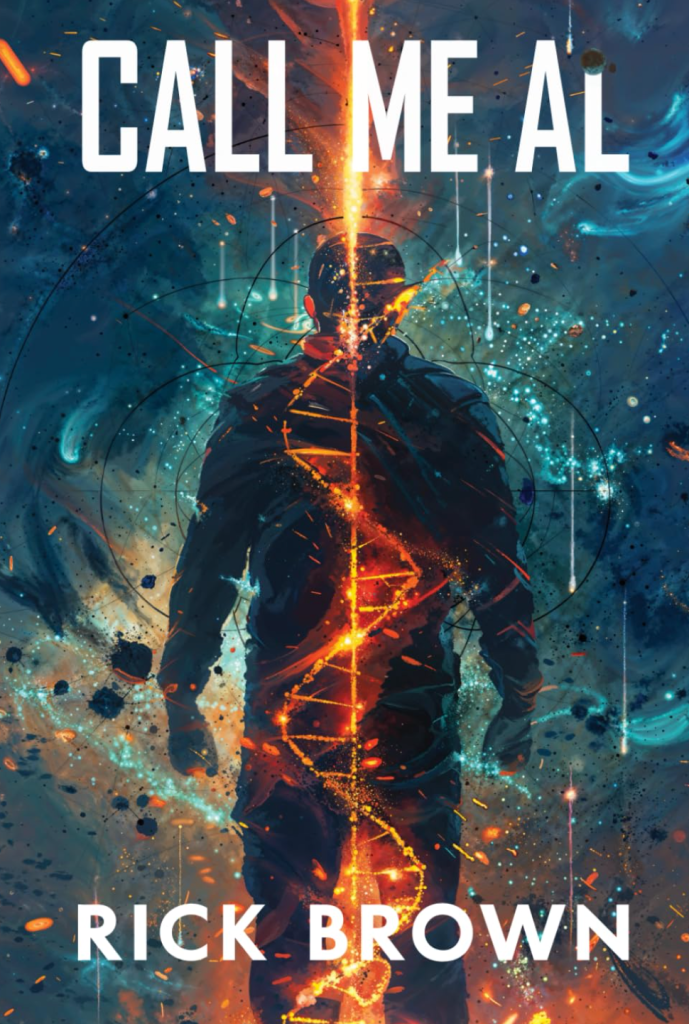
Greg, a blue-collar worker, undergoes a gene therapy intended to cure a brain condition but instead finds himself with drastically elevated intellect. This transformation thrusts him into a new reality fraught with challenges that test his understanding of himself and his place in the world. Brown captures the essence of this metamorphosis brilliantly, presenting a character study that is as much about the power of the human mind as it is about the vulnerabilities of the human heart.
The novel is enriched with dynamic relationships that evolve as Greg’s newfound abilities reshape his interactions with others. His romance with Heather, a passionate theater director, and his intellectual bond with Dr. Tara Flynn, the geneticist behind his transformation, are particularly compelling. These relationships are depicted with nuance and depth, highlighting how Greg’s changes affect not only his own life but also those around him.
A standout element of the story is Greg’s relationship with Athena, his advanced AI assistant. This subplot not only adds a layer of intrigue but also serves as a commentary on our increasing reliance on technology. Brown skillfully uses Athena to explore themes of control versus autonomy, weaving a cautionary tale about the potential perils of AI as it becomes more intertwined with daily human life.
Set fifteen years into the future, “You Can Call Me Al” reflects on the trajectory of today’s technological and scientific advances, posing essential questions about identity, humanity, and ethics. Brown’s narrative is a mirror held up to our current scientific ambitions, exploring the potential consequences of tampering with human nature under the guise of improvement.
Overall, “You Can Call Me Al” is a masterfully crafted novel that offers a compelling look at the speculative possibilities of future innovations and their impact on human relationships and societal norms. It is a must-read for anyone fascinated by the intersection of technology and human emotion, and it will particularly resonate with those who appreciate narratives that challenge both the mind and the soul. Rick Brown has not only written a story about the future; he has sparked a conversation about the timeless debate over what it truly means to be human.
Written by Jeyran Main
Click here to feature your book in the Review Tales Magazine.
Discover more from Review Tales
Subscribe to get the latest posts sent to your email.


