
Review Tales
Trusted Reviews and Author Features Since 2016
Refusing Disappearance: On Becoming Unladylike by Regina Louise
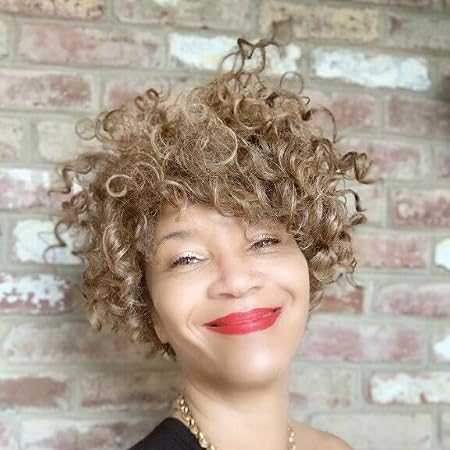
In Unladylike: A Mythopoetic Reclamation of Love, I am exploring the deeper intention behind why I write—specifically, how poetry becomes a set of coordinates that leads us back to ourselves.
For much of my life, I understand writing as a way to document what has happened to me. But as I move more deeply into my work, I recognize that I am doing something more than recording experience. I am using language to revise the meanings that have been assigned to my life—meanings shaped by abandonment, displacement, race, gender, longing, and the cultural expectations imposed upon women.
I am not simply writing poems about survival. I am developing a practice of reclamation.
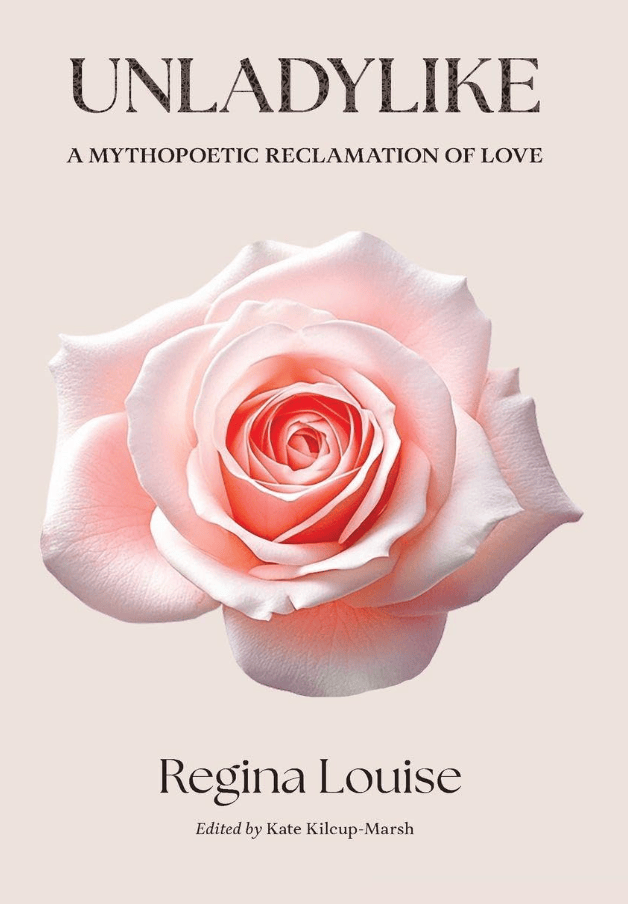
Some experiences occur before we possess language capable of holding them. Others take place after language has been taken from us, distorted, or replaced by someone else’s interpretation of who we are. When language is missing, inadequate, or imposed upon us, the psyche begins organizing itself around conclusions that may never have been true: I am unwanted. I am unworthy. I am difficult to love. What happened to me is who I am.
Poetry interrupts those conclusions.
Through image, metaphor, rhythm, repetition, and myth, poetry gives shape to what has previously been unspeakable. It allows me to return to an experience without becoming imprisoned inside it. It creates enough distance for me to witness what happened and enough intimacy for me to recover the self who lived through it.
This is what I mean when I describe the poems in Unladylike as coordinates. They are not instructions, explanations, or solutions. They are points of orientation. A poem cannot erase what happened, but it can return me to a place within myself that the experience did not destroy. It can remind me: I am still here. My inner life belongs to me. My story does not end simply because someone else names me incorrectly.
The word unladylike has historically been used to discipline women—to tell us how much anger, desire, grief, appetite, truth, and authority we are permitted to possess. In this work, I reclaim the word as a declaration of sovereignty. To become unladylike is not to abandon tenderness, generosity, or grace. It is to stop performing acceptability at the expense of my own wholeness. It is to refuse the belief that belonging requires my disappearance.
I am also exploring the difference between mythopoetic language and conventional self-help language. Self-help often asks, What should I do? Mythopoetic inquiry asks, What story has my psyche been living inside, and what other story is trying to emerge?
Rather than reducing transformation to a sequence of steps, poetry allows contradiction, mystery, the body, memory, and imagination to participate. It recognizes that healing is not always linear and that understanding something intellectually is not the same as being transformed by it. Sometimes the language that heals us is not the language that explains the wound. Sometimes it is the language that finally honors the wound’s depth without making the wound our identity.
When language finally matches experience, something becomes possible that has not been possible before. I can recognize myself. I can recover self-continuity. I can understand that the person I was before the rupture, the person who endured it, and the person I am becoming all belong to the same life.
This is the work of Unladylike. The poems are coordinates. They locate what has been exiled, return language to the body, and make a path toward self-recognition. Again and again, they ask:
What names have I inherited?
What conclusions have I mistaken for identity?
What story am I now willing to release?
What language might lead me home?
I write because language does more than describe reality. Language participates in creating the reality the psyche organizes around. Through poetry, I am not changing the facts of what has happened to me. I am changing what those facts are permitted to mean.
And in doing so, I am no longer merely telling the story of my life.
I am reclaiming authorship of it.
Discover more from Review Tales
Subscribe to get the latest posts sent to your email.
2 Comments on “Refusing Disappearance: On Becoming Unladylike by Regina Louise”
Leave a Reply


A fascinating feature. As always, writers come in all shapes and sizes (not literally), and it is great that we hear about them in the format you are so good at producing on this site.
LikeLike
Thank you for hosting Regina.
LikeLike