
Review Tales
Trusted Reviews and Author Features Since 2016
Who Stole My Pork Belly?: A Memoir by Huey Choi (Book Review #2412)

Inheritance can take many forms. Sometimes it is money or property; sometimes it is a family name, a reputation, a set of expectations, or a collection of silences passed quietly from one generation to the next. In Who Stole My Pork Belly?, Huey Choi examines what happens when the inheritance you receive is one you must ultimately decide whether to keep.
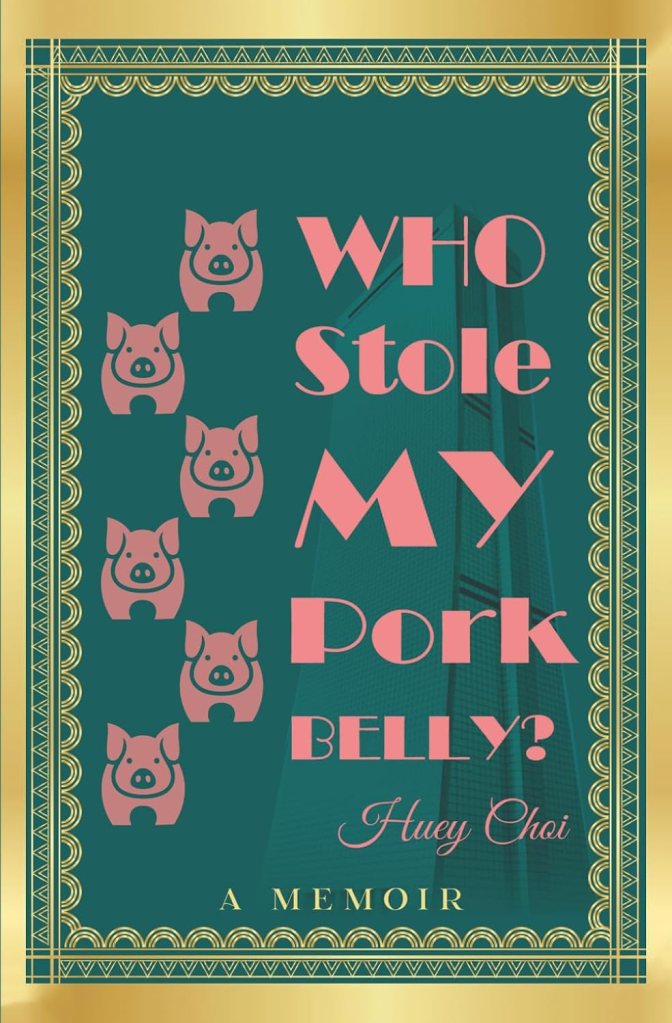
At the heart of this memoir is the weight of a name. Choi describes being born into a legacy defined by duty, reputation, and silence, with the expectation that the family name must be protected at any cost. Yet beneath the carefully maintained image, there was a lack of kindness and protection. The contrast between outward reputation and private reality becomes an important part of the author’s reckoning.
Rather than presenting the memoir as an exercise in revenge, Choi frames it as an act of separation and self-discovery. The central question is not simply what happened in the past, but what should be carried forward from it. What does a person owe to an inheritance that caused pain? Can someone acknowledge where they came from without allowing it to determine who they become?
The memoir appears to find its emotional strength in the quieter moments. Choi writes about the comfort of a simple meal, the stillness of evening tea in a pale celadon cup, and a deep tenderness toward people and beings who are often overlooked. These seemingly ordinary details provide an interesting counterpoint to the larger family legacy. Rather than grand gestures saving the day, it is small mercies that become sustaining forces.
Food, in particular, gives the book’s unusual title an intriguing resonance. Pork belly is something tangible and familiar, almost playful in contrast to the heavier themes of family, identity, and survival. It suggests that nourishment can be both literal and symbolic—something that connects us to memory, culture, comfort, and the ordinary rituals through which we build a life.
One of the most compelling aspects of Choi’s perspective is the refusal to equate survival with bitterness. There is strength in acknowledging what was lost without allowing that loss to become the foundation of everything that follows. The author’s idea of inheritance ultimately shifts from what was handed down to what can be consciously chosen.
The result is a memoir about resilience, but also about discernment. Choi does not simply ask how to survive a difficult legacy; the deeper question is how to emerge from it without becoming defined by it.
Who Stole My Pork Belly? offers a reflective look at family, identity, expectation, and the quiet process of becoming one’s own person. Its message is not about erasing the past or settling scores. It is about recognizing what shaped you, deciding what deserves to remain, and having the courage to build something different. Sometimes freedom is not found in escaping where you came from, but in finally realizing that you are allowed to choose what comes with you.
Written by Jayran Main
Discover more from Review Tales
Subscribe to get the latest posts sent to your email.


