
Review Tales
Trusted Reviews and Author Features Since 2016
The Death of Driftwood by Rick Hodges (Book Review #2428)
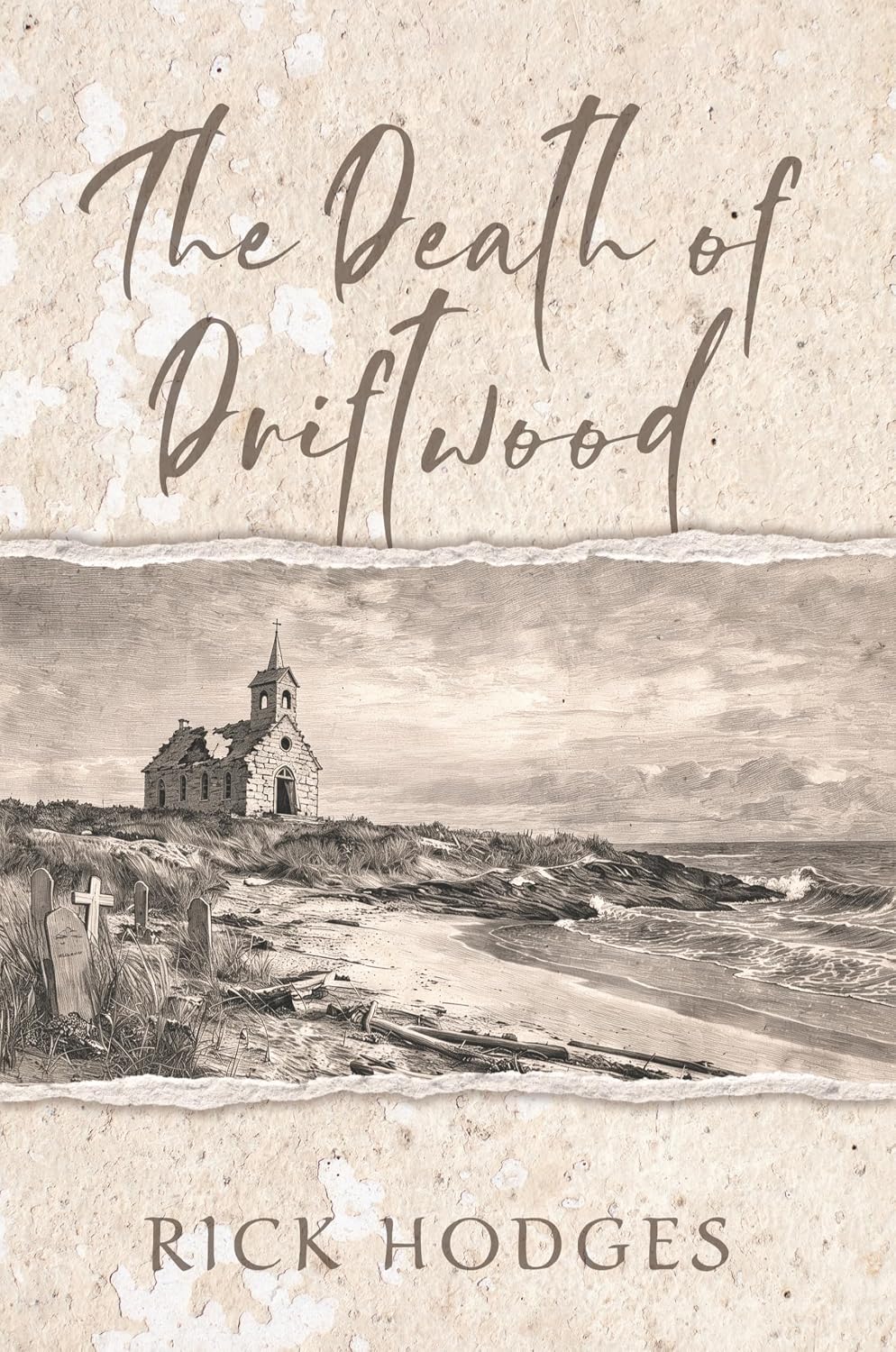
Some communities survive because they remain unseen. They build their own traditions, protect their families, and create a sense of belonging beyond the reach of a world that might otherwise destroy them. In The Death of Driftwood, Rick Hodges imagines such a place on the Virginia coast, then asks what happens when the secrecy that protected it begins to unravel.
Driftwood has an extraordinary history. Founded in the eighteenth century by escaped slaves and shipwrecked French Quakers, the coastal settlement becomes a rare refuge where Black and white families live together, intermarry, and build a community outside the laws and prejudices of the wider world. Their survival depends on remaining hidden, and for generations, that secrecy becomes both protection and tradition.
By 1960, however, the community’s fragile balance is beginning to change. The ritual of hiding children from census takers reflects the lengths Driftwood’s residents have gone to in order to protect their way of life. But when Delaney, a rebellious Black teenager, refuses to follow that tradition, the possibility of exposure suddenly becomes very real.
Her defiance introduces one of the novel’s most compelling questions: what happens when the younger generation no longer accepts the rules created by those who came before them? For Driftwood, secrecy has protected the community, but it has also demanded conformity. Delaney’s actions force its residents to confront whether preserving their refuge is worth continuing to live in fear.
Thomas Morse, a minister with a troubled past, enters at precisely this moment. Initially appearing to offer hope, he gradually becomes a corrosive influence, encouraging distrust and division within a community that has survived largely because of its ability to remain united. Prejudice and jealousy begin to intensify, eventually pushing old tensions toward violence.
The historical setting gives the story considerable emotional weight. Driftwood represents a fascinating imagined response to a very real history of racism, slavery, exclusion, and the desperate search for safety. By blending history with imagination, Hodges creates a world where folk traditions, faith, storms, pirates, and generational memory coexist with the very human struggle to protect home.
What makes the premise especially compelling is that the greatest threat to Driftwood may not come from outside at all. Outsiders certainly pose a danger, but internal division threatens to accomplish what generations of external hostility could not. Fear can protect a community for a time, yet when fear becomes the foundation of relationships, it can also become destructive.
The Death of Driftwood is ultimately a story about refuge and what it takes to preserve one. It explores the complicated inheritance passed from one generation to the next, the dangers of intolerance, and the devastating consequences of allowing suspicion to replace trust.
With its multigenerational scope and richly imagined history, the novel offers a sweeping portrait of a community caught between hiding and being seen. Driftwood may have been created as a sanctuary, but its survival depends on something more difficult than secrecy: its people must decide whether they can continue to choose one another when fear gives them every reason to turn against each other.
Written by Jeyran Main
Discover more from Review Tales
Subscribe to get the latest posts sent to your email.


