Review Tales
Trusted Reviews and Author Features Since 2016
Dog Training the American Male by Steve Alten (Book Review #435)


The plot and storyline seemed very simple. There wasn’t anything novel about it. What made it enjoyable to read was the way it was told and the writing skills Steve Alten demonstrated in his book. The New York Times best-selling author did not shy away from making you laugh and ponder on certain aspects of the story.
The content was suitable for a more mature audience and the humor suited the situation built from the storyline. I particularly enjoyed Jacob’s personality and his behavior before and after meeting the protagonist.
The big sloppy German Shepherd was a nice addition bringing all of the elements of the story together. The love of an animal was a beautiful and insightful way to validate how animals do, in fact, influence us and affect us.
I recommend this book to anyone seeking a good fun read. There is nothing more delightful than reading a book like this, on a day when you really don’t feel like doing anything.
Written by Jeyran Main
If you would like a book review, click here
Writing Poetry by Diana Raab, PhD

Writing Poetry by Diana Raab, Ph.D
Poetry is the voice of the soul. Poets help us see a slice of the world in a way in which we might not have observed it before. They highlight details to cast a light on a feeling, an image, or an event. Poetry also helps offer insight into both the human psyche and human behavior, and it is a place where the imagination can roam free.
Letting go and writing poetry is about just allowing life and experiences to unfold as they are meant to unfold. When writing poetry, try to release or let go of your rational mind and let your sensations and emotions take over. Letting go is also about slowing down and pausing while being mindful of what is stirring inside you.
As you string words together, feel the poem erupt from deep inside you. Begin by writing about something about which you feel strongly. Writing in this way will help reveal you to yourself, and will be transformative. Over time, you’ll learn what inspires you to write poetry.
Life provides all of us much material to write about. In addition to our memories, reflections, and fantasies, this wealth of material can also include the books or articles you read and the movies you’ve watched. Poet Robert Frost deftly says, “A poem begins with a lump in the throat: a homesickness or a love sickness. It is a reaching out toward expression: an effort to find fulfillment.”
Poems come to me when I least expect it, but most often when I am in the midst of doing something else. Sometimes an image or a title drifts into my mind, and that’s where I begin. Reading the works of other poets is a wonderful way to invite in the muse because it fills you with random thoughts and invites rhythm into your own poetry. My book, Lust, for example, is on Audible and read by actress Kate Udall, and she does a terrific job of bringing the poems alive.
Writing Prompt
Pick up a poetry anthology and find a poet whose voice and sensibility resonates with you. Read a poem by that poet a few times, first to yourself and then out loud. Feel the poem’s rhythm; see its images and ideas. Choose your favorite line from the poem, and let it be the first line of your own poem. Write it at the top of your journal page. Now continue writing lines in connection with it. Read what you write and reflect on new feelings.
Diana Raab, Ph.D. is an award-winning memoirist, poet, blogger, and speaker who advocates the healing and transformative powers of writing. She’s the author of eight books, and her essays and poetry have been widely published. She’s a regular blogger for Psychology Today, Elephant Journal and Thrive Global. Her latest book is Writing for Bliss: Telling Your Story and Transforming Your Life. Website, www.dianaraab.com; https://www.facebook.com/DianaRaab.Author/
Celestia by J. D. Evergreen (Book Review #434)
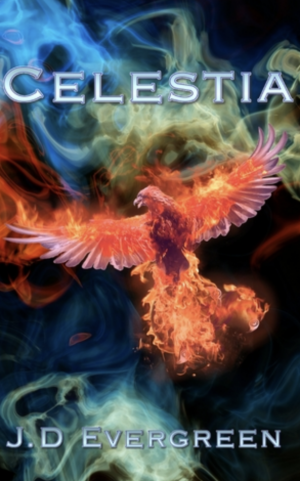


At first, I was interested in figuring out how this kingdom had gotten to this state. I was seeking more backstory and descriptive content. A protagonist seeking to save a world she loves and suddenly becoming the hero possessing magic she didn’t know she had, was not a first-time discovery for me. As I read more, I realized that it wasn’t just another world being saved, but it was more about Talia overcoming much more. I found the situation with people being brainwashed quite intriguing as well.
The story is suitable for the young adult fans and may require more depth for a more adult audience. The literature was well written. The author has clear potential in writing good stories, and it’s very apparent that she has cared about creating this fantasy world.
Talia is not strong, but maybe we don’t always need a strong leader. Maybe, by just having one, it is enough to create that hope in people. I would recommend this book to people that are into magic, wizardry, and fantasy storylines.
Written by Jeyran Main
If you would like a book review, click here
If you would like your book edited click here
Need help getting your book published? Contact Me.
The Gene Police By Elliott D. Light
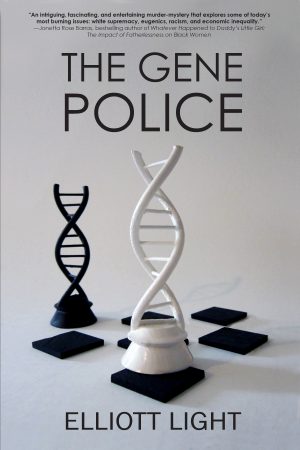

The Gene Police
By Elliott D. Light
Genre: Mystery
Before the words “white supremacy” filled the airways, before we learned of American Nazis and the alt-right, before there was a Muslim ban, before we considered building a wall or knew what DACA stands for, there was eugenics—a pseudo-science that promoted the belief that a race could be improved by controlling who was allowed to mate with whom.
It was eugenics that compelled white doctors to inform Carl and Betty Langard that their newborn baby had died. And it is the cruelest of circumstances—the murder of Jennifer Rice—that fifty years later leads Shep Harrington to search for Baby Langard.
As Shep soon learns, the quest brings him to the top of a slippery slope with an ill-defined edge. Question begets question, and the slide down the slope proves inevitable: What happened to the baby? Who took it? Why was he taken? And who killed Jennifer Rice? 
When Shep learns that Baby Langard was born at a hospital run by Alton Nichols, a famous Virginia eugenicist, he is drawn into the dark history of the American eugenics movement and its proponents—the so-called “gene police.”
On Facebook: https://www.facebook.com/smalltownmysteries
Website: smalltownmysteries.com
On Amazon: https://amzn.to/2K78DF8
On B&N: http://bit.ly/2qUf8T7
The Art of Fully Living: 1 Man. 10 Years. 100 Life Goals Around the World by Tal Gur (Book Review #433)
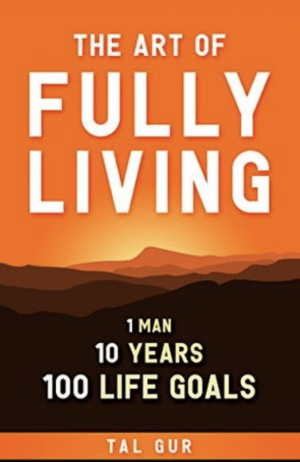


“The very structure of this book models Tal’s immersive approach to goal-driven living: each chapter of The Art of Fully Living is dedicated to a year of focus—socializing, fitness, freedom, contribution, love, adventure, wealth, relationship, spirituality, and creativity—and follows Tal’s endeavors as he works toward fulfilling 100 life goals in only 10 years.”
There are many books similar to this one wanting to assist the reader in a better living situation. Ways to achieve your goals or to live happily seems to be trending in the book industry these days. What I believe made this book different was that he set a number for the amount of goals he had and it wasn’t all set to be big ones either. He attempted to turn passion into a living, and instead of complicating things, he simplified them. You would think that setting 100 goals would be a lot but, since he applied the things I mentioned, it did not appear to be as hard as it originally made me feel.
The literature was easy to understand and had a nice flow to it. The author appeared to write in a caring and upbeat tone. Another positive move the author makes is convincing the reader that the journey is doable.
Although the book is set as a memoir, I believe it is more of a self-help and well- being book. I recommend it to people that wish to make a change in the way they live.
Written by Jeyran Main
This review was written for underrated.com
If you would like a book review click here
If you would like your book edited click here
Need help getting your book published? Contact Me.
Dating, After the Apocalypse by Rod A. Walters

Dating, After the apocalypse by Rod A. Walters
A very important person recently suggested that I write about the future of dating, what with all the recent bad sex-news. This is not that “capital-A” Apocalypse thing, with panicked people running around, buildings afire, and huge earthquakes gobbling streets and busloads of bug-eyed Apocalypse-bound citizens. This “small-a” apocalypse gets set in 2037AD, after which I will be dead, or worse, beyond any useful dating range.
Read MoreMillenials like Dystopias Because Authority Figures are Liars by Walter Rhein
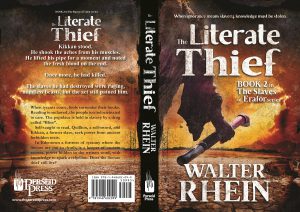
Millenials like Dystopias Because Authority Figures are Liars by Walter Rhein
I was recently on the phone with renowned fantasy author Janet Morris. Janet had just announced the release of my book ‘The Literate Thief,’ a dystopian fantasy novel with themes of fact suppression that has only become more relevant in the Trump regime. Janet had called to discuss the back cover matter, but we ended up having a more general discussion about the deteriorating state of the world.
As we talked, Janet expressed a certain sympathy for the next generation of young people. Millenials are unfairly bashed in the media, but the fact is, they haven’t had it easy. Over the last few decades, the only people getting richer are the people who were rich, to begin with, and now somebody figured out that the price of a college education should be to pay in advance everything you’re ever going to earn throughout your entire life.


In a nation that aspires to freedom, debt is the modern equivalent of slavery.
‘The Literate Thief,’ deals with a world much like ours, but with the deterioration accelerated to the point of almost satire. The problem with good and evil, when you encounter it in the real world, is that good guys don’t wear white hats, and bad guys aren’t snarling beasts that breathe green, noxious fumes. In fact, in reality, the representatives of evil are often more attractive than their good counterparts.
As I talked to Janet, she expressed that she hoped the young people would be able to see it. The way they voted indicates that they are aware of right vs. wrong, to a far greater degree than the generations that came before them. Still, there’s plenty of time to be corrupted, especially when frustration and a lack of income kick in. It’s easy to be eventually beaten down, particularly when you’re criticized enough, or told you’re a “disappointment” enough, whether that criticism is fair, or earned, or isn’t.
A book like ‘The Literate Thief,’ and the previous volume, ‘The Reader of Acheron,’ exists to reassure people with a nagging sensation in the back of their mind that, no, they aren’t crazy. Yes, the world is filled with liars. Yes, those people are telling you things that are not in your best interest. When you stop and take a step back, it’s actually amazing the audacity of the bold-faced lies that some people try to sell you. We’re all gaslighted to a certain extent, and the narratives of religion, family and patriotism can all be used, in the wrong hands, to bludgeon you into submission.
‘The Literate Thief‘ is not a book that you’re ever going to find in a mass-market bookstore, and that’s because the themes are not designed to help support a narrative that makes a small number of people rich. This is a book for individuals, and the purpose is to empower people to cut through the BS they’ve been programmed with and help them seize control of their lives.
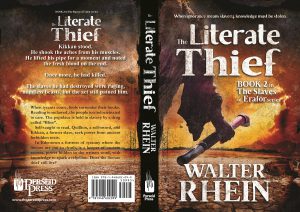
I’ve got two daughters aged 5 and 7, and most of my writing is inspired by the fear of all these mind-control narratives and lies that permeate our society. We all have to develop the ability to carve up the narrative that’s presented to us and separate the meat from the fat. I sincerely hope ‘The Literate Thief‘ provides a tool to help people do that. I think it is, and for that reason, the only way to promote it is by word of mouth.
If young people are educated about how to defend themselves, then they won’t be susceptible to becoming the debt slaves of the powers that be. You can take it as truth that there are a lot of individuals and institutions in our society that will suppress that message whenever possible. So grab your copy here before it too is banned.
Thanks for reading, feel free to contact me via email (walterrhein@gmail.com), on Facebook or at my web page: StreetsOfLima.com.
Written by Walter Rhein
Freedom City By Philip Becnel

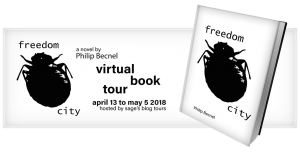 Freedom City
By Philip Becnel
Genre: Contemporary fiction
FREEDOM CITY is an anti-Trump satire that pays homage to The Monkey Wrench Gang.
After Donald Trump unceremoniously dies from natural causes, four mi sfits from Washington, D.C. who call themselves the Fearless Vampire Killers sever the heads of Confederate statues and wage a comedic guerrilla war on post-Trump America. When President Pence enlists droves of fascist volunteers to crush the “alt-left” uprising, the rebels must risk their lives to run the fascists out of D.C.
What follows is not only a battle for survival—but a desperate search for remnants of what once made America great.
About the Author
I was born in San Francisco and raised in Cotati, California, but I spent my formative years in New Orleans and then Northern Virginia. I now live in Washington, D.C., where I’ve been a private detective for almost twenty years.
FREEDOM CITY, an anti-Trump satire about resistance to American fascism, is my debut novel, but some years ago I published two nonfiction books about investigating: Introduction to Conducting Private Investigations and Principles of Investigative Documentation.
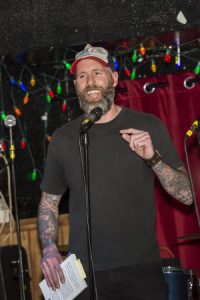 I’ve also published articles in a variety of legal and popular journals, including Time Magazine.
https://www.facebook.com/PhilipBecnelIV/
https://www.barnesandnoble.com/w/freedom-city-philip-becnel/1127764621?ean=9781387416042 https://www.goodreads.com/book/show/37858302-freedom-city
Excerpt (First paragraph):
Despite the odium and widespread condemnation of Donald J. Trump, 45th President of the United States of America, he passed with all the fanfare of a fart in amesh sack. Medical examiners said it was a thrombotic stroke, likely exacerbated by obesity and high blood pressure. Some said cocaine and opioids had been found in his system, but these reports were never confirmed. Trump was dead, and now it was time to start glossing over his dismal legacy and perpetuating his vision, posthumously, for Making America Great Again…
One Too by Sherrie Cronin (Book Review#432)


Lola and her family meet other people with similar powers. However, they are different. XO is now an active force, and they need everything they can get to defeat it. The story deals with more telepath and non-psychic individuals. The adventure is filled with courage, teamwork and honorable resilience.
I don’t think the book would have been a good idea to be read as a standalone. Even though some may be able to figure everything out from just reading this one alone, I would recommend the reader to try some of the previous books in the series. This would allow a better understanding of the characters. Otherwise, they would be overwhelmed with a vast amount of characters to remember.
Another aspect of the book was that due to the individual introductory system where the characters have previously been given a backstory, I found the finale to be thoroughly enjoyable. It was a mixture of adventure, family ethics, principles, and fantasy. The family has to work as a team and use their powers working together to achieve their goal.
The author has made a clear connection between her books and has an admirable knowledge towards literature and storytelling. The book had a nice flow to it, and the concept of it all was pleasurable to read.
Written by Jeyran Main
If you would like a book review click here
If you would like your book edited click here
Need help getting your book published? Contact Me.


 Review Tales