
Review Tales
Trusted Reviews and Author Features Since 2016
GIFTS (The Spark Form Chronicles #3) by Matt Doyle (Book Review #339)


Things really sum up in this third book, and although I found the work to be shorter, it still remained sweet.
Wick by Matt Doyle (Book Review #240)
The author’s style of writing and literature standard was as always delightful. Things went back to the basics with John, and that was a nice touch to the story. This highly intelligent science fiction story is very well plotted and created. The world setting was just as picturesque, and the emphasis on the relationships between the characters was a nice addition to the story.
I recommend the whole series to anyone who really enjoys sci-fi books.
Written by Jeyran Main
If you would like a book review click here
The Helper by M. N. Snow (Book Review #91)

I was given this book by the Author & UnderratedReads for a review.
The Helper is a book written about three friends with three secrets. It takes you on a journey where friendship, relationships and the desire to help others means more than anything. They have the power to heal people, meaning they are a giver.
John Sloan is a marine and loses this generous ability. Since that is all he knows to be from the age of four, the loss takes on several tumbles and falls to figure out why and how to now carry on without it. Dusty Hakalla is a healer with a past. His powers were once abused, and he is not quiet over this ordeal. Deena Morrison is John’s love interest and is also a healer. She too has a past where she was adopted and does not know much about her biological parents.
The helper begins with an absolutely beautiful prologue. I highly recommend readers to start the book with that. It truly gives you an insight on what you are to expect walking into this story. I use the term “walking” because it was truly a walk-through rather than a read through. The use of accurate terminology, wording and the high-quality literature standard flying off the pages impacted my vision so much so that I was off my scale of conception.
There is quite a substantial amount of backstory to how everything begins for all three friends. The chapters are short and easy to read through. The connection between the characters and the bond between them was touching. All of them had relatable personalities and were written up to draw you in. The setting of the world and description was very well put together, and the plot did consist of enough twists and drama to keep you reading and feel engaged. I have also to add that there is profanity regularly used across the book.
I recommend this book to anyone that loves to read on magical realism, science fiction, and fantasy stories. I look forward to reading more from this author.
Written by Jeyran Main
If you would like a book review click here
If you would like your book edited click here
Need help getting your book published? Contact Me.
(adsbygoogle = window.adsbygoogle || []).push({});
Blogger Recognition Award #1

I am honored to be nominated by THE MUNDANE TEENAGE LIFE. Thank you for this beautiful award!
RULES
- Thank the blogger who nominated you and provide a link to their blog.
- Write a post to show your award.
- Give a brief story of how your blog started.
- Give two pieces of advice to new bloggers.
- Select 15 other bloggers you want to give this award to.
- Comment on each blog and let them know you have nominated and provide the link to the post you created.

The story of how my website started is here. I challenged myself to start reading one book a month as a new years resolution. My life and responsibilities, work and everything else had consumed what I loved, and that was to read. So I wanted to push myself back into a routine, and once I started, it was like giving back beats to my sleeping heart.
As part of the reward I am to give two pieces of advice so here goes:
1- Always be honest in what you post. By being honest, you attract the right audience & gain genuine love back
2-Be consistent. No matter what you decide with your blog or website, stick to it. Don’t flip flop between interests. Be organized and clear.
I nominate the following blogs. They deserve this recognition.
CARNIVAL (The Spark Form Chronicles Book 2) by Matt Doyle (Book Review #338)
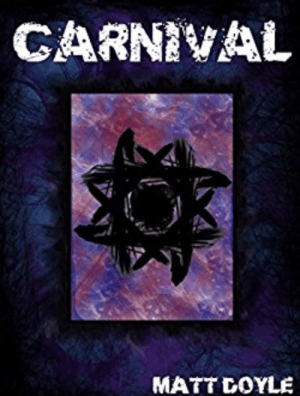


Card games have never sounded this exciting. The characters and plot were yet again multi-layered, and filled with action battles. The pace of the story was fast and justified. Each character had its own agenda, path, fate, and personality. I personally enjoyed this aspect of the story. The science fiction and content was filled with highly thought out, plausible reasoning which gave the tale a solid foundation to its grounds.
I believe that if I had not read the first book, this one would have not made any sense. If you are interested in reading this book, then I would start from the beginning.
Wick by Matt Doyle (Book Review #240)
The international card battling uses holographic data, and that is how the competitors choose to battle it out depending on the combinations of the played cards. As each character’s agenda was pursued, they all came together for the big finale which made this story to be extremely appealing to read. I recommend this book to science fiction fantasy readers.
Written by Jeyran Main
If you would like a book review click here
Malignant Melanoma – A Potentially Deadly Skin Cancer by James Okun, MD
It is time for James Okun to pick our brain and inform us on some important medical matters. You can show your support by buying his books or leaving a comment here if you like- Jeyran Main
James D. Okun, MD is a Phi Beta Kappa graduate of Duke University and of the Albert Einstein College of Medicine in New York. He is the co-author of The History of New Innovations in Modern Medicine and of Erasing Scars: Herpes and Healing.

Did you know that a mole can turn malignant, spread and lead to death if it is not diagnosed by biopsy and treated early? This condition is called metastatic malignant melanoma. Also, extremely important is prevention involving the use of appropriate sun blocks and avoidance of high-risk behaviors such as overexposure to the sun or improper use of tanning beds.
Malignant melanoma is a dangerous type of skin cancer and is what killed actor James Rebhorn of Showtime’s popular Homeland TV program at the age of sixty-five (www.dermacentermd.com).
Melanoma also killed famous singer Bob Marley at the age of 36 when a melanoma developed under one of his toenails. This type of melanoma known as “acral” or “hidden melanoma” develops in obscure areas of the body such as “the lining of the mouth, nose, and female genitals, and underneath or near fingernails or toenails.” (www.melanomaupdates.com/2014).
Per the American Cancer Society (www.cancer.org) melanoma is relatively rare and “accounts for only about 1% of skin cancers but causes a large majority of skin cancer deaths.”
The three layers of the skin consist of a surface layer and two deeper layers. The top protective and waterproof layer of the skin is the epidermis. The next deeper layer is the dermis which contains hair follicles and sweat glands. This layer is followed by the subcutaneous layer which is the deepest layer of the skin and contains fat.
The epidermis contains the melanocytes which produce the dark pigment melanin that leads to darkening of the skin. In melanoma, the melanocytes become malignant (cancerous) and if not caught early this type of skin cancer can metastasize (spread) to other parts of the body and can lead to death as in the case of Mr. Rebhorn and Bob Marley.
Under normal circumstances, the melanocytes like other cells in the body, divide and grow under cellular controls that control the rate of cell division. Growth rate and cellular restraint on growth are normally in a homeostatic balance. When cancer ensues, out of control cell growth eventually forms a tumor composed of melanocytes which are known as a melanoma (See The History of New Innovations in Modern Medicine Chapter 10). The cancerous melanocytes divide with abandon overwhelming the normal restraints against wild, out of control cellular growth.
One potential sign of a melanoma includes (www.cancer.org) the development of a new mole or spot not noticed previously. Additionally concerning is a mole that has changed in color, has borders which have become irregular, has become asymmetrical, has increased in size, or is in the process of changing or “evolving” in terms of size, shape, color, “feel” or borders, or is bleeding or cracking.
Common sites of distant spread or metastasis of melanomas include the lungs, liver, bones, and brain (www.melanoma.org).
Treatment options for melanomas include chemotherapy, radiation, surgical excision, and new types of targeted therapies in which drugs are specifically targeted to affect molecules in the tumor which control cell division and growth, based on genetic profiles, hopefully without affecting normal cells.
James D. Okun, MD is a Phi Beta Kappa graduate of Duke University and of the Albert Einstein College of Medicine in New York. He is the co-author of The History of New Innovations in Modern Medicine and of Erasing Scars: Herpes and Healing.


A World Without Color by Bernard Jan (Book Review #337)



The author’s emotions and the way he expresses what he endures was very raw and authentic. I felt as though, I was there as the third person and grieved as he grieved. The true love felt between the two was stunning. The work reached unsuspected depths of emotional turmoil, and the literature represented it a very lovely way.
The only thing I would improve would be the ending. I believe a story that is real, surely can end with a tangible ending as well.
I believe the reason why this book stands out is that nothing about it felt fabricated. If you are an animal lover, you will really enjoy reading this book and understand how it is to love an animal.
In addition, I really like the name of the book. Life truly does lose its color when you lose your love.
Written by Jeyran Main
If you would like a book review click here
Fancy & Adriaan by Haidji (Book Review #92)
This love story is written in the format of poetry and fantasy. Fancy is a fairy and Adriaan is an elf. Fancy is the fruit of a thought of a being, living on a flower. She can feel but not think. Adriaan is an elf born in the forest living in a tree. He can think but not feel.
Fancy begins to fly away from her origin. Adriaan wishes to move away from the tree too but no matter how many times he tries and thinks, he cannot find a way.
“His Thoughts, Rather than Helping Him, Created More Walls Around Him”
As Fancy flies around testing her wings, she flies closer to the middle of the forest and finds a tree that Adriaan has been stuck in. As they meet they fall in love. Here is where the magic happens. She can then feel what he is thinking, and he can then think what she is feeling.
This is a beautiful love story. The type you wish to read over again just so you too, can start flying like Fancy and find that wonderful Adriaan.
The setting of the story is magical and full of mysterious yet enchanting moments of extraordinarily written literature. The poetic touch in the story adds to its hypnotizing effect, and it really steals you away from whatever is previously on your mind.
I liked the separated sentences as well. It gave me time to think about what I just read before reading the next. I think that was a smart touch by the author.
The book is so nicely done that you can use many of its phrases as inspirational love quotes.
I highly recommend this short story to anyone that still believes in love its eternal effect on the human being.
Written by Jeyran Main
This review was kindly requested by the author, Haidji.
If you would like a book review click here


 Review Tales