
Review Tales
Trusted Reviews and Author Features Since 2016
The Psychosomatics of An Eye Disease – Keratoconus Written by Dr. James Okun
It is time for James Okun to pick our brain and inform us on some important medical matters. You can show your support by buying his books or leaving a comment here if you like- Jeyran Main
James D. Okun, MD is a Phi Beta Kappa graduate of Duke University and of the Albert Einstein College of Medicine in New York. He is the co-author of The History of New Innovations in Modern Medicine: New Thought and the Threat to Traditional Medicine

The Psychosomatics of An Eye Disease – Keratoconus
Do we have an attitude to the world that can cause changes in the structure of the cornea? Several published studies suggest that the answer is “yes”.
My own story was published in a local newspaper in Louisiana in 1986 with the title “Doctor Claims Aesthetic Realism Saved Vision” (see Alexandria Town Talk November 1986 in Appendix Erasing Scars: Herpes and Healing https://amzn.to/2a2rVxQ).
The article documents how I was crushed with a diagnosis of keratoconus of the cornea in 1982 when applying for a position as an Ophthalmology resident. I was devastated by the fact that I had developed bilateral keratoconus in which the cornea thins and bulges affecting sight and possibly requiring one or two corneal transplants.
I had been basically unaware of It, but my sight had been changing insidiously and very slowly with slight problems with night vision while driving at night in college.
There had also been a very minor difficulty with the bright lights of approaching headlights. I really didn’t pay much attention to it. I was too busy studying to get into medical school. My respect for medical knowledge was the best thing I had going for me.
By the end of my first year of my Ophthalmology residency in 1985, my vision had worsened and my rigid contact lens was not fitting well and would even pop out. I chose to resign from my residency which had been so hard to get into. My emotional pain was immense.
It was then that I met my wife at Ochsner Foundation Hospital in New Orleans where we both worked on the day I submitted my resignation letter. It was March of 1985. I was hopeless. I only wish I had met her sooner. It could have saved my career as an Ophthalmologist.
She told me that she had studied and had been a consultant of the philosophy Aesthetic Realism founded by critic and poet Eli Siegel in New York City in 1941.
Mr. Siegel founded a new way of seeing the world called Aesthetic Realism based on four statements: 1. Every person is always trying to put together opposites in himself 2. Every person in order to respect himself has to see the world as beautiful or acceptable 3. There is a disposition in every person to think he will be for himself by making less of the outside world 4. All beauty is the making one of opposites and the making one of opposites is what we are going after in ourselves. (Erasing Scars p. 136).
I found out by studying opposites in myself that I had a fight between contempt (and the pleasure from it “2A Pleasure Described”) and respect. I learned that the way I saw people was based on being superior and not seeing that everyone I knew was the same and different from me, just like every individual cornea has the same structure in everyone.
I began to study how I used the way I saw the members of my family, especially my mother, to be superior and to think I had nothing new to learn from her. I remember disliking my wife when she saw me have contempt for my mother.
She told me Mr. Siegel had told her in a lesson she had with him in 1970 that “our way of seeing a bad person can be bad” and “even a turtle has a right to be critical of us and sometimes is.” (See Chapter 4 in Erasing Scars: Herpes and Healing).
I came to see that I did not want to welcome criticism and learned to be firm with myself and that I was being soft with my ego. Flexibility and firmness are important in maintaining proper structure in the layers of the cornea and I found that firmness and flexibility need not be fighting in me in the way that they were.
Mr. Siegel explained that anger obliterates our desire to know. When I was angry I felt firm and rigid with people.
I learned that I got a pleasure (2A Pleasure) from being rigid and stubborn. Mr. Siegel was the first to describe this pleasure that we all unconsciously seek through elevating our egos by having contempt for everything, not ourselves.
For example, when I was fighting with my mother on the phone or when my father did not make my article on the return of my sight important, and told me, “no one will come to see a doctor who can’t see” I was firm and gave them no right to be critical of me. Even as I became a doctor and saved the lives of many I was hoping he would approve of me.
He was lessening my mind but instead of being “blind with anger” and rigid, I should have related that when I first met Aesthetic Realism I also felt it questioned all the knowledge I had learned and I hated to respect something that I had not learned about at Einstein or at Duke. I became intolerant instead of relating myself to him.
It is now 32 years later and my latest Optometrist could not believe that I had never had corneal transplants. I can see well in glasses. My lenses fit well and my vision in glasses and contacts is excellent although my parents never were grateful for my changes.
In terms of the published scientific studies backing up the personality characteristics of patients with keratoconus, I found I fit the bill in almost all categories. I had a lot to change.
References:
Crossen, RJ. “Psychological Handling of Contact Lens Wearing in Keratoconus Patients.” Contacts and Intraocular Lens Medicine Journal October/November/December 1978-Volume 4 – Issue 4 – pp 49-50. Print.
Farge, Emile J et al. “Personality Correlates of Keratoconus.” Phenomenology and Treatment of Psychophysiological Disorders.” Richmond: Spectrum Publications, 243-250. (1982). Print.
James D. Okun, MD is a Phi Beta Kappa graduate of Duke University and of the Albert Einstein College of Medicine in New York. He is the co-author of The History of New Innovations in Modern Medicine and of Erasing Scars: Herpes and Healing.
If you would like a book review click here
Esther from Bite into Books Introduces herself!



History of Philosophy by Michael J. Stewart (Book Review #206)


History of Philosophy is a mind-boggling book discussing Roman, Eastern, and Western philosophy. It also includes Theories and philosophers, which have had great influence in shaping what we have today.
I liked this book because it was very easy to understand. Philosophy is not a subject that everyone finds enjoyable or easy to read, however, this book has been written with a nice flow and connectivity between the subject matters. The literary standard is easy to comprehend and for that reason, it makes the book enjoyable to read.
There is not much I would change about this book as it is thorough enough and useful for students or people that wish to have a general knowledge of the philosophical world.
If you would like a book review click here
The Senior Sleuths: Dead In Bed By M. Glenda Rosen


The Senior Sleuths: Dead In Bed
By M. Glenda Rosen
Genre: Mystery
Like Nick and Nora Charles from “The Thin Man” series, Dick and Dora Zimmerman solve crimes, especially murders.” Along with Zero the Bookie (fashioned after the authors father) and a fascinating cast of other characters (such as Frankie Socks fresh out of the Witness Protection Program) the Zimmerman’s have the time-the money, the smarts and the chutzpah-to get involved in murder and mayhem, even when warned by the police to stay away…or else.
In these modern noir stories, the hard-boiled detectives are soft-boiled sleuths whose inner shell is softer and gentler, although their outer shell is still tough and determined. Of course, they can still be nearly beaten by the bad guys. But it is the puzzle of the mystery and putting the pieces together to solve it that matters.
 “No doubt, thanks to my father, writing mysteries is in my DNA! My father was a small time gangster. Really! So, it wouldn’t take a genius, a psychiatrist or a palm reader to figure out the geneses of my fascination with crime and criminals. In my series, “The Senior Sleuths,” Zero the Bookie is a version of my dad and several other characters are based on his associates who I met, like Doc, The Gimp, Johnny the Jig, Fat Lawyer and others. What a wealth of material there was for me to claim! Believe me, I saw and heard a lot.”
This series is the senior version of Nick and Nora Charles, with a humorous touch, a splash of noir, cracker-jack sleuthing, unusual, captivating characters, and fascinating mysteries. —Marilyn Meredith, Author of the “Deputy Tempe Crabtree Mysteries
About the Author
Marcia Rosen has previously published four books in her mystery series, “Dying to Be Beautiful.” Rosen is also author of “The Woman’s Business Therapist” and award-winning “My Memoir Workbook. For a dozen years she has given writing workshops on “Encouraging and Supporting the Writer Within You!” and “Now What? Marketing Your Book.”

She was founder and owner of a successful Marketing and Public Relations Agency for many years, created several radio and TV talk shows and received numerousawards for her work with business and professional women. She currently resides in Carmel, California. www.theseniorsleuths.
https://www.facebook.com/MarciaGRosen
https://twitter.com/WriterMysteries
On Amazon: http://amzn.to/2C1OfjH
Survival by Alexander S. Blackmon (Book Review #204)


This book is all about survival techniques and basic preparing methods to survive tricky situations. I think it is a great book for people that travel a lot or are planning to travel to places that there may be circumstances where you really get stuck. I think it’s a very useful book to have and to even keep in the trunk of your car. The only recommendation I would have is to make it longer and more thorough. I would have liked to read more and to learn more about the subject matter. I particularly like the part where it even tells you how to make your home secure. For someone living in Canada, where people don’t even lock their doors, think this would be a “must buy”.
History of Empires by Robert Dean (Book Review #205)


History of Empires is a short book written about the history of the Roman, American, and British Empires. It also covers Sparta and Babylon and their history. Since it is a short book, it is obvious that the content is not going to cover everything or at least won’t be able to cover things in detail, however, what it does do is provide a general and correct overview of each of the subject matters.
I liked how everything was nicely laid out and structurally designed. The seven chapters are not filled with fluffy content and do have a nice flow to them. I was not a big fan of the long paragraphs and would have appreciated some breaks in between, to ease the eyes. Besides that, the book is a good intro for people that want to at least have some idea about past Empires.
//pagead2.googlesyndication.com/pagead/js/adsbygoogle.js
(adsbygoogle = window.adsbygoogle || []).push({});
Imam Hussain (PBUH): The Martyr of the Pioneer Culture of Mankind (Book Review #413)
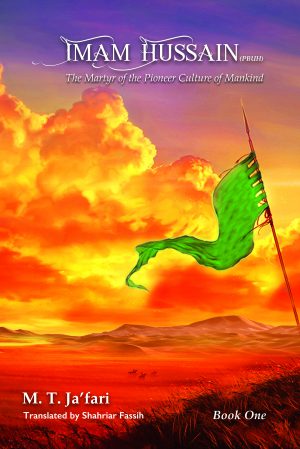
As a community, we have a history. We didn’t just start with our own generation. We can look back and see how others lived the human project. We can take examples and warnings from them. The book describes the philosophy of Imam Hussain’s movement against cruelty, dictatorship, and diversions that were created in the teachings of Prophet Muhammad (SAW).
From the beginning, I had no doubt that this book was going to be different. The author has an extreme amount of experience in writing books that have inspired so many Muslims. His knowledge of philosophy, religion and the social sciences alone were sufficient in having me prepare for what I was about to read in his book. Read More


 Review Tales