
Review Tales
Trusted Reviews and Author Features Since 2016
Descent into Dementialand by Sherry Hobbs (Book Review #2429)

Descent into Dementialand by Sherry Hobbs is a deeply moving memoir about love, grief, caregiving, and the extraordinary resilience required when the person you love begins to disappear in ways you cannot stop.
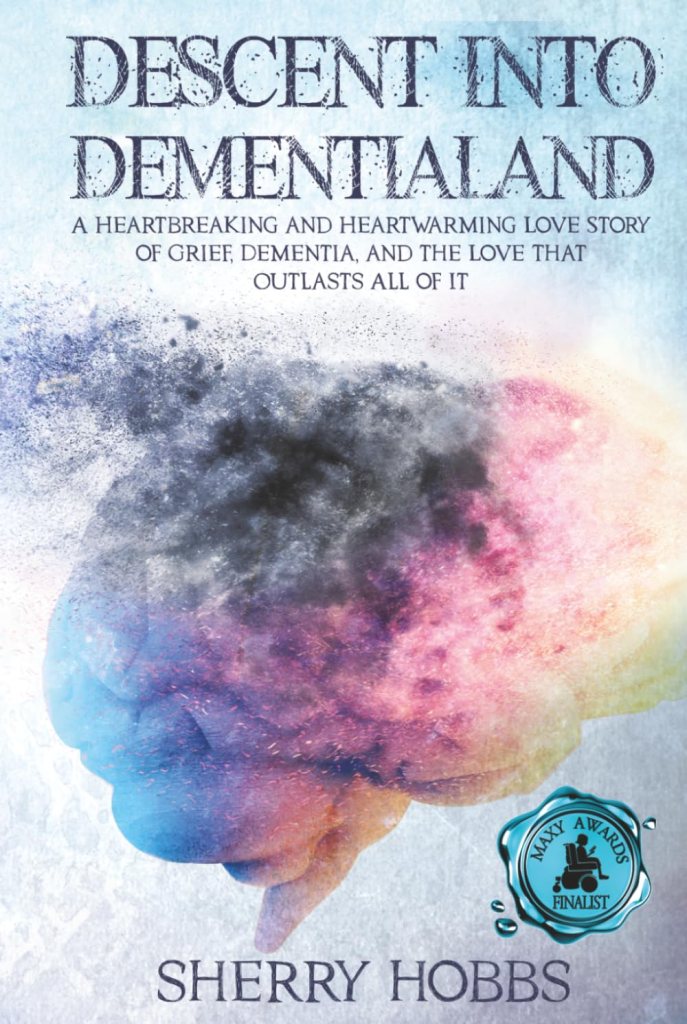
At its heart is a love story spanning fifty-five years. Hobbs and her husband began as college sweethearts and built a life filled with shared experiences, adventure, and family. But that life is eventually reshaped by two devastating forces: the suicide of their son and the gradual progression of dementia that begins taking pieces of her husband away.
What makes the memoir particularly heartbreaking is the incremental nature of that loss. Dementia does not arrive as one dramatic moment; instead, it quietly takes language, independence, recognition, and familiar connections. The person remains physically present while aspects of the person she has known and loved for decades become increasingly difficult to reach. Even something as intimate as her husband’s ability to remember the name of their beloved therapy dog becomes a reminder of how much has changed.
Hobbs approaches this experience not only with grief but with remarkable honesty. The book offers an inside perspective on caregiving that goes beyond clinical descriptions or broad discussions of dementia. It brings the experience into ordinary spaces—the kitchen, the bowling alley, and the countless small moments where caregiving becomes part of everyday life. Those details give the story its humanity.
There is also humor woven into the heartbreak, which makes the memoir feel especially authentic. Caregiving is rarely a single emotion. Exhaustion, frustration, tenderness, fear, sadness, and even laughter can exist within the same day. Hobbs appears willing to acknowledge all of those emotions rather than presenting caregiving as either a noble sacrifice or an unrelenting tragedy.
The book’s treatment of grief is equally significant. The loss of a child and the gradual loss of a spouse create different forms of mourning, yet both become part of Hobbs’s journey. Her experience demonstrates how grief can coexist with love rather than replacing it.
Most importantly, Descent into Dementialand is about continuing to show up. When memory fails, communication becomes difficult, and independence disappears, love has to find new ways of expressing itself. Hobbs’s answer to the question of how to hold on is beautifully simple: you never let go.
This memoir will likely resonate deeply with anyone who has cared for someone with dementia, experienced profound family loss, or watched someone they love change in ways they cannot control. Honest, painful, and ultimately hopeful, Descent into Dementialand reminds readers that even when memories disappear, love can remain—and sometimes it becomes the thing that remembers for both people.
Written by Jeyran Main


