Review Tales
Trusted Reviews and Author Features Since 2016
15 Steps to Healthy Living by Gordon Fimreite (Book Review #444)

15 steps to healthy living is a well-being self-help book written primarily to assist people in naturally losing weight and living a healthy life by gaining the right energy. The author demonstrates 15 ways of achieving such a goal by using his grandmother as an example. He uses her success in living 105 years as a source to prove how one can live this long by eating the right nutrition’s, supplements, and ingredients. Read More
The Brotherhood of Merlin Book Two: Lycenea by Rory Nelson (Book Review #445)


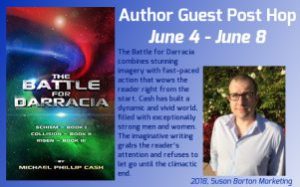
“My Favorite Darracia Character and Why” By Michael Phillip Cash

“My Favorite Darracia Character and Why”
By Michael Phillip Cash
When I began writing The Battle for Darracia, I knew I wanted to include some really strong female characters. I mean, strong female characters kick ass (can I say that?). Maybe I’m wrong here, but fantasy books in the past seem to be geared toward male readers. Which is fine, but I definitely think authors should be writing for both genders. Fortunately, things are changing. Characters like The X Files’ Scully, Star Wars’ Princess Leia and even Buffy the Vampire Slayer have shown readers that girls can be just as tough as boys can. Read More
Through the Whole of Space-Time: A Keiff Carmadden Tragicomedy, Book One – Mysteries, Secrets, and Lies By Dean Rosenthal (Book Review #443)


Book One – Mysteries, Secrets, and Lies By Dean Rosenthal
Through the Whole of Space is a sci-fi novel, the first of four books in its series. The story begins one thousand years in the future. Dr. Keiff works at the center of an institute and discovers some unsettling things about some aliens and their backgrounds. A foreign entity who happens to be a machine intelligence is a threat to their existence and that is where the story takes an interesting turn.
Although the story was a science fiction-based novel, filled with tech gadgets, it also possessed a good dynamic of character building and technologically advanced content.
I found the underlying of subatomic sciences and the protagonist choosing to live among the other races in the galaxy, to be very intriguing.
The literature is what stood out for me and that made me want to read the next books in the series. As I was aware of the fact that there are other books following this one, I did pay attention to see if there was enough background content in order for a strong continuation of the storyline. I believe the author succeeded in producing a solid foundation for his upcoming stories.
I recommend this book to high tech story lovers and sci-fi fans.
Written by Jeyran Main
If you would like a book review click here
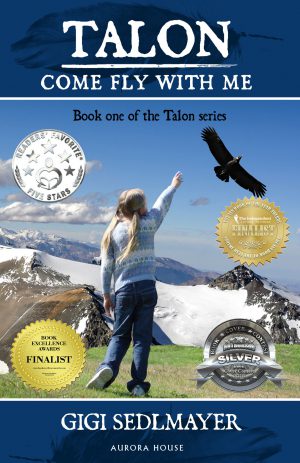
A Walking and Climbing Talon by Gigi Sedlmayer
A Walking and Climbing Talon
Friday was cloudy with thick rain clouds hanging over the mountain, but Matica and Talon still walked to Ramah for his practice. They hadn’t arrived back home when bullet-sized raindrops thundered down on them. Running the last hundred meters to the village, they took shelter in Amos’s house where Talon pressed himself close to the wall and waited, anxiously looking at Matica and the rain.
‘Poor Talon,’ said Jose, who had come home to shelter from the rain as well, ‘it looks as if he does not like the rain, but it will not last long. It is too heavy.’
And so it was. After ten minutes, it stopped as suddenly as it had begun. The blazing sun shone through the clouds, filling the air with hot dampness. Steam rose from the muddy ground and big puddles of water.
As Matica and Talon walked home, Talon went around every big puddle and stepped over the smaller ones, but he would never step into a puddle. Coming to the stony ground in front of the house, he shook his feet to shake off the mud then went inside.
‘Did you tell him to do that?’ Mira asked, amazed.
Grinning, Matica shook her head. ‘No, but he must hate mud and water. He never stepped into a single puddle.’
Talon didn’t go out to continue his training again until late afternoon when the puddles had dried up. Mira prayed they would have fine weather for their walk the next day.
And so it was.
It was a sunny Saturday, still a bit wet and humid, but not as hot as before. No clouds hung over the mountain. It was as clear as it could ever be.
After breakfast, Mira packed their lunch into the basket. Crayn had told the Indians what they intended to do for Talon and they thought it was a great idea but wondered if Talon could manage the long walk and the climb. They volunteered to carry Talon, but Crayn just smiled. ‘That would be a good idea, but I don’t think Talon would let himself be carried.’
On the way to Ramah, Aikon was bubbly and cheerful because he loved the adventure, and Mira hoped that Talon would make it. Crayn thought to himself, Well, I won’t carry him. And Talon? He chatted happily.
Tamo and Tima met them halfway to Ramah. After a short rest at the rock in Ramah, they walked on, but Talon began to limp just as they arrived at the place where the poachers had hidden the egg. They had a long rest, but his limp didn’t get any better; he waddled slowly and let his head and wings drop. Only the encouragement of his parents made him go on. Now and again, he would run and flap his wings to relieve his feet.
‘What can we do?’ Matica said, concerned.
‘Uh-oh… there’s nothing we can do. We can’t carry him,’ Crayn said. ‘Just go on, Mat.’
In the end, after nearly four hours of walking, they arrived at the foothills. Stopping, they admired the scenery. Talon lay down on his side on the grass, relieving his feet.
‘I’m glad I came,’ Mira said, admiring the view and the mountains. ‘I’ve never seen them so close. What beautiful scenery.’ She waved her arms around, inhaling deeply. ‘It’s so peaceful here.’ Looking at Talon, how he was laying, she said, ‘He needs a long rest before he can climb, so we’ll have our lunch here.’
She sat beside Crayn and unpacked the lunch. Next, she looked at Talon and shook her head. ‘Look at him. He really must have sore feet to lie down like that. I truly hope he can fly back home. Tsk, tsk, a climbing bird.’
Crayn pulled a face and whispered, ‘Home? Flying, yes, but not home.’
Mira looked at her daughter in concern, then whispered to Crayn, ‘Don’t let her hear that.’ Louder, she said, ‘I have to admit, Talon has done very well up to now.’
‘Look up there,’ Matica said, as she and Aikon sat beside her. She pointed at a high ridge where Tima stood. ‘She’s showing us where Talon has to go.’
‘Oh my, oh my. Isn’t that a bit high?’ Mira gasped. Crayn just shook his head.
‘We’ll see, but see the next ridge?’ Matica asked. Mira nodded. ‘That’s where they had the egg. At least we don’t have to go way up there, but we still need an easy way up. Tamo!’ she called him. ‘Could you look and find an easy way up for us?’ Tamo immediately flew off.
As they packed up their leftovers, Crayn got up to see if Talon was ready to go on. He sprang to his feet and followed him. ‘Okay,’ he said, ‘here we go.’
Now came the last part of their journey. Talon was tired and still limping, but he shook his head impatiently as if to say, ‘I will and I can do it. Let’s go!’
Mira and Aikon stayed behind and watched them go up the mountain.
Zigzagging up the wide, soft and grassy path with Tamo flying before them to show them the way, it was easy going in the beginning with the ground only sloping upwards a little at a time.
‘Dad, no wonder the poachers could get up here so easily and quickly,’ said Matica.
‘Yeah. Tamo should look for a higher place for their nest egg, but I think the bad part of the climb is still to come – for Talon, anyway.’
After half an hour of steady climbing, the path became steeper and narrower the higher they went. For Talon with his short legs, it became very difficult. At times, he had to walk sideways, letting his tail hang over the edge and with his raised neck scraping along the slope. One time he lost his footing, but he grabbed the grass on the cliff with his beak and held on firmly until his feet found the ground again. He grunted with effort. He really pushed himself to the limit.
When Crayn looked up, he could see there was still a long way to go. He didn’t think that Talon would make it, but after another half hour, they were quite close to Tima who still sat on the ridge above them. Just then, Tamo landed beside her and both of them encouraged Talon to climb to them.
On the last part of the journey, Crayn and Matica crawled upwards on their hands and feet then heaved themselves over the ridge. Standing up, they watched Talon. He spread his wings to balance himself then clawed his talons into the dirt of the vertical slope and, step-by-step, with deep grunts, he climbed that last, difficult hurdle. He strained his body to the utmost limit of his ability.
Accomplishing it, Talon fell onto the plateau, puffing heavily. Tamo and Tima nudged him then flew to the next plateau and screeched to encourage him. They had a good view from there of whatever Talon was about to do.
‘Dad, look at the view! Mum! Aikon!’ Matica yelled down. ‘You should have come up! It’s breathtaking up here! Hey, Dad, what’s that?’ Surprised, she pointed to a little valley they could just make out between two high peaks. ‘No, it can’t be, but it looks as if it was an old settlement of the Incas. Is that possible? Out here?’
‘Why not?’ said Crayn.
‘So, it is?’
‘Oh yeah, and we can visit it when you come with me to Cajamarca. It’s nearly on the way.’
‘Really? That would be marvelous. I’d love that.’ She looked up at Tamo and Tima. ‘You two always have that great, amazing view.’
‘Hmm, true,’ her father said, then looked at Talon. ‘He’d better plunge down now, I don’t want to stay up here too long. How about it, Talon?’
The Big Jump
The ledge Matica, Crayn, and Talon were standing on was quite narrow, so Talon had just enough room to lie on it. ‘Hey, Talon,’ Matica said, ‘what about jumping?’ But Talon did not move. He opened his eyes and looked questioningly up at his parents as if to ask, ‘Should I do it now?’ Matica interpreted his look. ‘Okay, let’s do it.’
Talon got up and looked down over the edge. Alarmed and startled, he stepped backward and bumped his tail on the rock behind him. He looked at Matica, frightened, then he grunted and nestled sideways against the rock.
‘Oh no,’ Crayn said, sat down and put his head in his hands. ‘He’s scared. A bird scared of heights?’
‘Talon!’ Matica yelled in surprise. ‘Is that true? That can’t be. You’re a bird. Birds are not scared of heights. Come on, you have to jump.’ Matica went to the edge and looked down just as Talon did before, but quickly stepped back. ‘Whoa, that is high.’ She put her hand on Talon. ‘You’re not used to the height. I understand, but…’
Crayn narrowed his eyes and said, ‘Hmpf. He’d better get brave and jump. I wouldn’t like to think we have done all this for nothing and he continues to be a walking bird.’
‘Tamo, what should we do?’ Matica called up to him. Tamo pushed at Tima with his head to show her that she should push Talon. ‘Oh, my! Push him?’
‘Hey, what’s happening up there?!’ came Aikon’s mumbling voice from below.
‘Talon is afraid to jump!’ Matica shouted down.
‘What? That can’t be! He’s a bird! Push him!’ yelled Aikon.
‘That’s what we’re going to do now! Hang on, he’ll come down soon!’ said Matica.
As Tamo screeched encouragingly, Talon spread his wings over Matica’s and Crayn’s heads then closed his eyes and made strange noises that sounded like a sigh. Was it an expression of fear? Matica thought.
Annoyed, Tamo screeched loudly so that Talon looked up, then Tamo jumped with his wings close to his body. Passing Talon, Matica and Crayn, Tamo spread his wings, flapped them a few times and flew in front of them, almost touching them. They could feel the wind from his huge wings.
Talon ducked in fright. When Tamo passed him again, Talon screeched then looked up at his mum. Just then, she let herself fall the same way as Tamo had and glided past Talon with the same ‘whoof, whoof, whoof’ of her wings. Talon watched her, but he still didn’t move. Instead, he closed his eyes again.
‘Don’t close your eyes, Talon,’ Matica said tearfully and poked him in his side. He opened his eyes again, walked closer to the edge, locked his talons into the slope then looked at Matica.
‘I can’t help you, you frightened big bird, you. I can’t show you, either. I’m not a bird. I have no wings, see? But you’re a bird. You have wings. So jump and fly,’ said Matica.
She pushed at his body, but he wouldn’t move. Next, Tamo flew so close that he touched Talon’s beak with his wingtips. Talon, irritated by that, shook his head wildly and in doing so, he lost his balance. His body weight did the rest. He stumbled and disappeared over the edge, toppling over and over, screeching in horror as he fell.
Shocked, Matica ran to the edge and watched him fall. Tamo and Tima dived after him, screeching in fright.
‘Talon!’ Matica screamed. ‘Spread your wings! You’ll crash!’
She buried her face in Dad’s arm when they heard two cries coming from her mum and Aikon from down below. ‘I can’t look,’ she mumbled.
Crayn looked horrified too. He watched Talon fall for the next nanoseconds then shook Matica. ‘Look!’ he said.
Matica opened her eyes through her fingers and saw that Talon had spread his wings, was flapping them and had flown up a bit higher into the air. She let go of her father and went to the edge. Talon flew just over the heads of her mum and brother. He had made it – just in time.
Thrusting her hands into the air, she clapped. ‘Hurrah, you made it!’
All were cheering and shouting for joy and Talon, screeching, flew past them in a graceful curve without flapping his wings. Matica interpreted what Talon said: ‘That wasn’t too bad. I love it now. I can’t understand why I didn’t want to do it. It’s easy, it’s wonderful, it’s amazing. I can soar with my parents now. I’m a real bird.’
‘He said all that?’ Crayn asked.
Matica nodded and grinned. Talon wouldn’t stop squeaking. They heard Aikon singing from down below, ‘Talon is flying, Talon is flying, Talon is in the air. Talon is a bird.’
‘What a miraculous bird Talon is, I have to admit,’ Crayn said with admiration, then he shook his head, ‘but I still don’t like him. No, he looks odd, you know, half-boiled!’
Talon is Soaring
Matica and her father watched the condors for a moment before beginning their descent back down the mountain. As the condors flew overhead, they often blotted out the sun with two black bodies and one brown one.
Tamo landed on his ridge where he had stood before and encouraged Talon to do the same. After Talon joined him, Tamo let himself fall and Talon followed him without any hesitation.
‘Hey, Dad,’ Matica said, beaming with delight, ‘he passed the test.’
Out of sheer joy and happiness, Talon landed and flew again and again. After the fourth landing, he fell again and picked up a good updraught of wind and spiraled high up into the sky. His parents followed him.
Approaching the bottom of the mountain, Matica lay down on a big, flat stone and watched them flying. She sighed. Mira sat beside her. ‘Matica,’ Mira said after watching her a while, ‘is something wrong? Is something bothering you?’
Matica sat up and pursed her lips. ‘No… yes. Oh, I don’t know. Yes, I guess.’ She wiped her face with her hand. ‘Will Talon come back to me? He has his freedom now. All three have their freedom now. Oh, Mum, will they come back?’
Mira looked at her husband. He just looked back at her in the apprehension and shook his head, then he made a sign to Mira by waving his hand into the air as if to say, ‘Let them go. They should go.’ Instead, Mira said to her daughter, ‘Of course they will, Matica. Wasn’t Tamo always there, even before Talon? They won’t forget you so they won’t leave you. You helped them bring up their chick. Don’t forget their gratitude.’
Aikon saw his father’s expression and gave him a queer look, but said nothing until they started on their long journey home. Aikon put his hand into Matica’s, squeezed it and said, ‘Don’t worry. He’ll come back. He loves you.’
The birds flew in wider circles over the mountain and they could still hear their happy screeching and chattering. Matica often looked back into the sky and silently prayed that all of them would return to her. Suddenly she yelled, ‘Mum, I can’t see them anymore! They’re gone!’ Devastated, she sat down. Mira and Aikon tried to comfort her.
‘All right, then, we may as well finish our sandwiches,’ Mira said. ‘We don’t need to take them home. I’m hungry anyway and I do believe you are too. This is as good a place as any.’ Everybody agreed because from there, they could see if the birds returned.
Matica ate, more interested in searching the skies than in her food.
Written by Gigi Sedlmayer
2018 New Emerging Children’s Writers by Marie Korman
2018 New Emerging Children’s Writers By Marie Korman
Twitter: @MarieKorman, Website: www.MarieKorman.com; www.KidsOnTrump.com
Do you know what the best thing is about a new children’s author? They bring the possibility of discovering a new book your kids fall in love with and the chance to fall in love with an author they will follow for decades. Here are some great new children’s authors who are making their debut in 2018.
Antayala Israel
Debut Book: How Sunny the Skunk Found His Smell
Expected Book Release Date: July 2018
Where to Find It: Amazon, Barnes & Noble
Follow Antalaya at:
Pinterest: @AntaylaIsrael1220
Instagram: @TheOnlyAntalaya
What You Should Know About Antalaya:
How She Became a Writer– While attending Humanities High School, she found her passion for writing in her children’s literature class where she first wrote: “How Sunny the Skunk Found His Smell”. Later in life, she would have a chance meeting with Joy Thomas Anderson, an illustrator, resulting in the opportunity to finally bring her story to market.
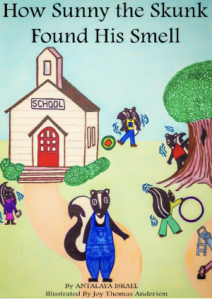
 What Makes Her Writing Unique– She believes in short simple children’s stories that are easy for kids to memorize like the mother goose stories of old. Antalaya explains further, “Sunny is a young boy just trying to fit in and make friends. My book is unique because it uses a fairytale format while addressing serious concern kids have today, which is wanting to fit in with others and feeling different, alone and without a “smell”.
One Thing That Might Surprise You to Know– Antalya created the Sunny the Skunk character based upon her own experience as a child. “I didn’t grow up having money and sometimes I felt alone because my family couldn’t afford the latest sneakers or jackets that were in style.”
What Readers Can Expect Next– She hopes to turn How Sunny the Skunk Found His Smell into a series. So be on the lookout for more adventures of Sunny the Skunk!
Stephanie Grey
Debut Book: The Jenson Adventures: The Ghost of Crow Island
Expected Book Release Date: Available Now
Where to find it: https://gremlincreative.com
Follow Stephanie at:
Twitter: @AuthorSGrey
Facebook: @AuthorSGrey
Website: https://www.stephaniegreybooks.com
What You Should Know About Stephanie:
How She Became a Writer– Stephanie’s been writing since she was kid. She loved writing short stories and even wrote a fictional newspaper called The Oracle that she handed out for fun in middle school.
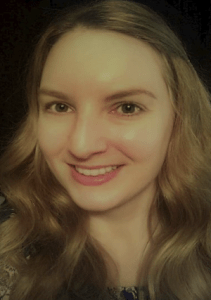
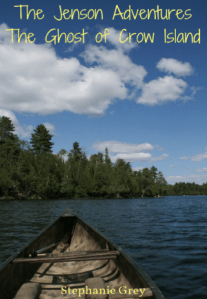 What Makes Her Writing Unique– In her own words, “My middle grade book stories are simple and traditional, which I don’t think you see often these days. The kids love and respect their parents and the parents are involved in their kids’ lives.
One Thing That Might Surprise You to Know– She lives in Hawaii but the ocean terrifies her. Stephanie said, “I’ll sit by the ocean and read, but I will not dip a toe in the water!”
What Can Readers Expect Next? – Stephanie indicated while she does hope to continue The Jensen Adventures as a series, she is currently finishing some adult book projects. Her post zombie apocalypse book, Division Tennessee will be available in June, so be sure to look for it.
Erin Spaulding
Debut Book: Eden’s New Friend
Expected Book Release Date: Available Now
Where to Find It: Amazon
Follow Erin at:
Twitter: @erinspaulding10 Instagram: espaulding1974Facebook: @erinmspaulding Website: www.erinspaulding.com
What You Should Know About Erin:
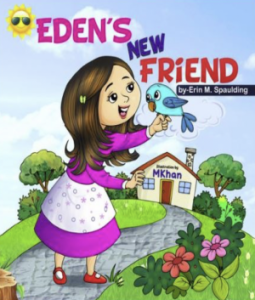
 How She Became a Writer– Sadly, she lost her mother at age 5. School officials thought it would be beneficial for her to keep a journal so that she would have a “safe” outlet for her and emotions. Erin stated, however, “I found myself turning it into a challenge to see what completely ludicrous scenarios I could create.” Later, as her children got older, she realized she needed to find another focal point for her attention, which had been exclusively her children, up to that point. It was at this point, that she decided to take the courageous leap, of transitioning into a writer, as an adult.
What Makes Her Writing Unique– Her writing is based on her own experiences raising her three children, over the past 20 years. Her vast experience means her stories will resonate with most kids, as well, as their parents. Nothing draws readers in better than real life experiences, that are totally relatable.
One Thing That Might Surprise You to Know– She is terribly afraid of heights.
What Can Readers Expect Next? – More adventures featuring Eden! Erin has already penned the next two books in the Eden series, “Eden Visits the Orchard”, and “Eden’s Bad Day” and hopes to have the next book available by August.
Written by Marie Korman
Protagonist vs. Antagonist By R. A. Rios

Protagonist vs. Antagonist By R. A. Rios
https://www.rariospromotions.com/
By definition: The Protagonist – The leading character, Hero or one of the major characters in a drama, movie, novel, or other fictional text. The Antagonist – A Villain, person or thing who actively opposes or is hostile to someone or something; an adversary.
These are the Characters that we cheer and cry for, they are the ones we remember well when mentioning the story from a movie or a book.
In the case of Superman or Katniss Everdeen of the Hunger Games, we can easily identify who is the protagonist and who is the antagonist. At times the writer makes it easy to identify the Villain or Antagonist but when as writers our Antagonist does not take on a human form can it be just as memorable?
Think for a moment as you visualize these Antagonists, maybe it is an animal or prehistoric beast, the weather or something supernatural, what about futuristic technology, society or maybe even a person’s own emotions! I’m sure just the mention of these brings to mind popular novels and movies.
In our development of a strong Protagonist and Antagonist, there must be a struggle between good and evil. For your Protagonist to be memorable and someone you can cheer and cry for they must not be indecisive. At one point they must decide what to do or how to move forward.
As in the case of Tom in my lasted Novel Release “The Flash Point Project.” Tom finds himself thrust into an uninhabitable world with no means of survival. He has a choice to either lie-down and die or struggle to survive. His trek would not be an easy one, as he not only has to deal with the elements but with himself as well as with the feelings deep within such as his loneliness.
While Tom struggles to survive, the reader can sympathize with his struggles and his emotions as we have all been there. That’s when the reader starts to cheer and cry for him, their hero, to make it as he finds a vestige of protection for his survival. But his struggle is not over in this epic journey, it has only just begun as he will soon discover in this secret underground city with its many levels of super advanced testing labs. Yes, our Protagonist stands out, but his Antagonist soon takes on many forms.
Friends we are only limited by our imaginations as Tom welcomes you to travel with him through time and space to the deepest part of your emotions through “The Flashpoint Project!”
Dream Cast—Western Song by Leigh Podgorski
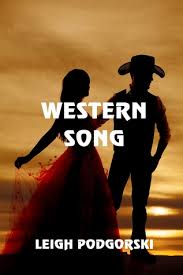
Dream Cast—Western Song by Leigh Podgorski
Always so exciting to imagine your dream cast for a novel or a play or a screenplay, it makes the piece come alive in a way nothing else can—except for the actual casting for a film or play!
Behold below, my dream cast for Western Song a timeless love story filled with rich unique characters played out beneath the wide Wyoming sky about a bull riding rancher and his recently deceased best buddy’s Thai immigrant mail-order bride; as she discovers the true power of freedom, he discovers he’s lost his heart.
Hollywood calling!
For Weston Beaudurant—ruggedly handsome Ewan McGregor. Oh, yeah, any woman’s dream!
Best known for the TV Series Fargo and the film Beauty and the Beast, Ewan is a versatile actor with more than 79 credits and counting. Is there a Western in his future?
Michelle Ang is well known around the world for her work as a regular cast member on the Australian show “Neighbours”, “Outrageous Fortune” and the hit teen show “The Tribe” I think Michelle would be a perfect romantic Song Phan Rang to Ewan’s Weston.
Of course, no Romance would be complete without a triangle. Well, maybe we could name a few, but this one not only has a triangle but two broken-hearted unrequited loves.
Strong, smart, competent, and beautiful lawyer Wynona Velez loses her heart to, who else, Weston Beaudurant. And who else to play her but the fabulous Jessica Alba?
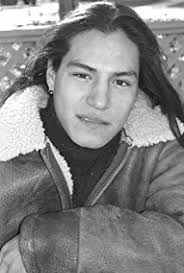
Our second broken heart belongs to, yup, another lawyer, Jack Deerstalker. Jack is a young, dynamic Native America who is felled by the beguiling Song. My top pick for Jack, the powerful, compelling actor, Eddie Spears.
Weston is a powerful presence in the town of Wild River, and he has a passel of friends. One of his oldest friends is the shaman Mad Bear. Wise, funny, and mentor to Jack, Mad Bear has a calming aura, though he has been known to mix it up with the best of them. My dream choice for Mad Bear? The formidable Graham Greene.
Next to Mad Bear is Zebadiah, Weston’s best friend from their school days, now married to his little sister Olive. Zeb is staunch and true, a firm stalwart of the Beaudurant family. Walton Goggins would be my dream pick for this role.
Finally, one of the deepest hearts of the piece is Weston’s sister, Zeb’s wife, Olive. When the brother and sister lost first their father and then their mother, it was Olive who held the household together. It is always Olive to whom Weston turns, though he’ll be darned if he’ll admit it. Rounding out my dream cast is the lovely and talented Zoe Deschenel as Olive Chantry.
So, there you have it.
My very own Dream Team.
Sometimes, dreams do come true. Or, from another great Hollywood “dream”:”If you build it, they will come.”*
Stay tuned!
*From the Book Shoeless Joe by W.P. Kinsella
Movie Field of Dreams produced by Kevin Costner
SOCIAL MEDIA
Web Site:
www.VioletHillsProductions.com
http://twitter.com/@leighpod52
https://www.facebook.com/leigh.podgorski
https://www.facebook.com/leighpodgorskiwriter/
https://www.facebook.com/WStheNovel/
https://www.linkedin.com/in/leigh-podgorski-3682649/
AMAZON PAGE
https://www.amazon.com/Leigh-Podgorski/e/B005P57NEQ
BOOKS: WESTERN SONG https://www.amazon.com/Western-Song-Leigh-Podgorski-ebook/dp/B072VR7W5S
Don’t Look for the Reason: Look for Me Under the Rainbow by Bernard Jan
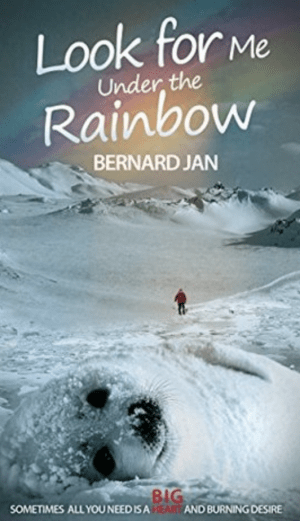
Don’t Look for the Reason: Look for Me Under the Rainbow
On an early, misty morning, a ship arrived and disembarked men. All the seals ran away. All, except the young. Unprotected, unaware of the danger, they innocently waited for human beings to approach. A man lifted a club and struck the fragile little head. One, two, three times. Blood spattered the white fur. No cries, no sound. Silent and quick. And then again. One, two, three dull thuds, blood, and death. Still, no cries. Only a blank look of surprise and disappointment. . . .
This is an excerpt from the second edition of my brand new novella Look for Me Under the Rainbow self-published as an ebook (April 15, 2018) and paperback (May 9, 2018), but it was also a reality happening in eastern Canada.
Each year, tens of thousands of harp seals mostly babies no older than three weeks, are shot or clubbed with hakapiks to death. Some of them are skinned alive before the lights in their eyes go out, and their carcasses are left to rot on the ice. This year, the slaughter of harp seal pups began on April 9 and ended up with 59,111 pups killed by the sealers by mid-May, not including seals who were injured and got away, according to Harpseals.org.
Every author has this one reason to write their books, putting pestering muse aside. If you are looking for my reason for writing Look for Me Under the Rainbow, seek no further because I just answered you.
Look for Me Under the Rainbow is the story of Danny, a curious harp seal pup with soft white fur and innocent black eyes. Unknown to him, Danny’s world is facing a menace that threatens an entire generation of seals with the slaughter by merciless humans. The hope for Danny and his family lies in the hands of Helen, an environmentalist, and member of a young activist crew of the Rainbow Warriors. Their mission is to save animals. The only question is will Helen win the race against time and clubs and save Danny before the hunt begins and the ice turns red.
Look for Me Under the Rainbow is my call to stop this madness, it is my call to save the lives of baby seals. Though written for younger readers, it will appeal to anyone who cherishes our beautiful planet and wishes to protect its treasures.
Written by Bernard Jan
Buy Look for Me Under the Rainbow by Bernard Jan on Amazon https://www.amazon.com/dp/B07C7JGMNG/
Bernard Jan previous work: A World Without Color
https://www.amazon.com/dp/B071FTK9HV
Bernard Jan’s website: www.bernardjan.com
Bernard Jan on Twitter: @BernardJanWorld
Bernard Jan on Amazon: https://www.amazon.com/Bernard-Jan/e/B0034P69DU/


